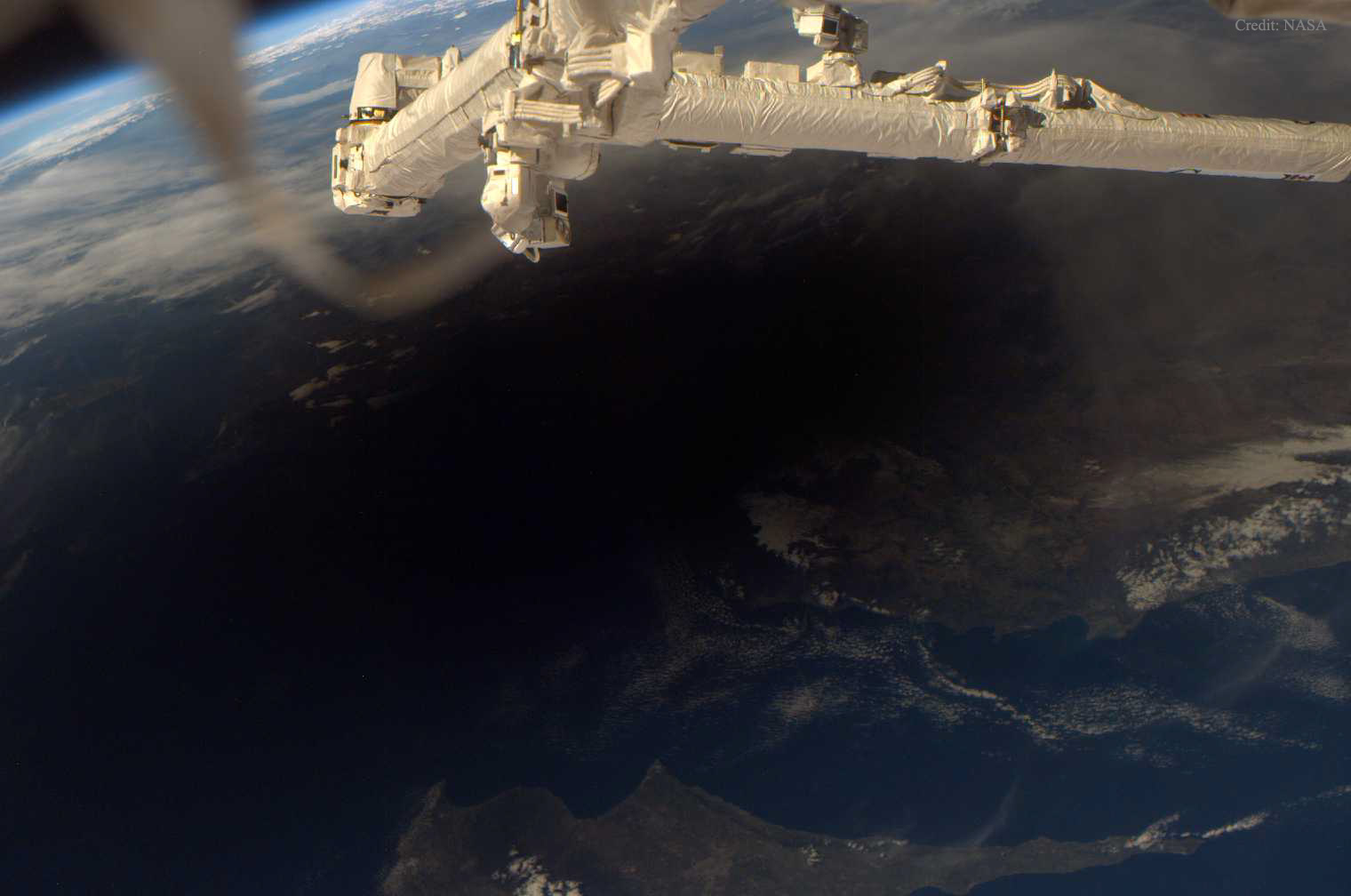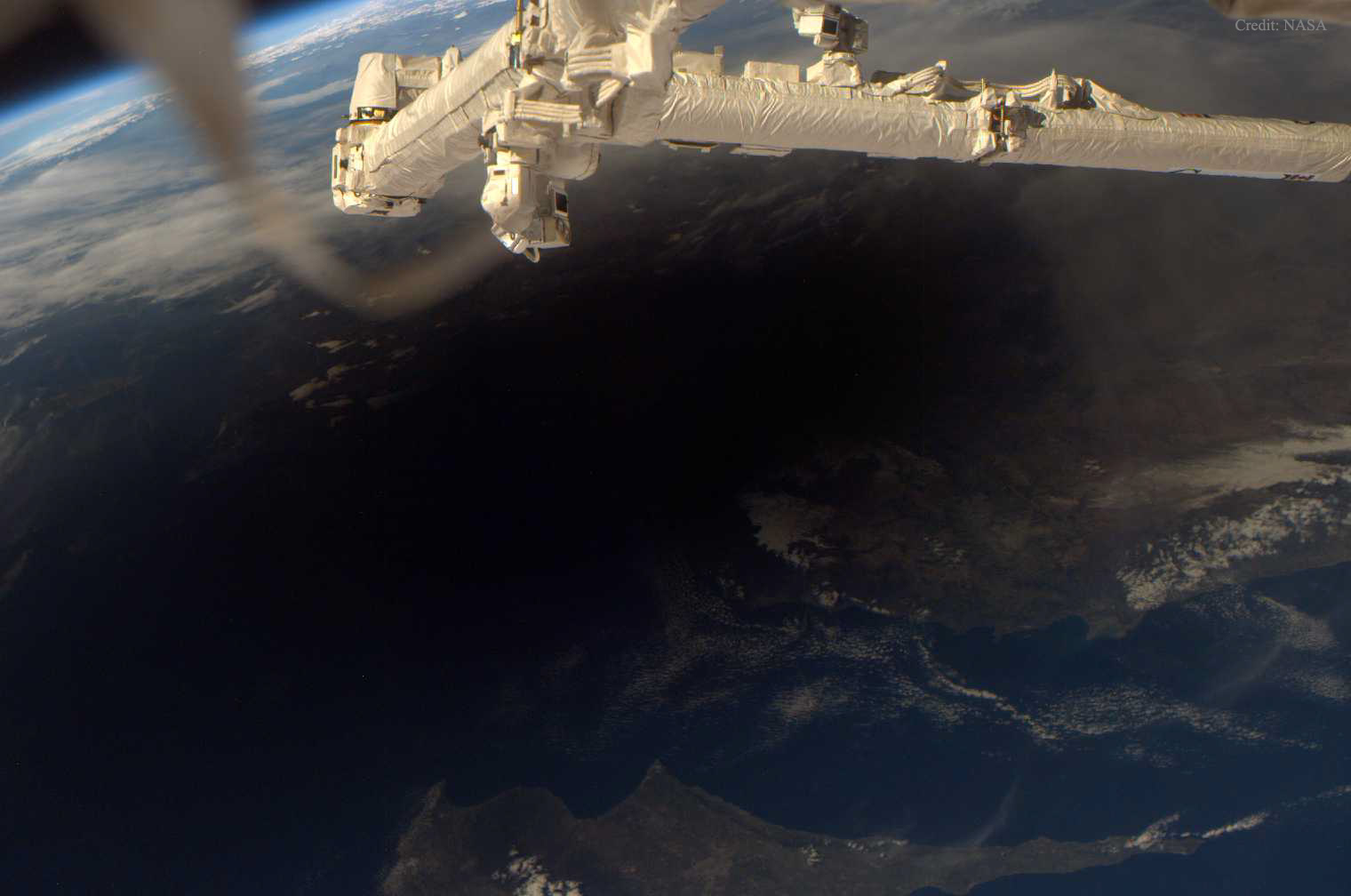
What does the Earth look like during a total solar eclipse? It appears dark in the region where people see the eclipse, because that's where the shadow of the Moon falls. The shadow spot actually shoots across the Earth at nearly 2,000 kilometers per hour, darkening locations in its path for only a few minutes before moving on. The featured image shows the Earth during the total solar eclipse of 2006 March, as seen from the International Space Station. On Friday the Moon will move in front of the Sun once again, casting another distorted circular shadow that, this time, will zip over part of the north Atlantic Ocean.
¿Qué aspecto tiene la Tierra durante un eclipse solar total? En la región donde se observa el eclipse, la Tierra aparece oscura, ya que allí cae la sombra de la Luna. El punto de sombra se desplaza a través de la Tierra a casi 2.000 kilómetros por hora, oscureciendo las ubicaciones en su trayectoria solo durante unos minutos antes de continuar su camino. La imagen destacada muestra la Tierra durante el eclipse solar total del 2006 marzo, tal como se ve desde la Estación Espacial Internacional. El viernes, la Luna se moverá nuevamente frente al Sol, proyectando otra vez una sombra circular distorsionada que, en esta ocasión, se desplazará sobre parte del océano Atlántico norte.