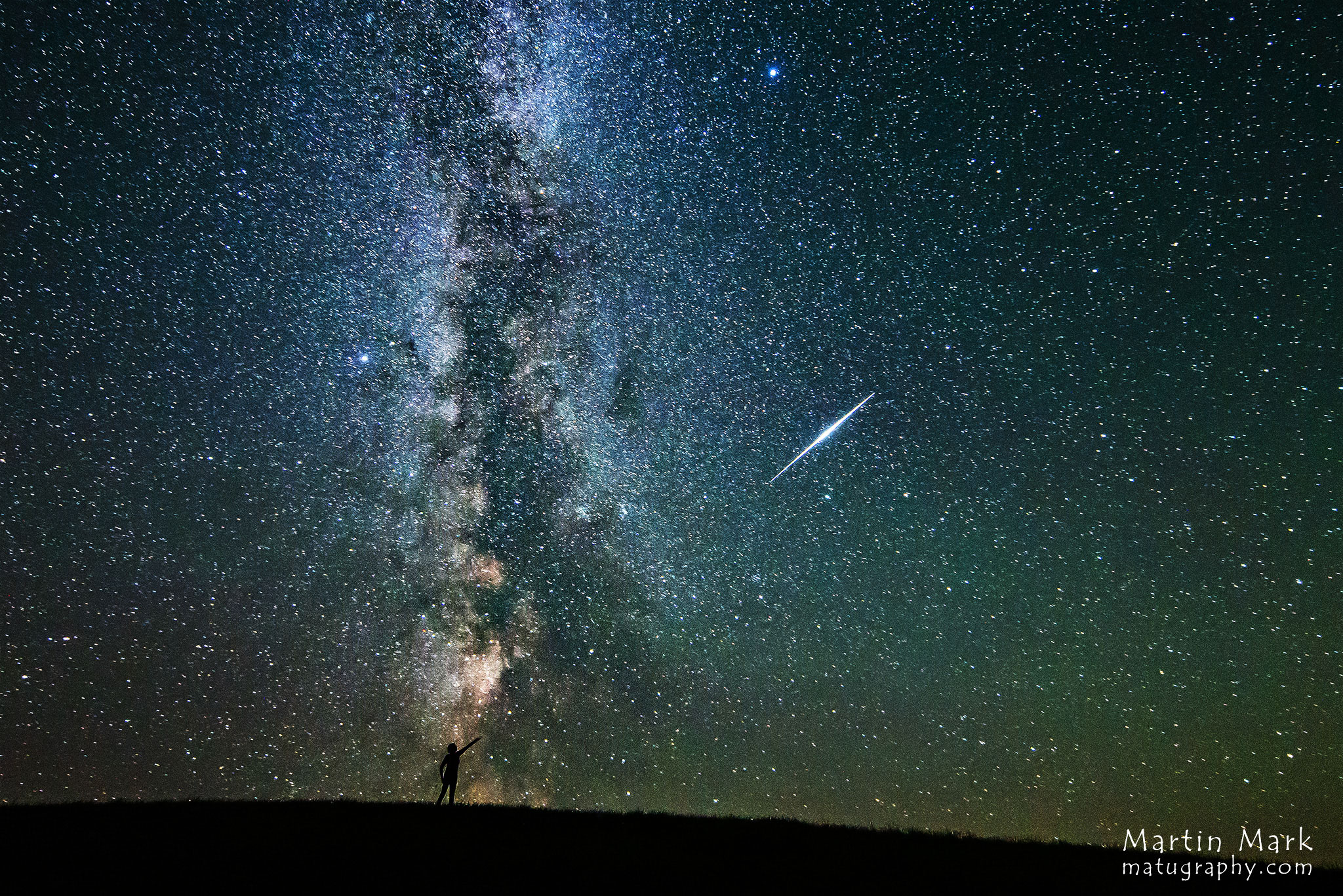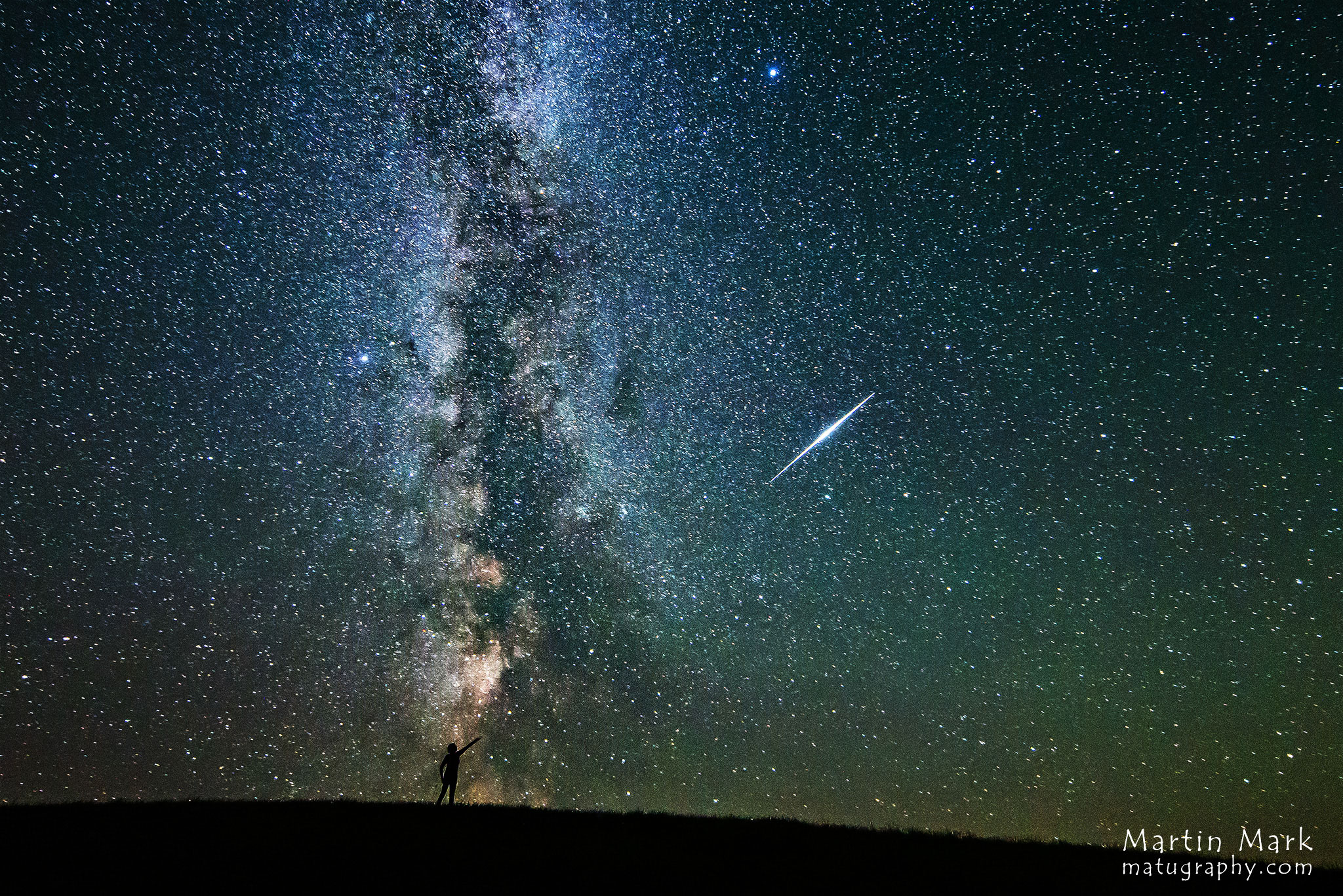
Is this person throwing a lightning bolt? No. Despite appearances, this person is actually pointing in the direction of a bright Iridium flare, a momentary reflection of sunlight off of a communications satellite in orbit around the Earth. As the Iridium satellite orbits, reflective antennas became aligned between the observer and the Sun to create a flash brighter than any star in the night sky. Iridium flares typically last several seconds, longer than most meteors. Also unlike meteors, the flares are symmetric and predictable. The featured flare involved Iridium satellite 15 and occurred over southern Estonia last week. In this well-planned image, a spectacular night sky appears in the background, complete with the central band of our Milky Way Galaxy running vertically up the image center. Retrospective: Today in APOD History
¿Esta persona está lanzando un rayo? No. A pesar de las apariencias, esta persona está apuntando hacia una brillante chispa de Iridium, un reflejo momentáneo de la luz solar en una nave espacial de comunicaciones en órbita alrededor de la Tierra. Mientras el satélite Iridium orbita, sus antenas reflectantes se alinean entre el observador y el Sol, creando un destello más brillante que cualquier estrella en el cielo nocturno. Las chispas de Iridium suelen durar varios segundos, más tiempo que la mayoría de los meteoros. A diferencia de los meteoros, estas chispas son simétricas y predecibles. La chispa mostrada en esta imagen involucró al satélite Iridium 15 y ocurrió sobre el sur de Estonia la semana pasada. En esta imagen bien planificada, un espectacular cielo nocturno aparece en el fondo, completo con la banda central de nuestra Galaxia de la Vía Láctea que se extiende verticalmente por el centro de la imagen.