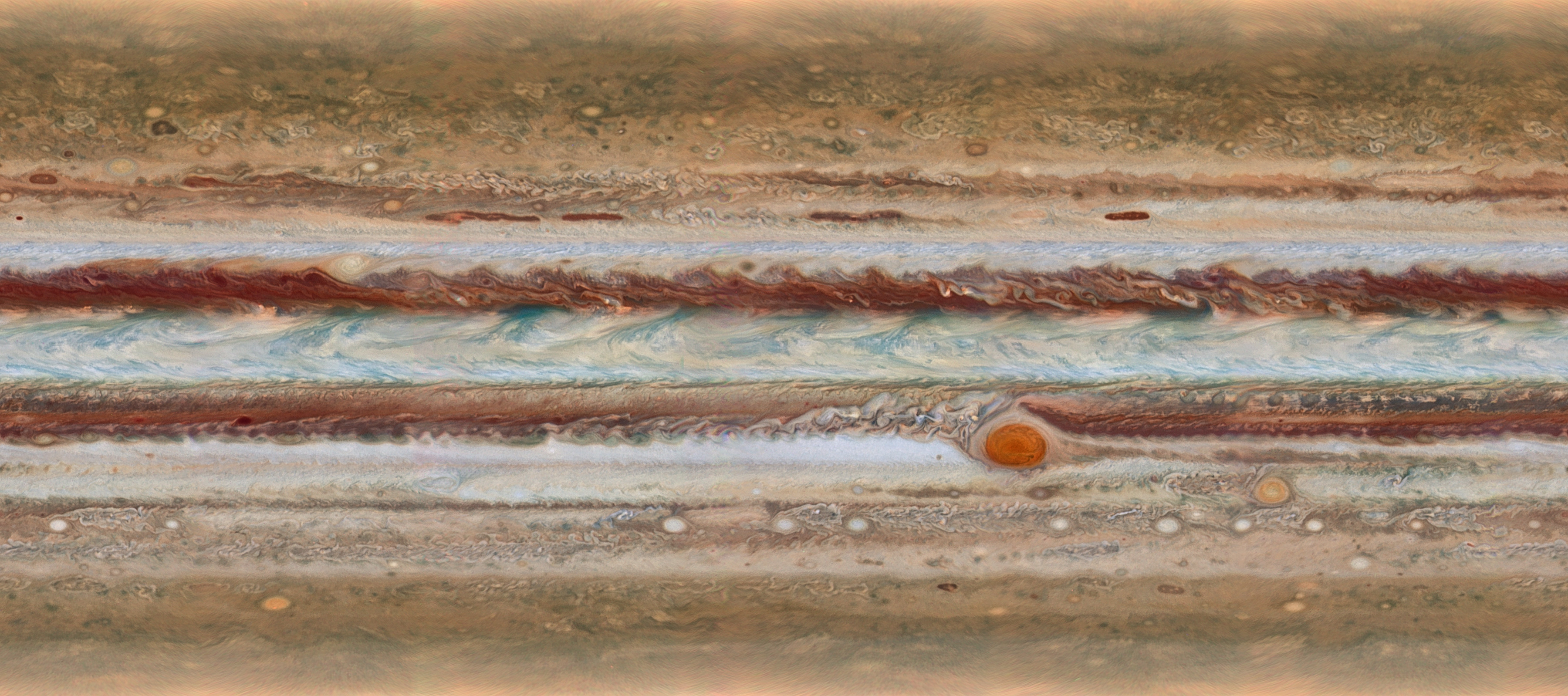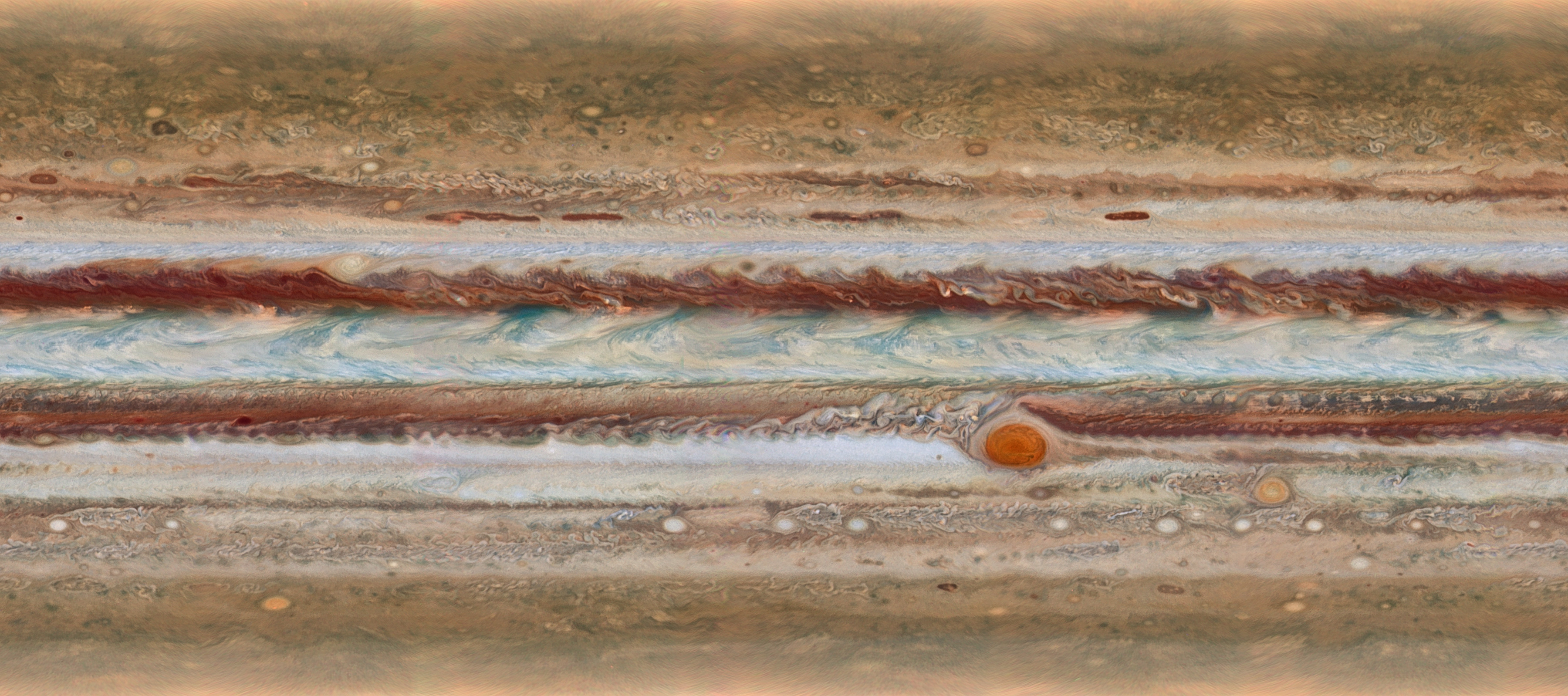
Two remarkable global maps of Jupiter's banded cloud tops can be compared by just sliding your cursor over this sharp projection (or follow this link) of image data from the Hubble Space Telescope. Both captured on January 19, during back-to-back 10 hour rotations of the ruling gas giant, the all-planet projections represent the first in a series of planned annual portraits by the Outer Planet Atmospheres Legacy program. Comparing the two highlights cloud movements and measures wind speeds in the planet's dynamic atmosphere. In fact, the Great Red Spot, the famous long-lived swirling storm boasting 300 mile per hour winds, is seen sporting a rotating, twisting filament. The images confirm that Great Red Spot is still shrinking, though still larger than planet Earth. Posing next to it (lower right) is Oval BA, also known as Red Spot Junior.
Dos mapas globales notables de las cimas nubosas de Júpiter pueden compararse simplemente desplazando el cursor sobre esta proyección nítida (o siguiendo este enlace) de los datos de imagen del Telescopio Espacial Hubble. Ambos capturados el 19 de enero, durante rotaciones consecutivas de 10 horas del gigante gaseoso dominante, las proyecciones de todo el planeta representan la primera de una serie planeada de retratos anuales del programa Legacy de Atmosferas de Planetas Exteriores. Comparar los dos destaca los movimientos de las nubes y mide las velocidades del viento en la dinámica atmósfera del planeta. De hecho, la Gran Mancha Roja, la famosa tormenta giratoria de larga duración que alardea de vientos a 480 km/h, se ve mostrando un filamento giratorio y retorcido. Las imágenes confirman que la Gran Mancha Roja sigue disminuyendo de tamaño, aunque aún sigue siendo más grande que el planeta Tierra. A su lado (inferior derecha) se encuentra Oval BA, también conocido como la Mancha Roja Junior.