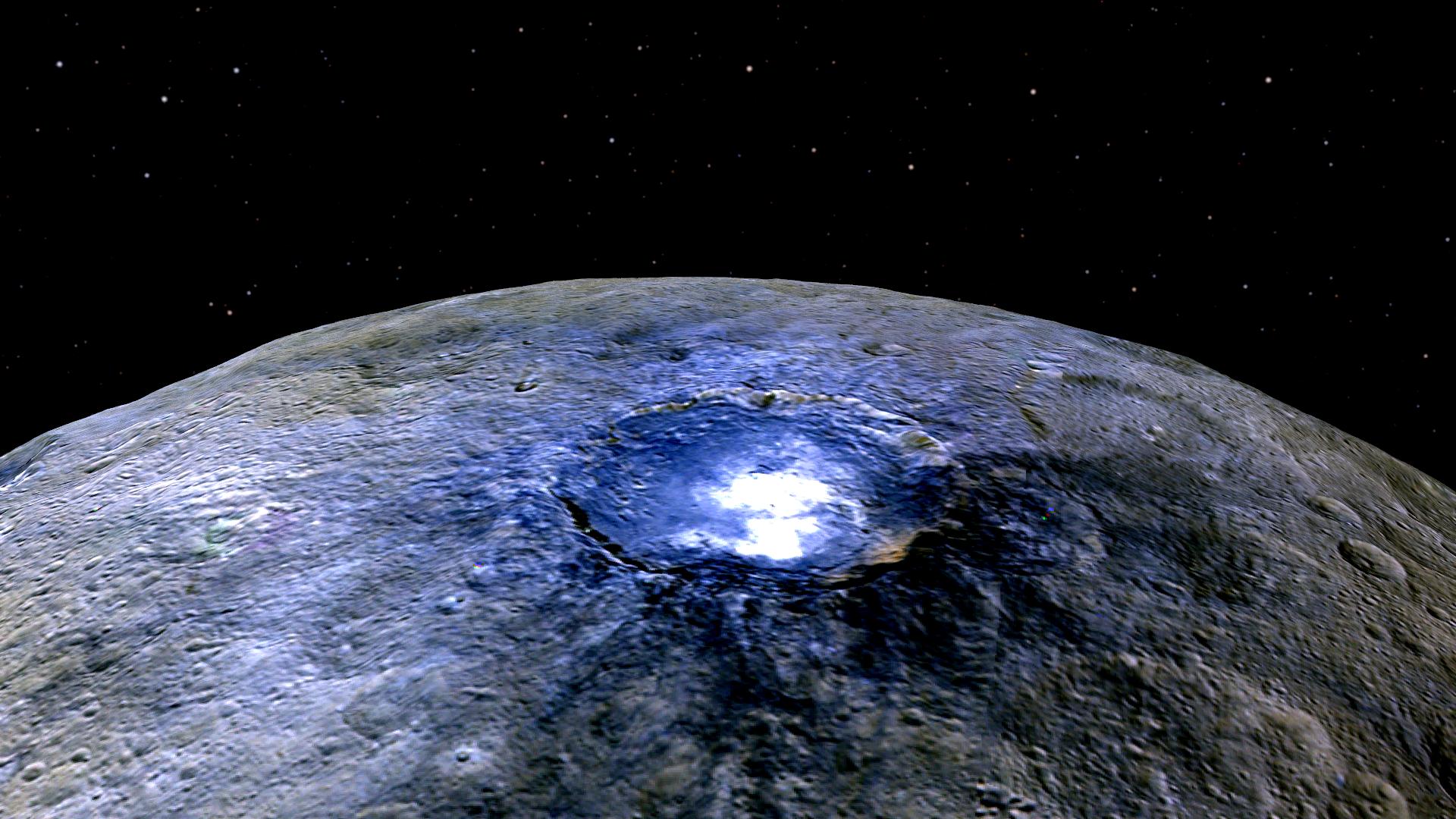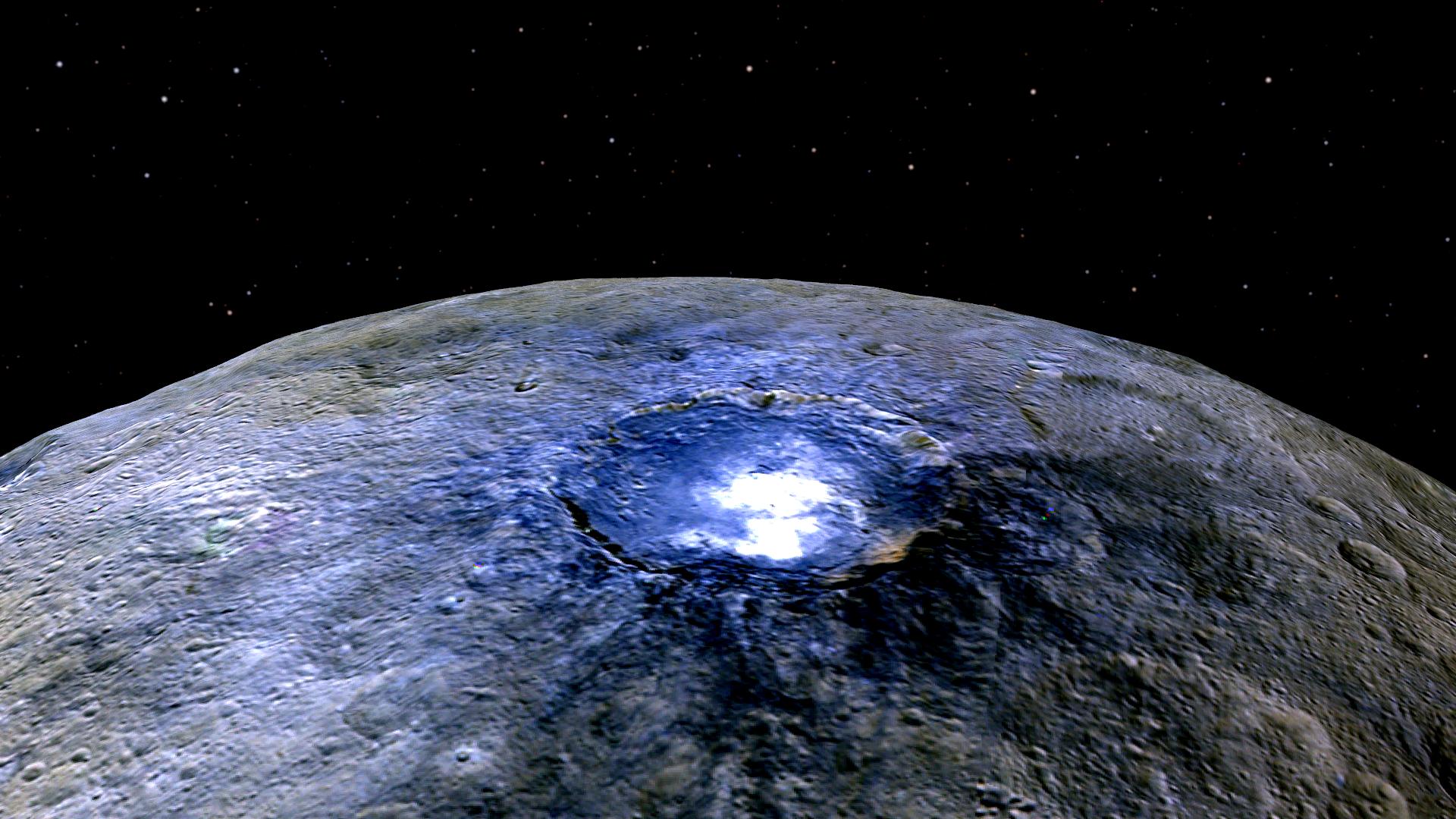
Dwarf planet Ceres is the largest object in the Solar System's main asteroid belt with a diameter of about 950 kilometers. Exploring Ceres from orbit since March, the Dawn spacecraft's camera has revealed about 130 or so mysterious bright spots, mostly associated with impact craters scattered around the small world's otherwise dark surface. The brightest one is near the center of the 90 kilometer wide Occator Crater, seen in this dramatic false color view combining near-infrared and visible light image data. A study now finds the bright spot's reflected light properties are probably most consistent with a type of magnesium sulfate called hexahydrite. Of course, magnesium sulfate is also known to Earth dwellers as epsom salt. Haze reported inside Occator also suggests the salty material could be left over as a mix of salt and water-ice sublimates on the surface. Since impacts would have exposed the material, Ceres' numerous and widely scattered bright spots may indicate the presence of a subsurface shell of ice-salt mix. In mid-December, Dawn will begin taking observations from its closest Ceres mapping orbit.
El planeta enano Ceres es el objeto más grande en el cinturón principal de asteroides del Sistema Solar, con un diámetro de aproximadamente 950 kilómetros. Desde marzo, al explorar Ceres desde órbita, la cámara del vehículo espacial Dawn ha revelado alrededor de 130 puntos brillantes misteriosos, principalmente asociados con cráteres de impacto distribuidos por la superficie oscura del pequeño mundo. El más brillante se encuentra cerca del centro del cráter Occator, de 90 kilómetros de ancho, visible en esta dramática vista en color falso que combina datos de imágenes en luz visible y en infrarrojo cercano. Un estudio reciente indica que las propiedades de la luz reflejada del punto más brillante son probablemente más consistentes con un tipo de sulfato de magnesio llamado hexahidrito. Por supuesto, el sulfato de magnesio también es conocido por los habitantes de la Tierra como sal de Epsom. La niebla reportada dentro de Occator sugiere que el material salino podría haber quedado como un residuo de una mezcla de sal y hielo de agua que sublima en la superficie. Dado que los impactos habrían expuesto este material, los numerosos y ampliamente distribuidos puntos brillantes de Ceres podrían indicar la presencia de una capa subsuperficial de mezcla de hielo y sal. A mediados de diciembre, Dawn comenzará a tomar observaciones desde su órbita de mapeo más cercana a Ceres.