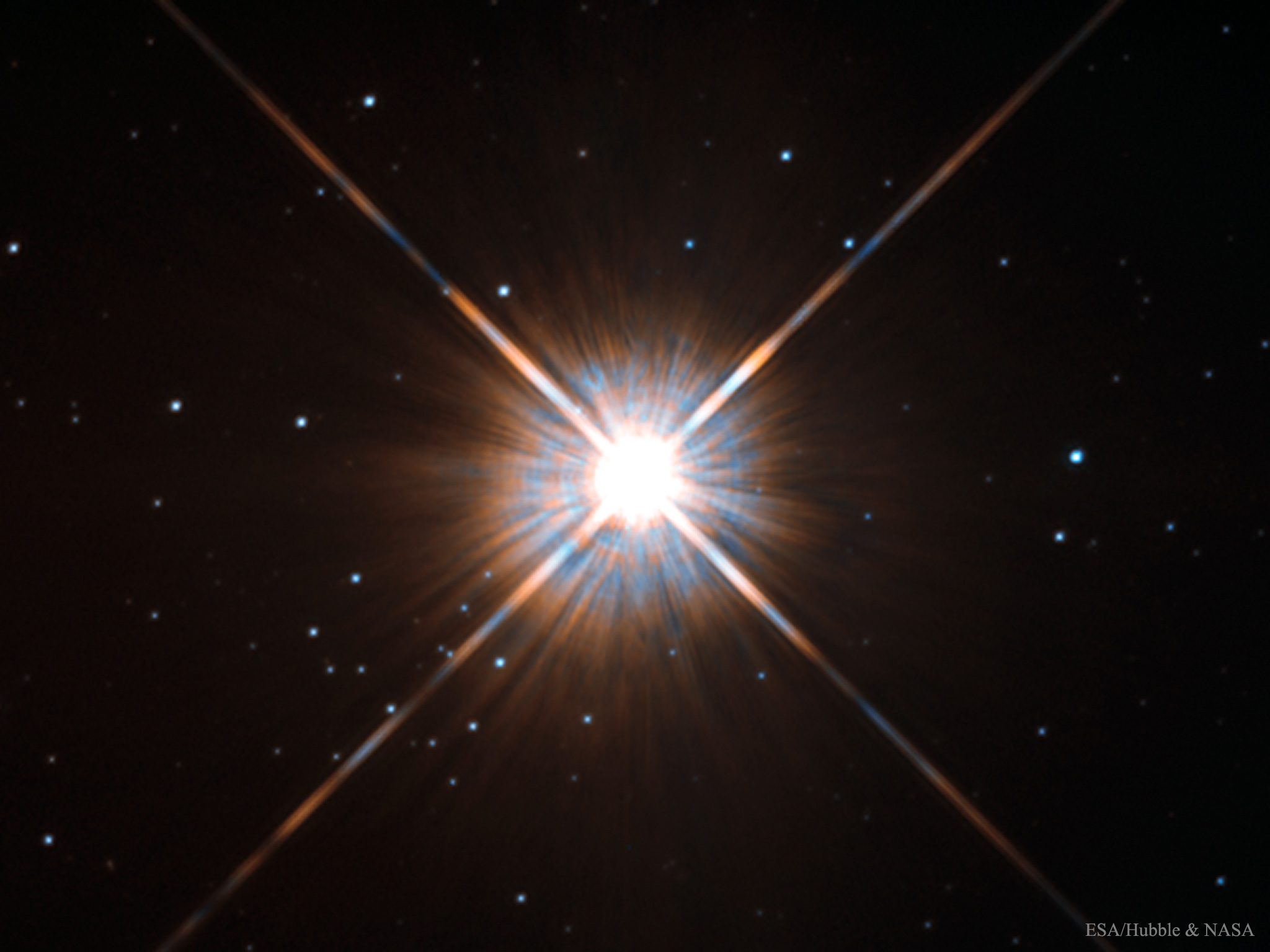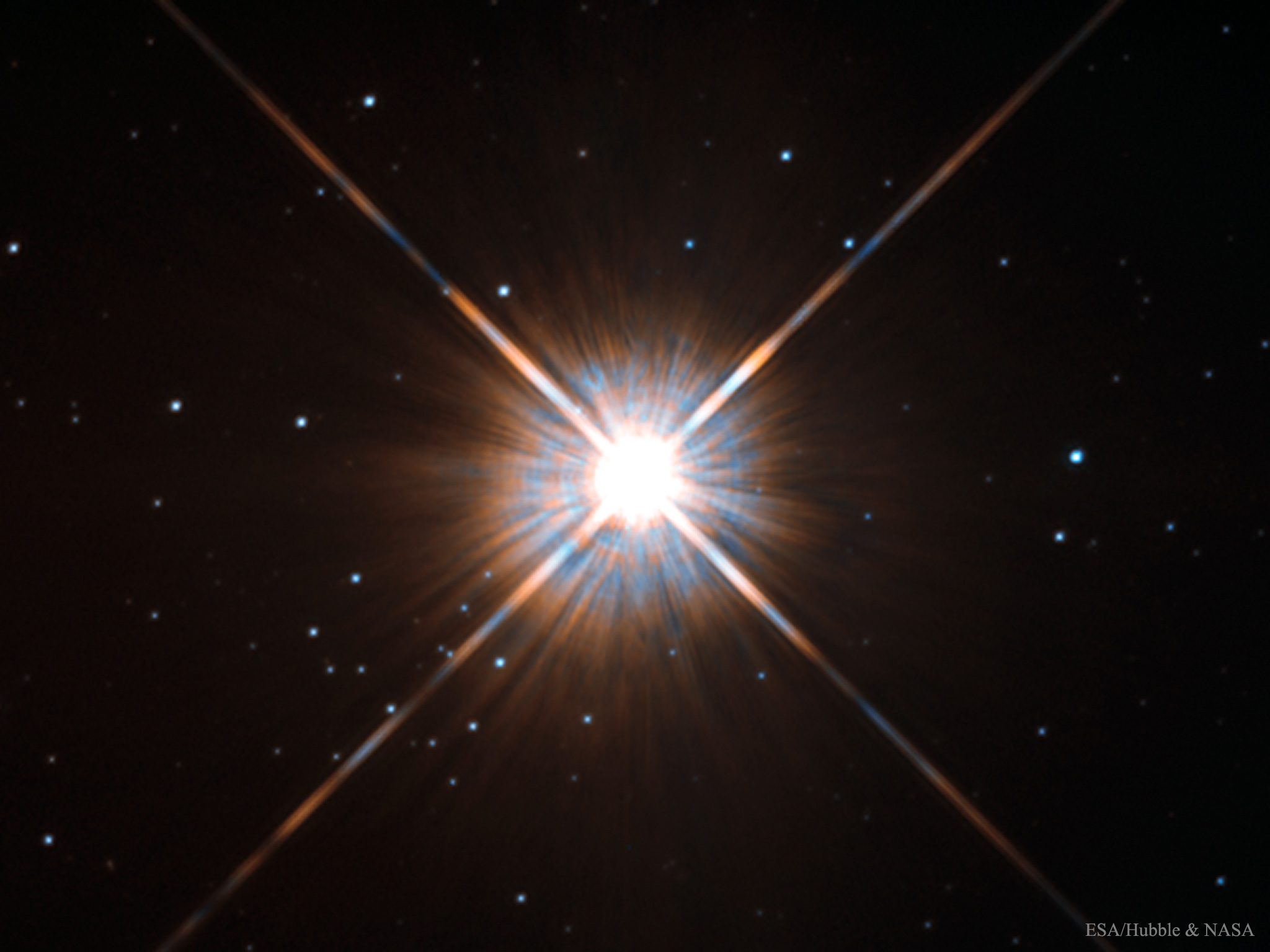
Does the closest star to our Sun have planets? No one is sure -- but you can now follow frequent updates of a new search that is taking place during the first few months of this year. The closest star, Proxima Centauri, is the nearest member of the Alpha Centauri star system. Light takes only 4.24 years to reach us from Proxima Centauri. This small red star, captured in the center of the featured image by the Hubble Space Telescope, is so faint that it was only discovered in 1915 and is only visible through a telescope. Telescope-created X-shaped diffraction spikes surround Proxima Centauri, while several stars further out in our Milky Way Galaxy are visible in the background. The brightest star in the Alpha Centauri system is quite similar to our Sun, has been known as long as recorded history, and is the third brightest star in the night sky. The Alpha Centauri system is primarily visible from Earth's Southern Hemisphere. Starting last week, the European Southern Observatory's Pale Red Dot project began investigating slight changes in Proxima Centauri to see if they result from a planet -- possibly an Earth-sized planet. Although unlikely, were a modern civilization found living on a planet orbiting Proxima Centauri, its proximity makes it a reasonable possibility that humanity could communicate with them. #PaleRedDot : Follow the search for planets around Proxima Centauri.
¿Tiene planetas la estrella más cercana a nuestro Sol? Nadie lo sabe con certeza — pero ahora puedes seguir las actualizaciones frecuentes de una nueva búsqueda que se está llevando a cabo durante los primeros meses de este año. La estrella más cercana, Proxima Centauri, es el miembro más cercano del sistema estelar Alpha Centauri. La luz tarda solo 4,24 años en llegar hasta nosotros desde Proxima Centauri. Esta pequeña estrella roja, capturada en el centro de la imagen destacada por el Telescopio Espacial Hubble, es tan tenue que solo fue descubierta en 1915 y solo es visible a través de un telescopio. Las formas en forma de cruz X creadas por el telescopio, llamadas difracción, rodean a Proxima Centauri, mientras que varias estrellas más lejanas en nuestra Galaxia de la Vía Láctea son visibles en el fondo. La estrella más brillante del sistema Alpha Centauri es muy similar a nuestro Sol, ha sido conocida desde la historia registrada y es la tercera estrella más brillante del cielo nocturno. El sistema Alpha Centauri es principalmente visible desde el Hemisferio Sur de la Tierra. Comenzando la semana pasada, el Proyecto Pale Red Dot del Observatorio Europeo del Sur comenzó a investigar pequeños cambios en Proxima Centauri para ver si resultan de un planeta — posiblemente un planeta del tamaño de la Tierra. Aunque es poco probable, si se encontrara una civilización moderna viviendo en un planeta que orbita a Proxima Centauri, su proximidad hace que sea una posibilidad razonable que la humanidad pueda comunicarse con ellos.