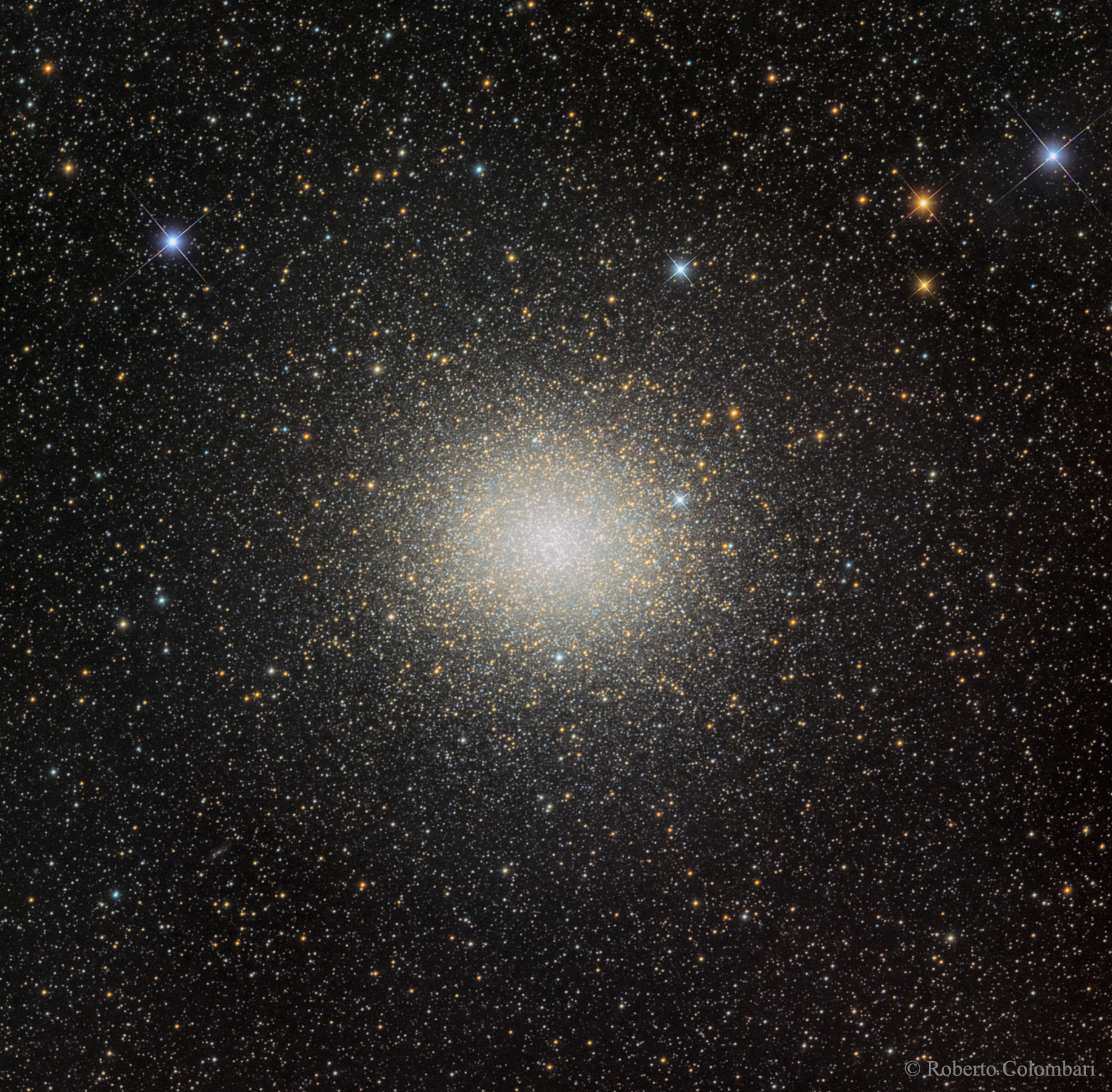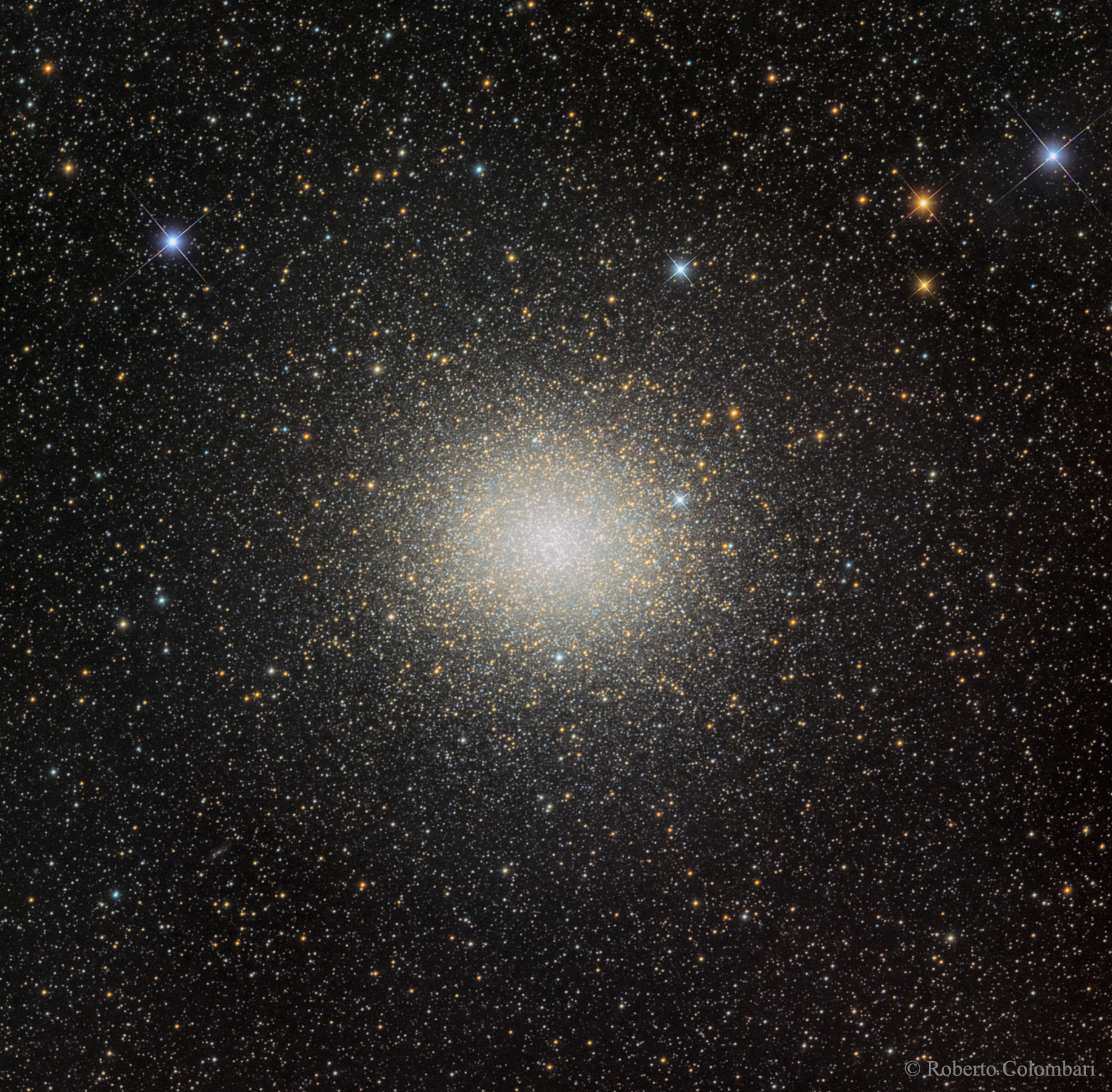
This huge ball of stars predates our Sun. Long before humankind evolved, before dinosaurs roamed, and even before our Earth existed, ancient globs of stars condensed and orbited a young Milky Way Galaxy. Of the 200 or so globular clusters that survive today, Omega Centauri is the largest, containing over ten million stars. Omega Centauri is also the brightest globular cluster, at apparent visual magnitude 3.9 it is visible to southern observers with the unaided eye. Cataloged as NGC 5139, Omega Centauri is about 18,000 light-years away and 150 light-years in diameter. Unlike many other globular clusters, the stars in Omega Centauri show several different ages and trace chemical abundances, indicating that the globular star cluster has a complex history over its 12 billion year age.
Esta enorme bola de estrellas es anterior al Sol. Mucho antes de que la humanidad evolucionara, antes de que los dinosaurios recorrieran la Tierra y incluso antes de que existiera nuestro planeta, globos antiguos de estrellas se condensaron y orbitaron una joven Galaxia Vía Láctea. De los 200 o así cúmulos globulares que sobreviven hoy en día, Omega Centauri es el más grande, conteniendo más de diez millones de estrellas. Omega Centauri también es el cúmulo globular más brillante, con magnitud visual aparente de 3,9, es visible para los observadores del sur con el ojo desnudo. Catalogado como NGC 5139, Omega Centauri está a unos 18.000 años luz de distancia y tiene un diámetro de 150 años luz. A diferencia de muchos otros cúmulos globulares, las estrellas en Omega Centauri muestran varias edades diferentes y abundancias químicas distintas, lo que indica que el cúmulo estelar globular tiene una historia compleja durante su edad de 12.000 millones de años.