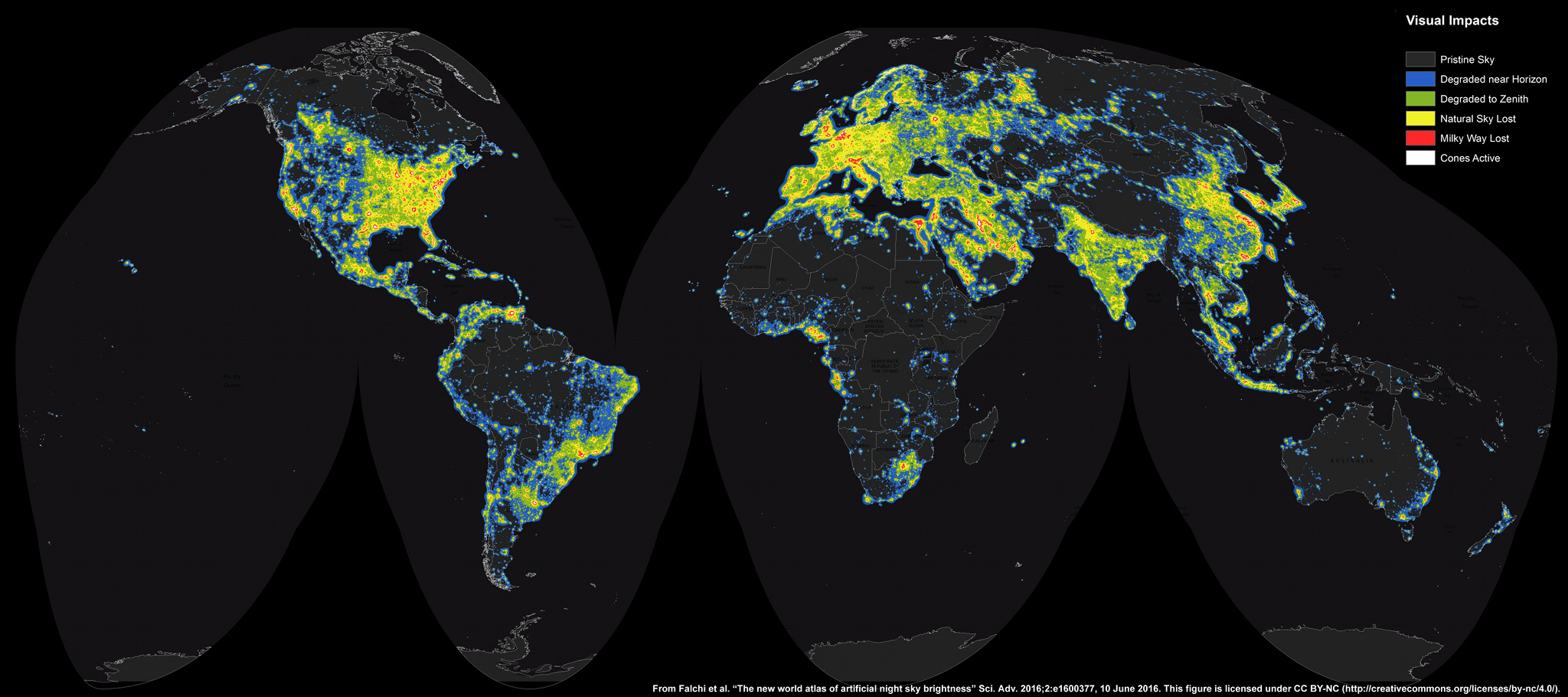
How far are you from a naturally dark night sky? In increasing steps, this world map (medium | large) shows the effect of artificial night sky brightness on the visual appearance of the night sky. The brightness was modeled using high resolution satellite data and fit to thousands of night sky brightness measurements in recent work. Color-coded levels are compared to the natural sky brightness level for your location. For example, artificial sky brightness levels in yellow alter the natural appearance of the night sky. In red they hide the Milky Way in an artificial luminous fog. The results indicate that the historically common appearance of our galaxy at night is now lost for more than one-third of humanity. That includes 60% of Europeans and almost 80% of North Americans, along with inhabitants of other densely populated, light-polluted regions of planet Earth.
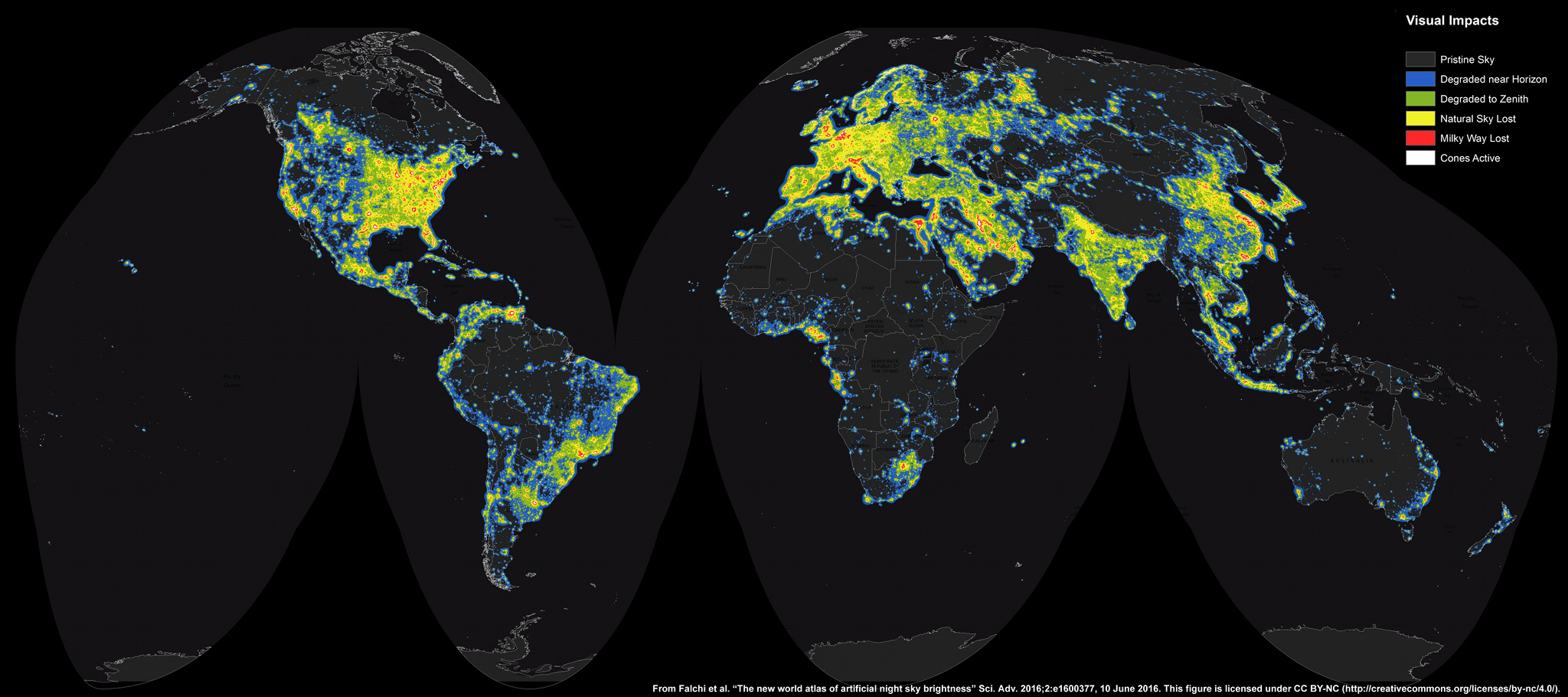
¿A qué distancia estás de un cielo nocturno naturalmente oscuro? En pasos incrementales, este mapa mundial (mediano | grande) muestra el efecto del brillo artificial del cielo nocturno en la apariencia visual del cielo. El brillo fue modelado utilizando datos satelitales de alta resolución y ajustado a miles de mediciones recientes del brillo del cielo nocturno. Los niveles de color se comparan con el nivel natural de brillo del cielo en tu ubicación. Por ejemplo, los niveles de brillo artificial en amarillo alteran la apariencia natural del cielo nocturno. En rojo, ocultan la Vía Láctea en una niebla luminosa artificial. Los resultados indican que la apariencia históricamente común de nuestra galaxia durante la noche ahora está perdida para más de un tercio de la humanidad. Eso incluye al 60% de los europeos y casi el 80% de los norteamericanos, junto con los habitantes de otras regiones densamente pobladas y contaminadas por la luz de la Tierra.