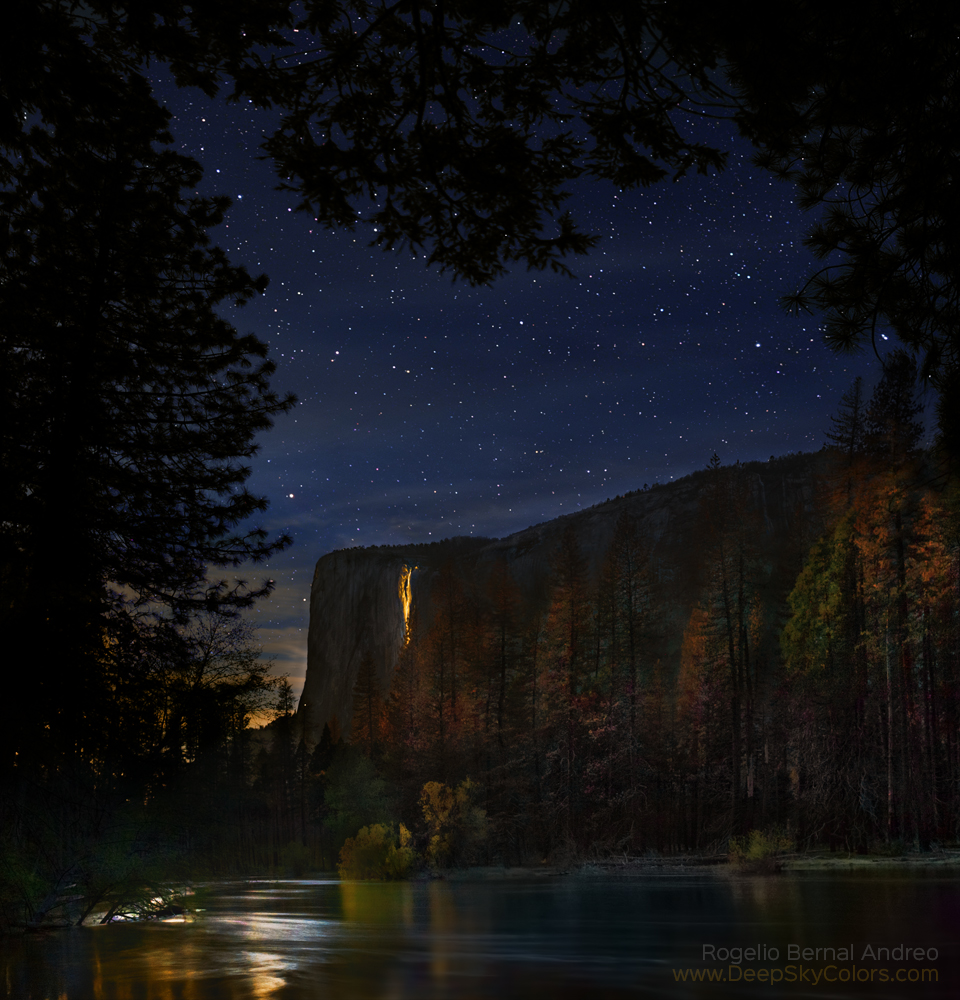
On certain dates in February, an elusive firefall can be spotted at sunset in Yosemite National Park, when the weather cooperates and the direction to the setting Sun is just right. Often photographed from vantage points below, at the right moment the park's seasonal Horsetail Fall is isolated in the shadows of the steep walls of El Capitan. Then, still illuminated with rays of sunlight reflected by the angled rockface directly behind the flow, the waterfall briefly takes on a dramatic, fiery appearance. The Horsetail firefall is more rarely photographed at moonset under a starry night sky, though. Even more elusive by moonlight, the firefall effect can also be seen when skies are clear and a bright Moon sets at the right direction along the western horizon. Skies were clear and stars were shining for this well-planned photograph of the Horsetail firefall lit by a gibbous Moon setting in the early morning hours of May 9.
En ciertas fechas de febrero, se puede observar un misterioso firefall al atardecer en el Parque Nacional de Yosemite, siempre que el clima lo permita y la dirección del Sol poniente sea adecuada. A menudo se fotografía desde puntos de vista situados más abajo, y en el momento adecuado, el cañón estacional de Horsetail Fall se encuentra aislado en las sombras de las paredes empinadas de El Capitan. Entonces, aún iluminado por los rayos de luz solar reflejados por la superficie rocosa inclinada directamente detrás del cañón, el agua toma brevemente una apariencia dramática y llameante. El firefall de Horsetail también se fotografía con menos frecuencia al anochecer bajo un cielo estrellado. Incluso más misterioso bajo la luz de la luna, el efecto firefall también puede verse cuando el cielo está despejado y una luna brillante se pone en la dirección correcta en el horizonte occidental. El cielo estaba despejado y las estrellas brillaban para esta fotografía bien planificada del firefall de Horsetail iluminado por una luna gibosa que se ponía durante las primeras horas de la mañana del 9 de mayo.