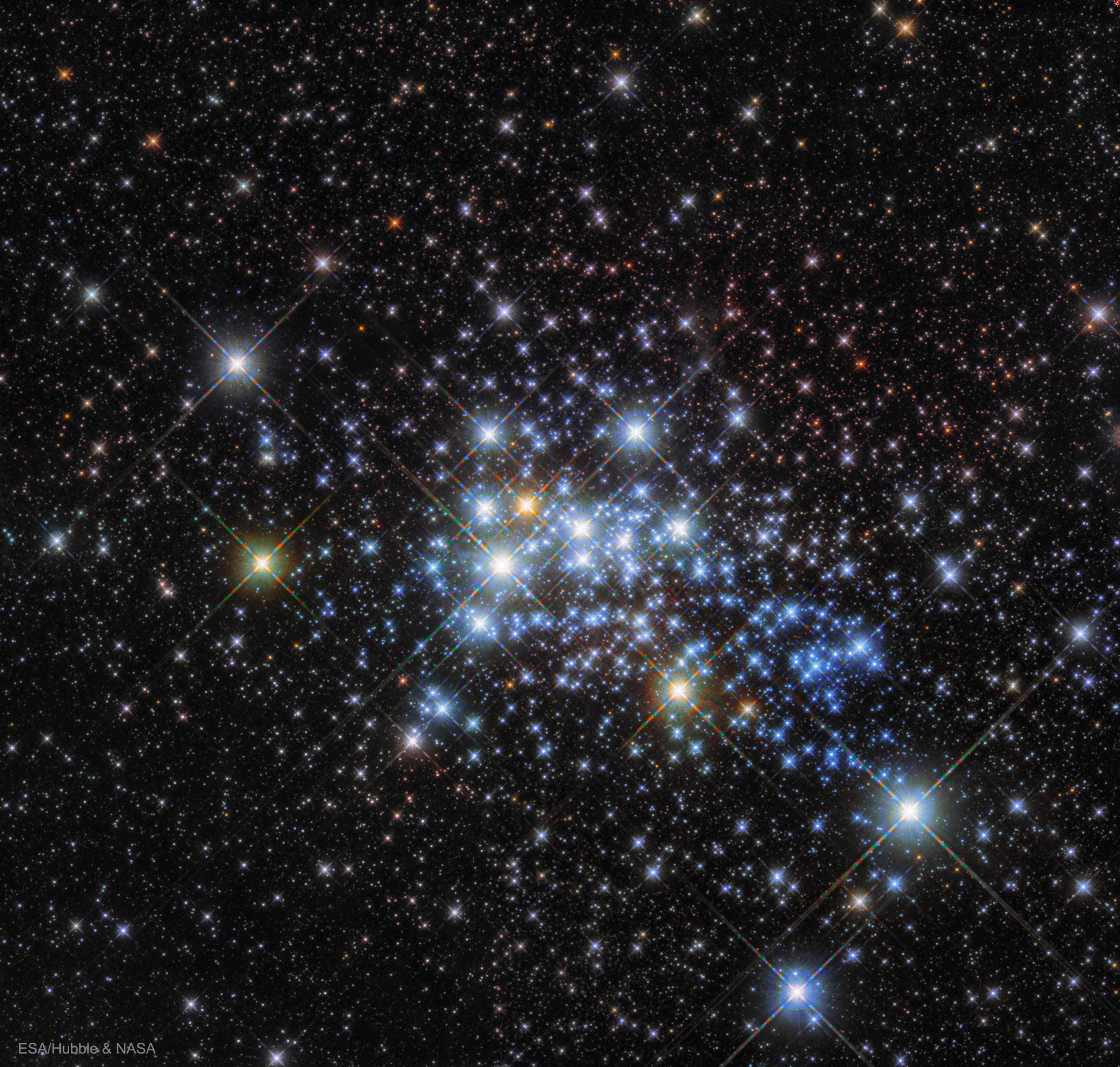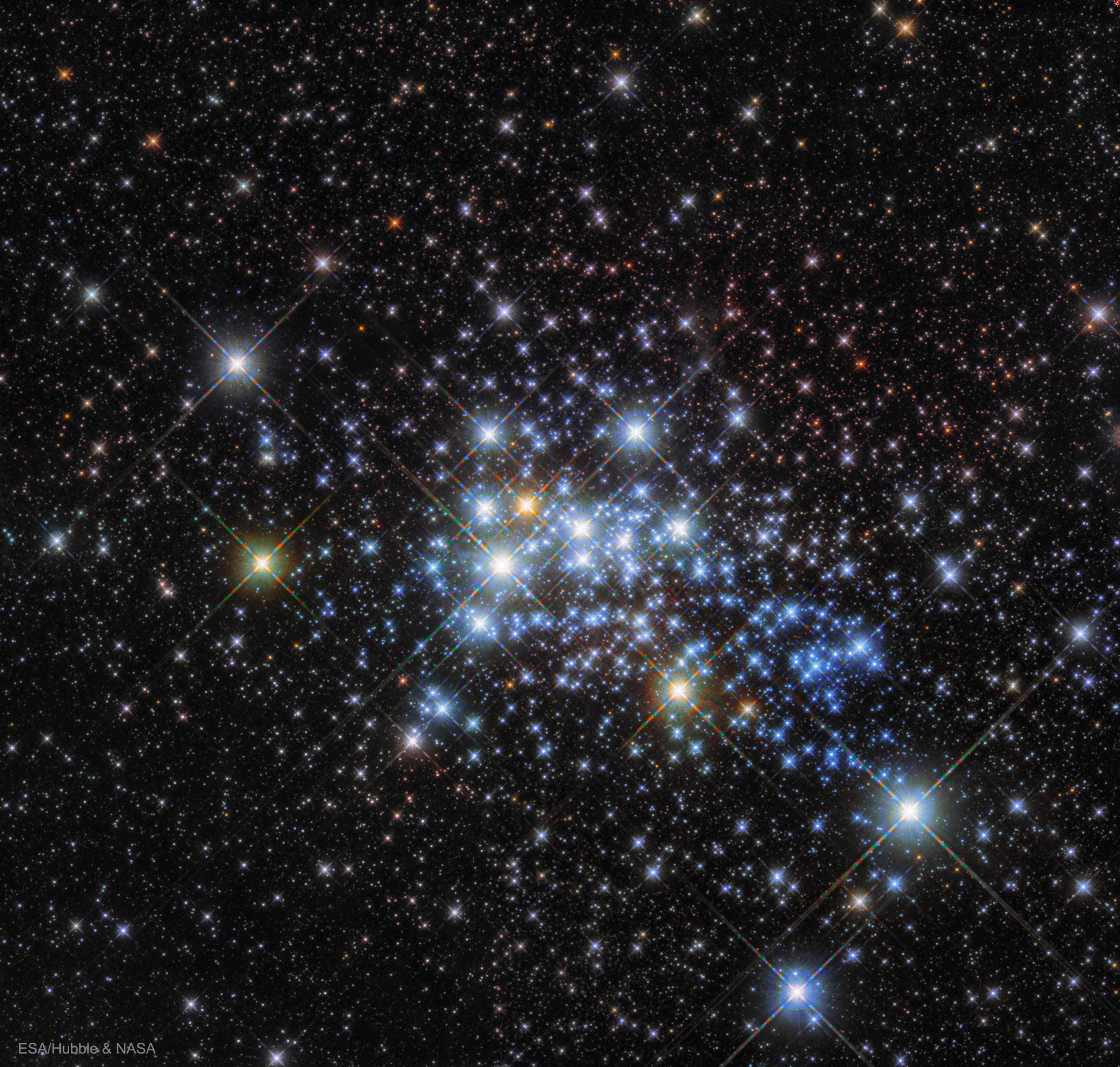
Star cluster Westerlund 1 is home to some of the largest and most massive stars known. It is headlined by the star Westerlund 1-26, a red supergiant star so big that if placed in the center of our Solar System, it would extend out past the orbit of Jupiter. Additionally, the young star cluster is home to 3 other red supergiants, 6 yellow hypergiant stars, 24 Wolf-Rayet stars, and several even-more unusual stars that continue to be studied. Westerlund 1 is relatively close-by for a star cluster at a distance of 15,000 light years, giving astronomers a good laboratory to study the development of massive stars. The featured image of Westerlund 1 was taken by the Hubble Space Telescope toward the southern constellation of the Altar (Ara). Although presently classified as a "super" open cluster, Westerlund 1 may evolve into a low mass globular cluster over the next billion years. Follow APOD on: Facebook, Google Plus, Instagram, or Twitter
El cúmulo estelar Westerlund 1 alberga algunas de las estrellas más grandes y masivas conocidas. Destaca la estrella Westerlund 1-26, una supergigante roja tan grande que, si se colocara en el centro de nuestro Sistema Solar, se extendería más allá de la órbita de Júpiter. Además, el joven cúmulo estelar alberga otras tres supergigantes rojas, seis hiperenanas amarillas, 24 estrellas Wolf-Rayet y varias estrellas aún más inusuales que continúan siendo estudiadas. Westerlund 1 está relativamente cerca para un cúmulo estelar, a una distancia de 15 000 años luz, lo que brinda a los astrónomos un buen laboratorio para estudiar el desarrollo de estrellas masivas. La imagen destacada de Westerlund 1 fue tomada por el Telescopio Espacial Hubble hacia la constelación austral del Altar (Ara). Aunque actualmente se clasifica como un cúmulo abierto “super”, Westerlund 1 podría evolucionar en un cúmulo globular de baja masa en los próximos mil millones de años.