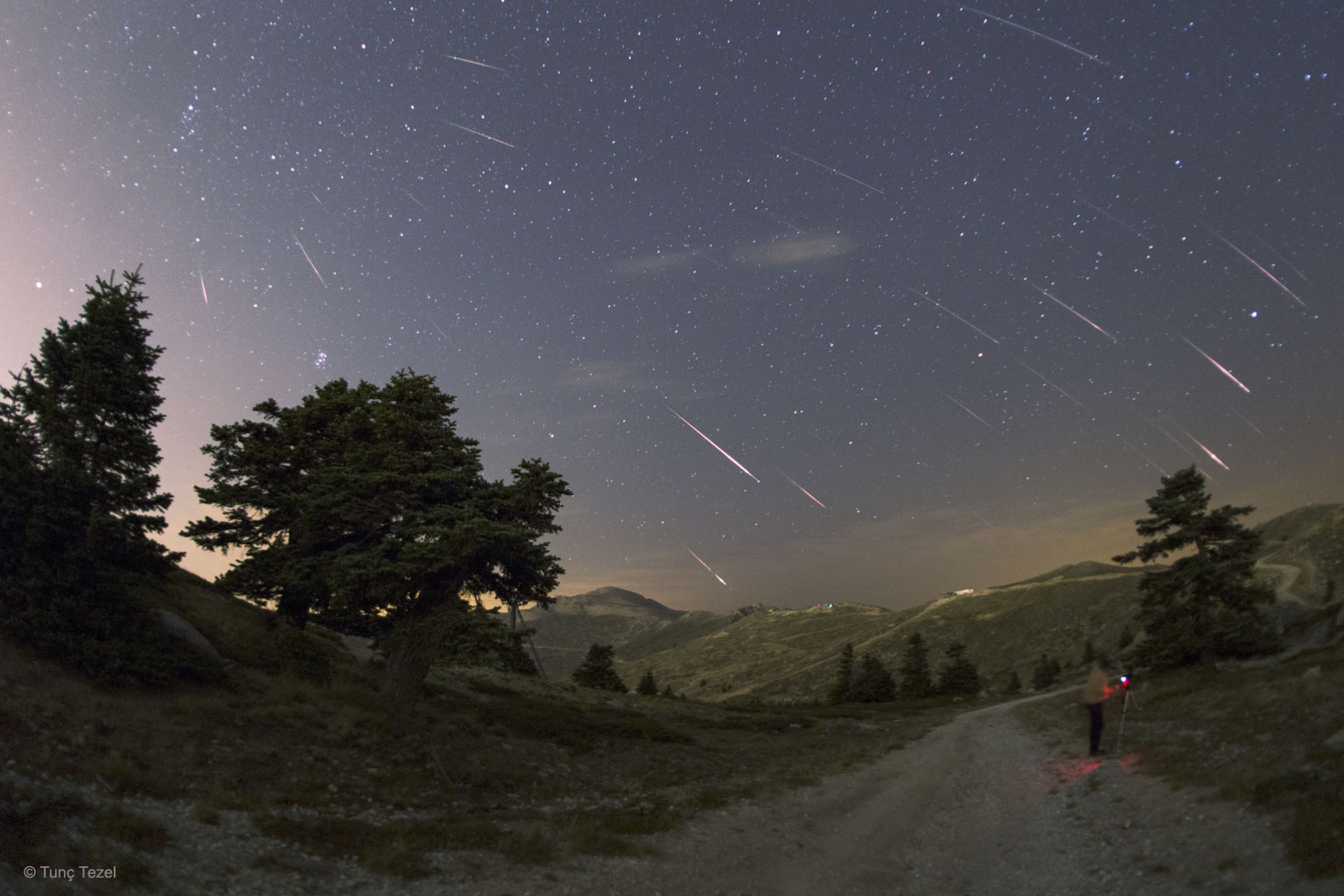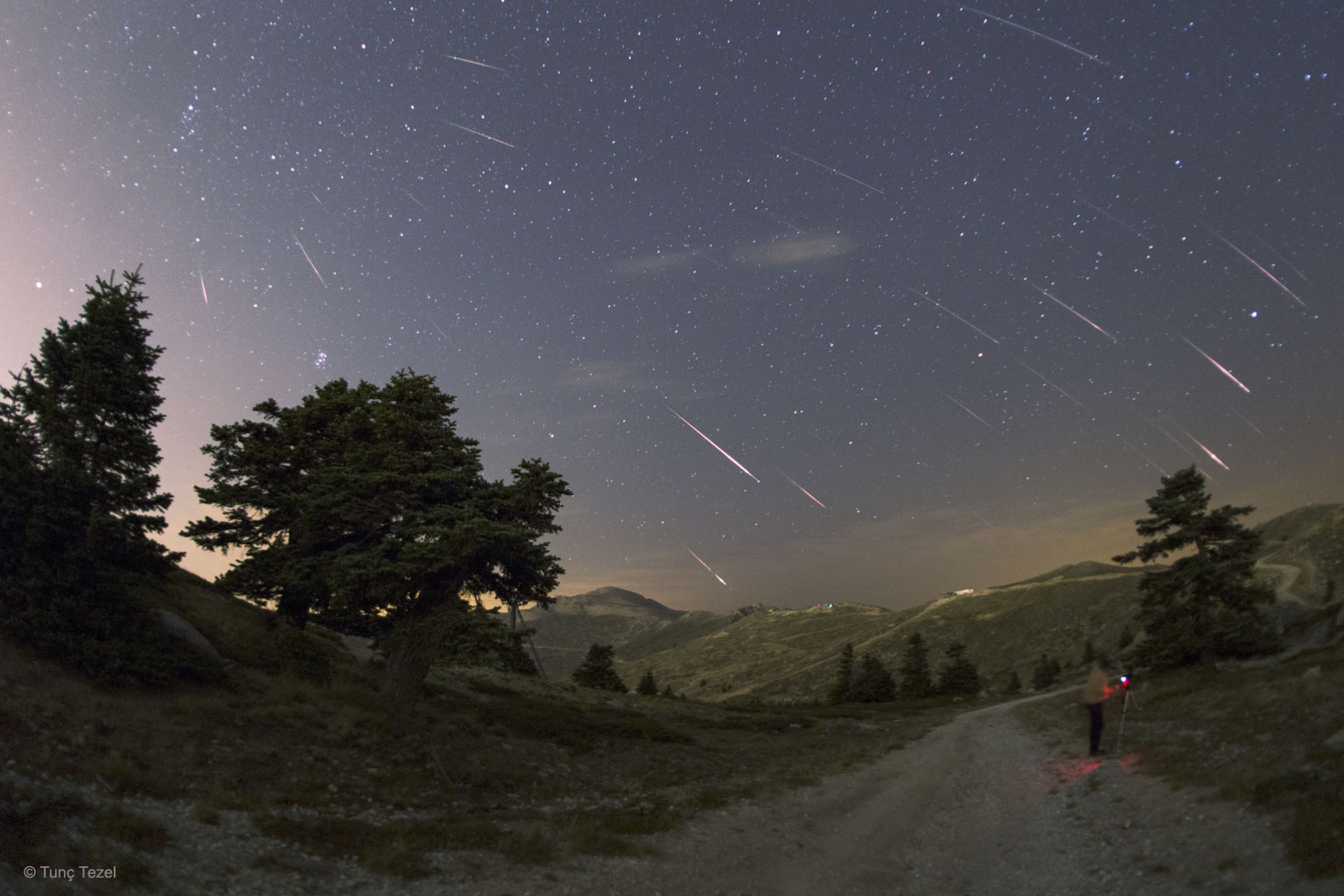
The Perseid Meteor Shower, usually the best meteor shower of the year, will peak late next week. A person watching a clear sky from a dark location might see a bright meteor every minute. These meteors are actually specks of rock that have broken off Comet Swift-Tuttle and continued to orbit the Sun until they vaporize in Earth's atmosphere. The featured composite image shows a outburst of Perseids as they appeared over Turkey during last year's meteor shower. Enough meteors were captured to trace the shower's radiant back to the constellation of Perseus on the far left. The tail-end of the Perseids will still be going during the total solar eclipse on August 21, creating a rare opportunity for some lucky astrophotographers to image a Perseid meteor during the day. Memorable APOD: Meteor Showers
La lluvia de meteoros de Perseo, generalmente la mejor lluvia de meteoros del año, alcanzará su máximo a finales de la próxima semana. Una persona observando un cielo despejado desde un lugar oscuro podría ver un meteoros brillante cada minuto. Estos meteoros son en realidad fragmentos de roca que se han desprendido del cometa Swift-Tuttle y han continuado orbitando al Sol hasta que se vaporizan en la atmósfera terrestre. La imagen compuesta mostrada captura una erupción de meteoros de Perseo tal como aparecieron sobre Turquía durante la lluvia de meteoros del año pasado. Se capturaron suficientes meteoros como para trazar el radiante de la lluvia de meteoros hasta la constelación de Perseo, ubicada en el extremo izquierdo. La cola de los meteoros de Perseo aún estará activa durante el eclipse total de Sol del 21 de agosto, creando una oportunidad rara para algunos fotógrafos astronómicos afortunados de capturar un meteoros de Perseo durante el día.