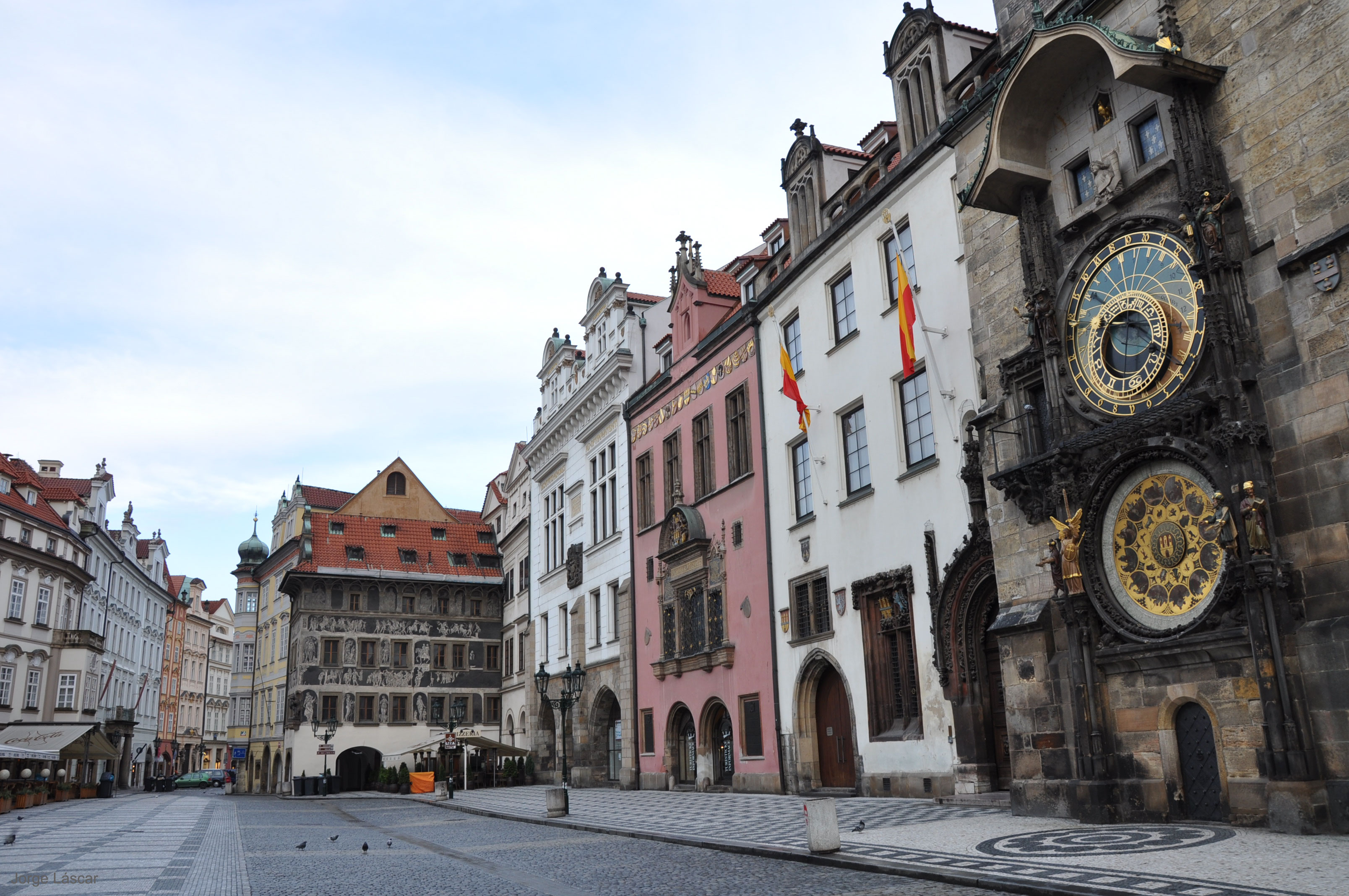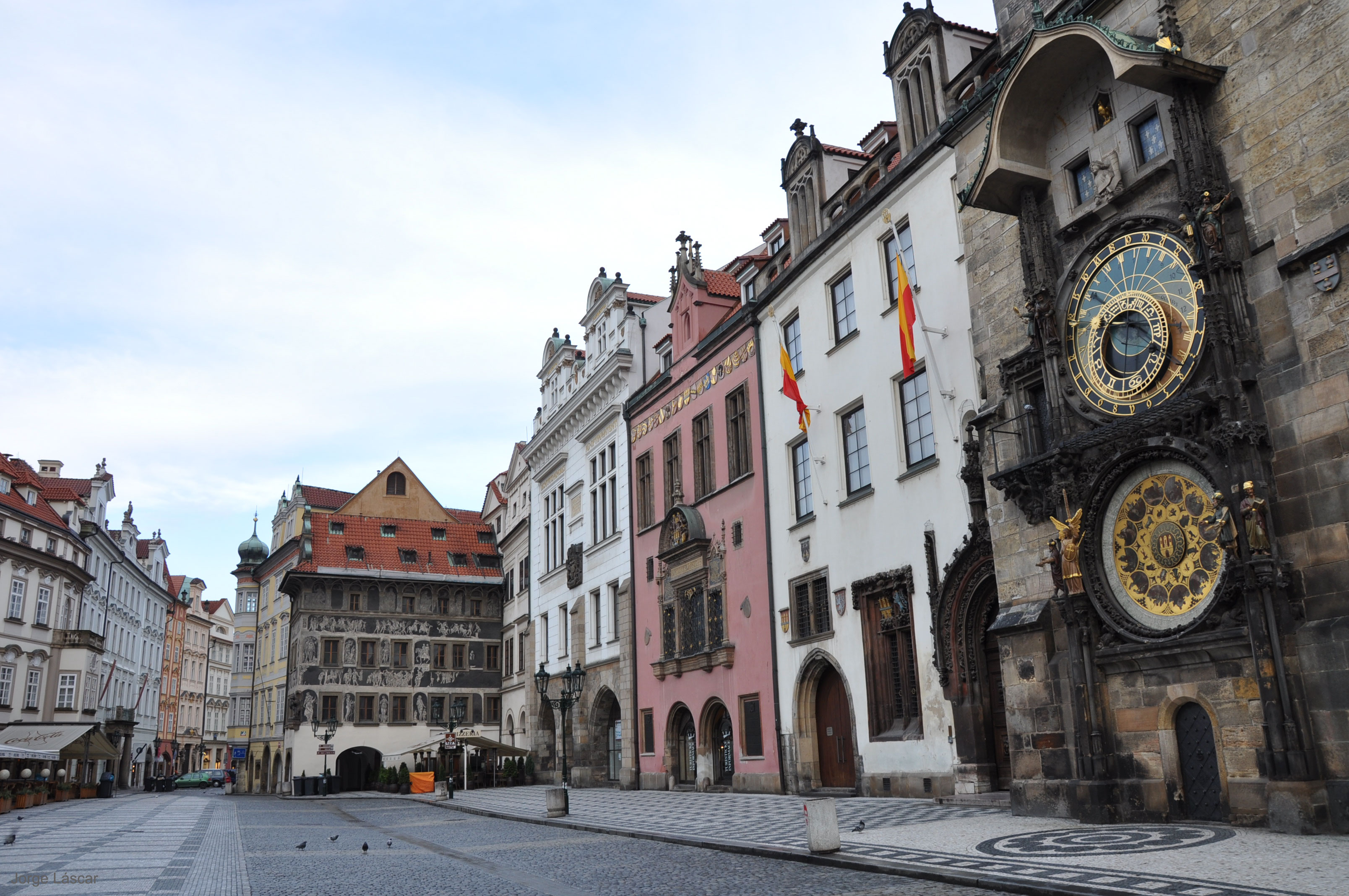
In the center of Prague there's a clock the size of a building. During the day, crowds gather to watch the show when it chimes in a new hour. The Prague Astronomical Clock's face is impressively complex, giving not only the expected time with respect to the Sun (solar time), but the time relative to the stars (sidereal time), the times of sunrise and sunset at several latitudes including the equator, the phase of the Moon, and much more. The clock began operation in 1410, and even though much of its inner workings have been modernized several times, original parts remain. Below the clock is a nearly-equal sized solar calendar that rotates only once a year. Pictured, the Prague Astronomical Clock was photographed alone during an early morning in 2009 March. The Prague Astronomical Clock and the Old Town Tower behind it are currently being renovated once again, with the clock expected to be restarted in 2018 June.
En el centro de Praga hay un reloj del tamaño de un edificio. Durante el día, las multitudes se reúnen para ver la representación cuando suena la hora. La cara del Reloj Astronómico de Praga es notablemente compleja, mostrando no solo la hora esperada con respecto al Sol (hora solar), sino también la hora relativa a las estrellas (hora sidérea), las horas de la salida y puesta del Sol en varias latitudes incluyendo el ecuador, la fase de la Luna y mucho más. El reloj comenzó a funcionar en 1410, y aunque gran parte de su funcionamiento interno ha sido modernizado en varias ocasiones, siguen existiendo piezas originales. Debajo del reloj hay un calendario solar casi del mismo tamaño que gira una vez al año. En la imagen, el Reloj Astronómico de Praga fue fotografiado solo durante una mañana temprana en marzo de 2009. El Reloj Astronómico de Praga y la Torre del Barrio Viejo detrás de él actualmente están siendo restaurados nuevamente, con la expectativa de que el reloj se reactive en junio de 2018.