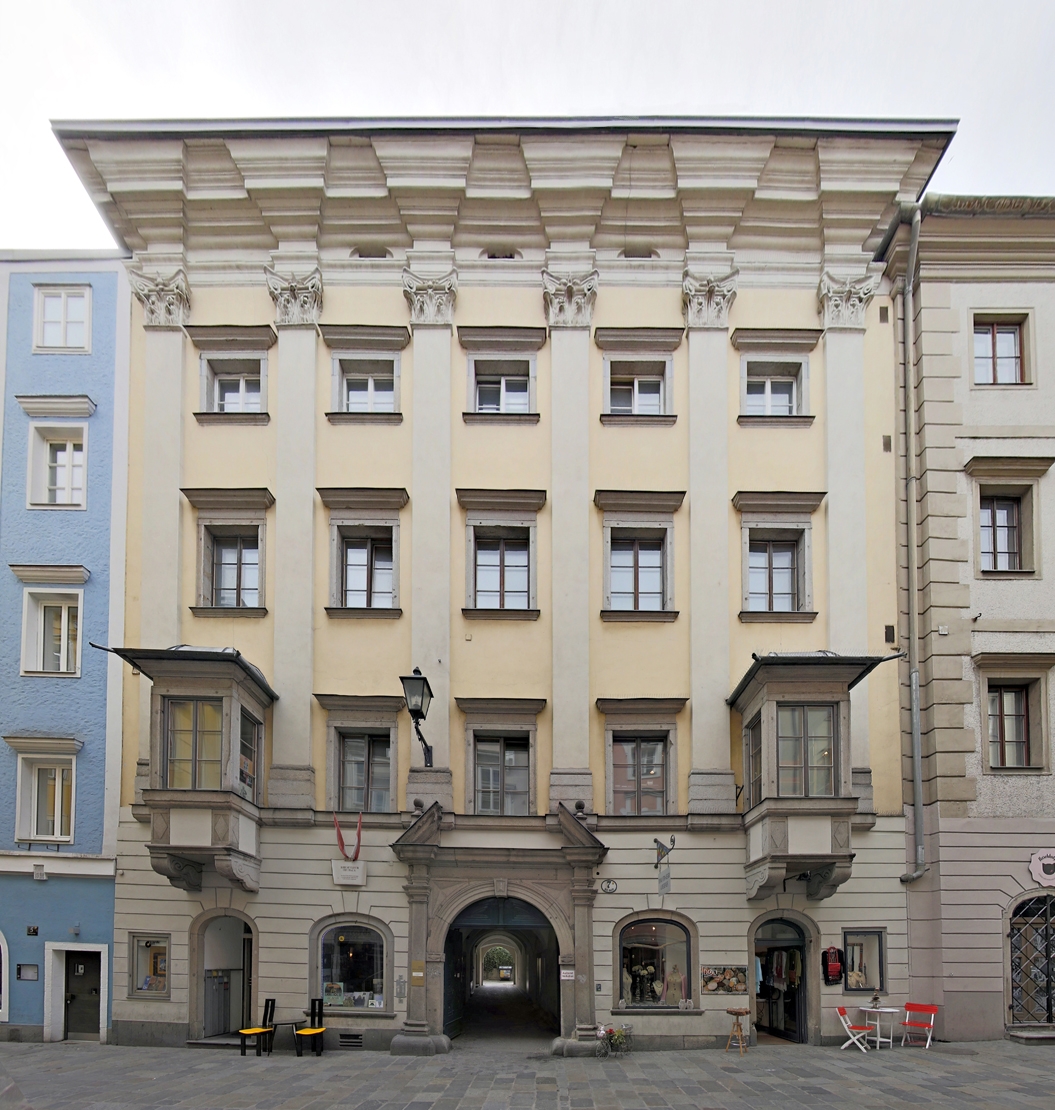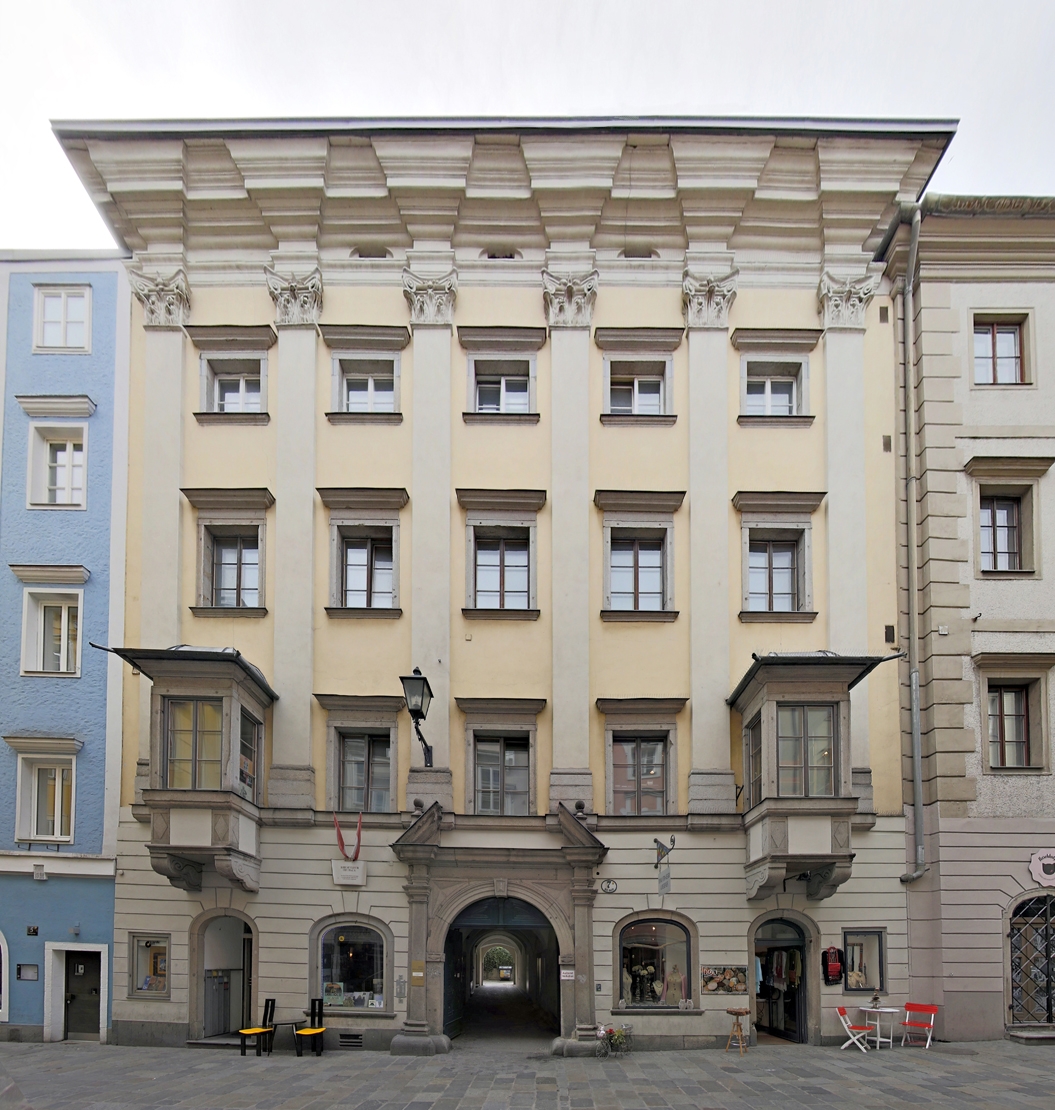
Four hundred years ago today (May 15, 1618) Johannes Kepler discovered the simple mathematical rule governing the orbits of the solar system's planets, now recognized as Kepler's Third Law of planetary motion. At that time he was living in this tall house on The Hofgasse, a narrow street near the castle and main square of the city of Linz, Austria, planet Earth. The conclusive identification of this residence (Hofgasse 7) as the location of the discovery of his third law is a recent discovery itself. Erich Meyer of the Astronomical Society of Linz was able to solve the historical mystery, based in part on descriptions of Kepler's own observations of lunar eclipses. A key figure in the 17th century scientific revolution, Kepler supported Galileo's discoveries and the Copernican system of planets orbiting the Sun instead of the Earth. He showed that planets move in ellipses around the Sun (Kepler's First Law), that planets move proportionally faster in their orbits when they are nearer the Sun (Kepler's Second Law), and that more distant planets take proportionally longer to orbit the Sun (Kepler's Third Law).
Hace cuatrocientos años hoy (15 de mayo de 1618), Johannes Kepler descubrió la regla matemática simple que gobierna las órbitas de los planetas del sistema solar, ahora reconocida como la Tercera Ley de Kepler del movimiento planetario. En ese momento vivía en esta casa alta en la Hofgasse, una calle estrecha cerca del castillo y la plaza principal de la ciudad de Linz, en Austria, en el planeta Tierra. La identificación concluyente de esta residencia (Hofgasse 7) como el lugar del descubrimiento de su tercera ley es un descubrimiento reciente en sí mismo. Erich Meyer de la Sociedad Astronómica de Linz logró resolver el misterio histórico, basándose en parte en descripciones de las propias observaciones de eclipses lunares de Kepler. Una figura clave en la revolución científica del siglo XVII, Kepler apoyó los descubrimientos de Galileo y el sistema copernicano de planetas que orbitan alrededor del Sol en lugar de la Tierra. Demostró que los planetas se mueven en elipses alrededor del Sol (Primera Ley de Kepler), que los planetas se mueven proporcionalmente más rápido en sus órbitas cuando están más cerca del Sol (Segunda Ley de Kepler), y que los planetas más distantes tardan proporcionalmente más tiempo en orbitar alrededor del Sol (Tercera Ley de Kepler).