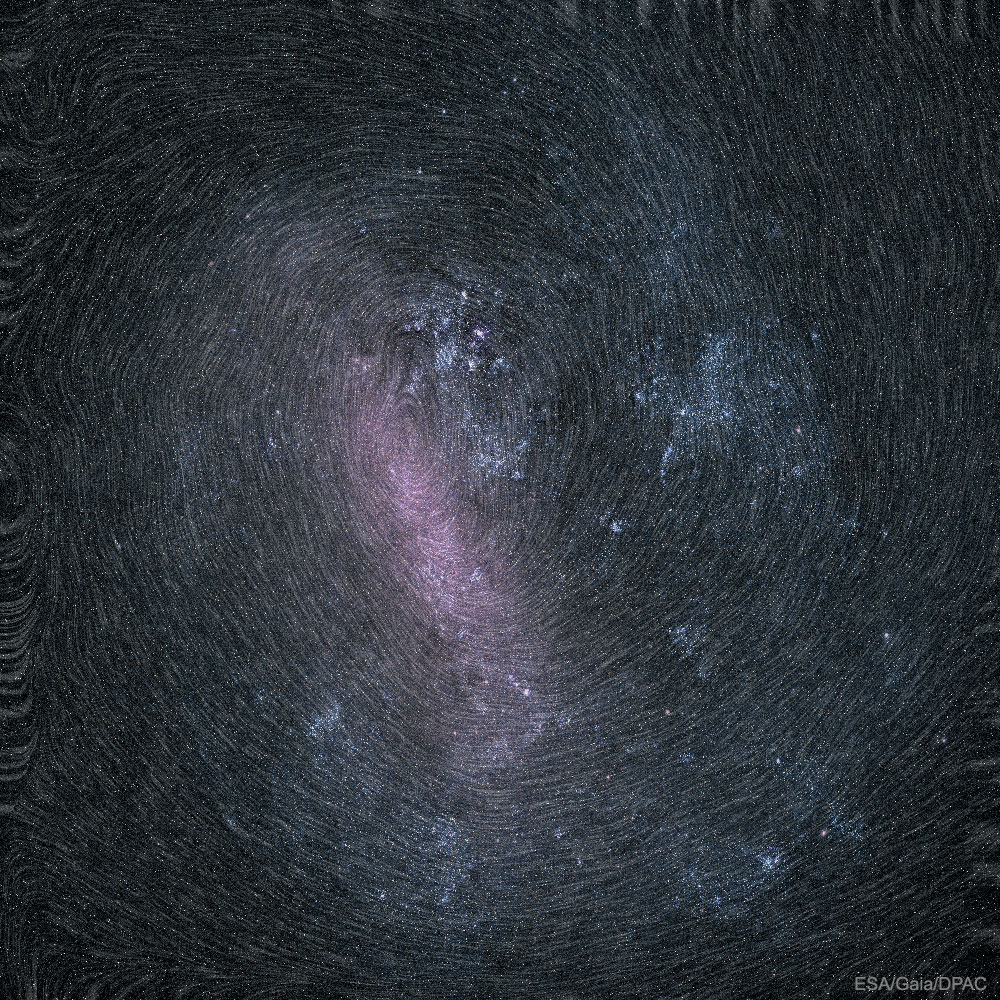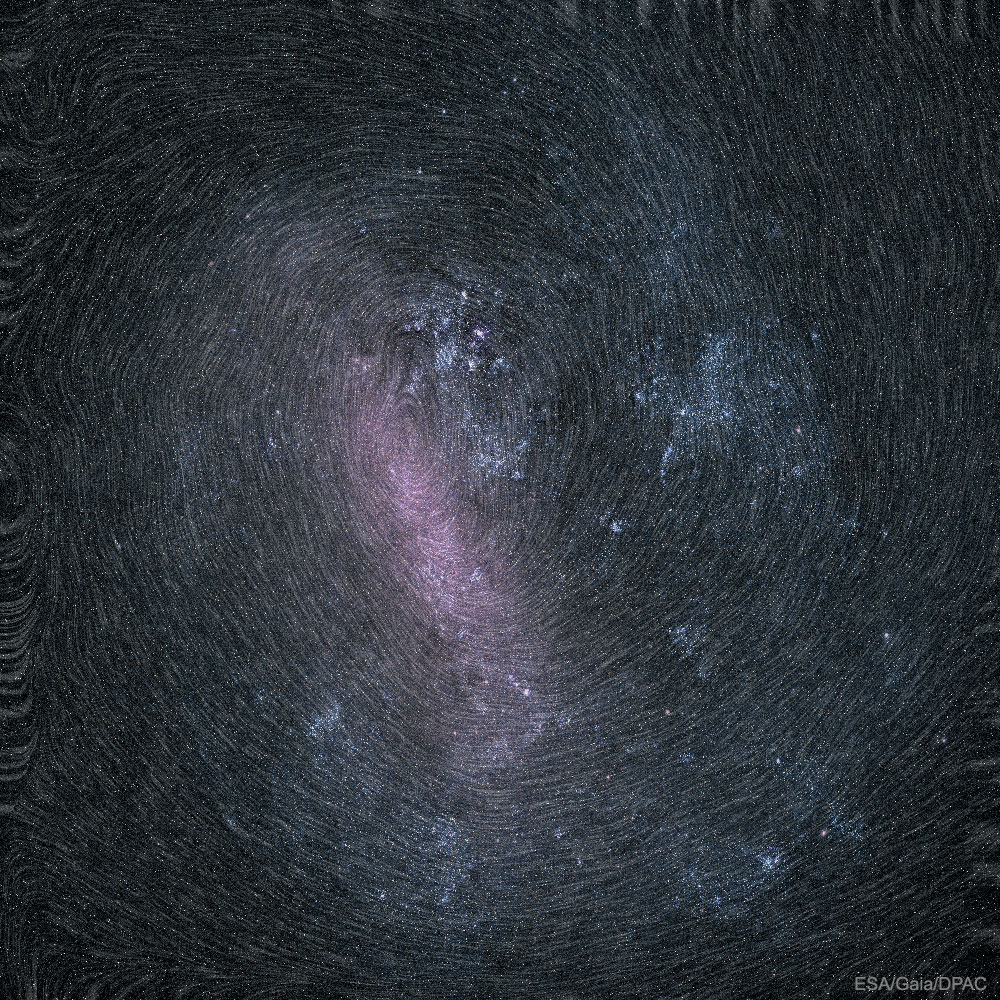
This image is not blurry. It shows in clear detail that the largest satellite galaxy to our Milky Way, the Large Cloud of Magellan (LMC), rotates. First determined with Hubble, the rotation of the LMC is presented here with fine data from the Sun-orbiting Gaia satellite. Gaia measures the positions of stars so accurately that subsequent measurements can reveal slight proper motions of stars not previously detectable. The featured image shows, effectively, exaggerated star trails for millions of faint LMC stars. Inspection of the image also shows the center of the clockwise rotation: near the top of the LMC's central bar. The LMC, prominent in southern skies, is a small spiral galaxy that has been distorted by encounters with the greater Milky Way Galaxy and the lesser Small Magellanic Cloud (SMC). Open Science: Browse 1,600+ codes in the Astrophysics Source Code Library
Esta imagen no está borrosa. Muestra con claridad que la galaxia satélite más grande de nuestra Vía Láctea, la Gran Nube de Magallanes (LMC), rota. Determinado por primera vez con el Hubble, la rotación de la LMC se presenta aquí con datos detallados del satélite Gaia, que orbita el Sol. Gaia mide las posiciones de las estrellas con tanta precisión que mediciones posteriores pueden revelar pequeños movimientos propios de estrellas que antes no eran detectables. La imagen destacada muestra, efectivamente, rastros de estrellas exagerados para millones de estrellas tenues de la LMC. La inspección de la imagen también revela el centro de la rotación en sentido horario: cerca de la parte superior de la barra central de la LMC. La LMC, destacada en los cielos del sur, es una pequeña galaxia espiral que ha sido distorsionada por encuentros con la mayor galaxia Vía Láctea y la menor Pequeña Nube de Magallanes (SMC).