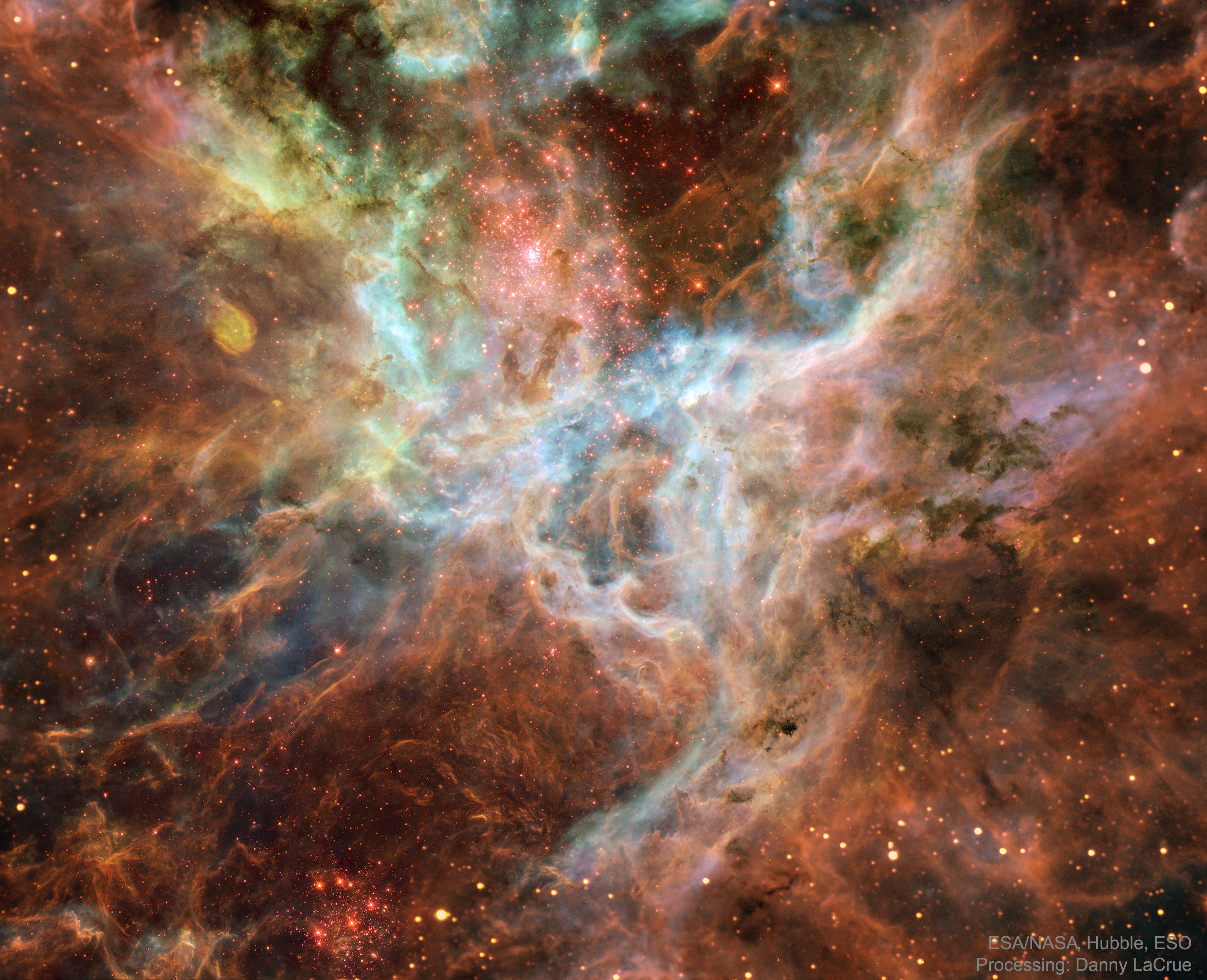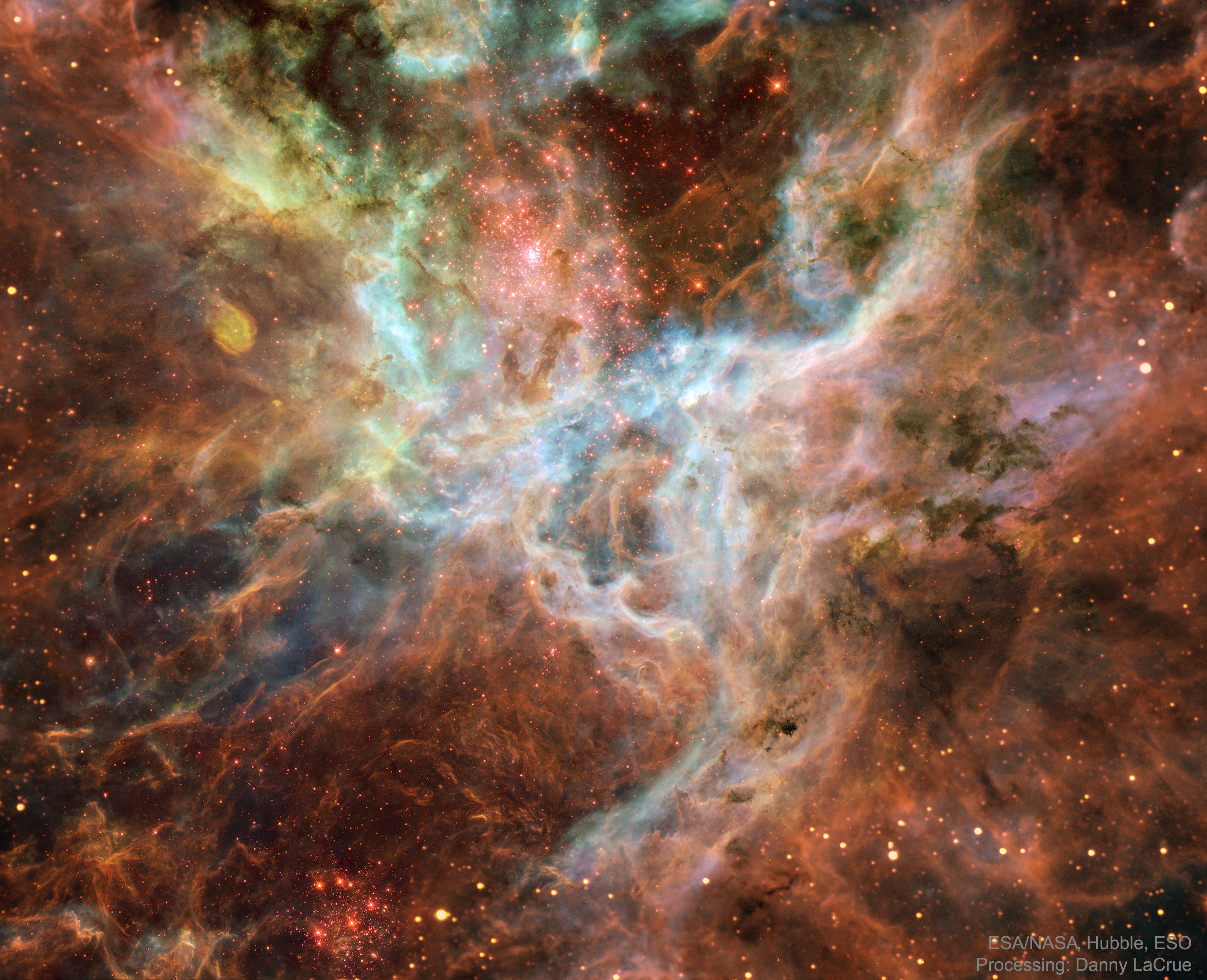
In the heart of monstrous Tarantula Nebula lies huge bubbles of energetic gas, long filaments of dark dust, and unusually massive stars. In the center of this heart, is a knot of stars so dense that it was once thought to be a single star. This star cluster, labeled as R136 or NGC 2070, is visible just above the center of the featured image and home to a great number of hot young stars. The energetic light from these stars continually ionizes nebula gas, while their energetic particle wind blows bubbles and defines intricate filaments. The representative-color picture, a digital synthesis of images from the NASA/ESA orbiting Hubble Space Telescope and ESO's ground-based New Technology Telescope, shows great details of the LMC nebula's tumultuous center. The Tarantula Nebula, also known as the 30 Doradus nebula, is one of the largest star-formation regions known, and has been creating unusually strong episodes of star formation every few million years.
En el corazón de la monstruosa nebulosa Tarántula se encuentran enormes burbujas de gas energético, largos filamentos de polvo oscuro y estrellas de masa inusualmente grande. En el centro de este corazón hay un nudo de estrellas tan denso que en una época se creía que era una sola estrella. Este cúmulo estelar, etiquetado como R136 o NGC 2070, es visible justo encima del centro de la imagen destacada y alberga un gran número de estrellas jóvenes y calientes. La luz energética de estas estrellas ioniza continuamente el gas de la nebulosa, mientras que su viento de partículas energéticas sopla burbujas y define filamentos intrincados. La imagen en color representativo, una síntesis digital de imágenes del telescopio espacial Hubble de la NASA/ESA y del nuevo telescopio de tecnología terrestre de ESO, muestra grandes detalles del tumultuoso centro de la nebulosa del LMC. La nebulosa Tarántula, también conocida como la nebulosa 30 Doradus, es una de las regiones más grandes de formación estelar conocidas, y ha estado creando episodios inusualmente fuertes de formación estelar cada pocos millones de años.