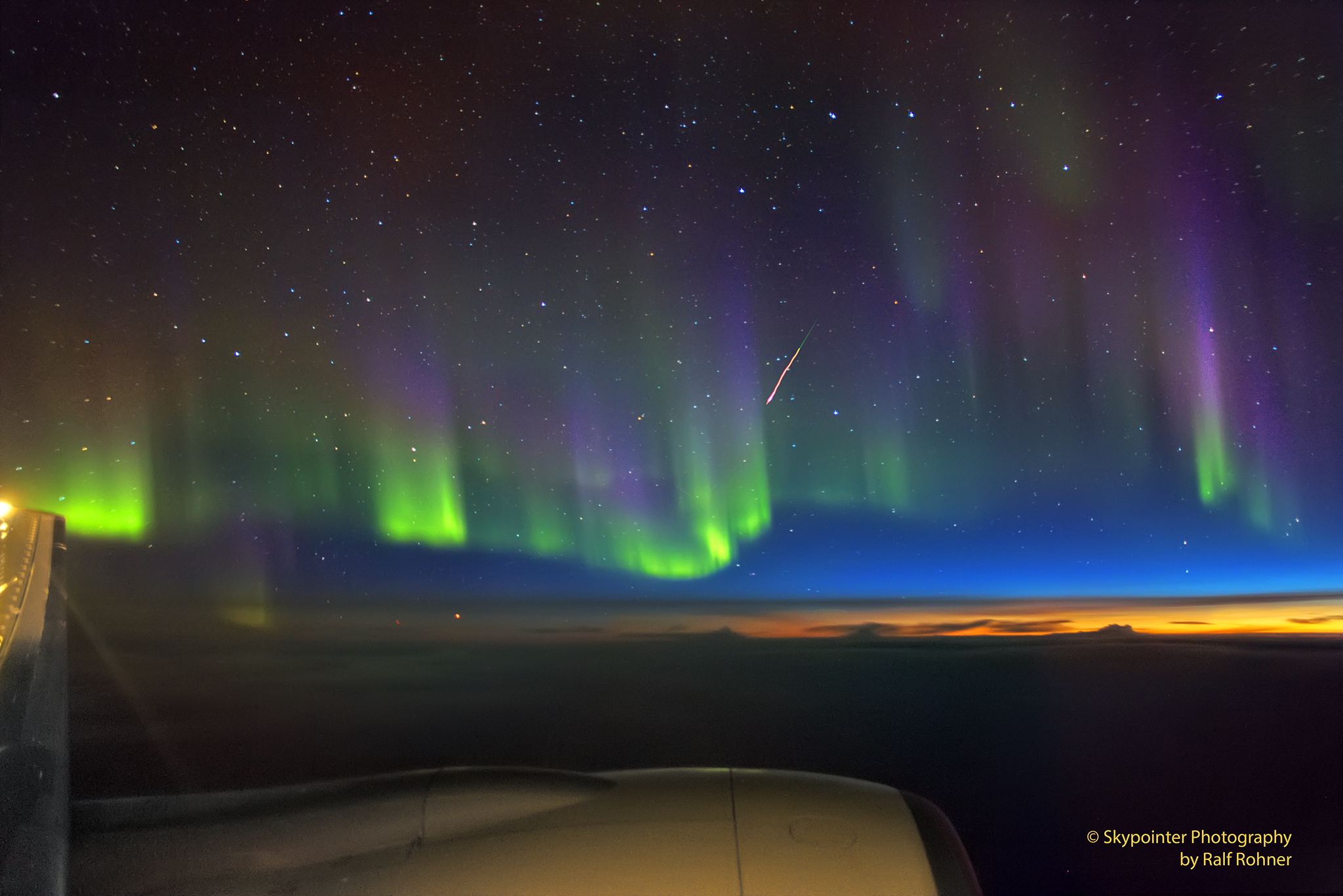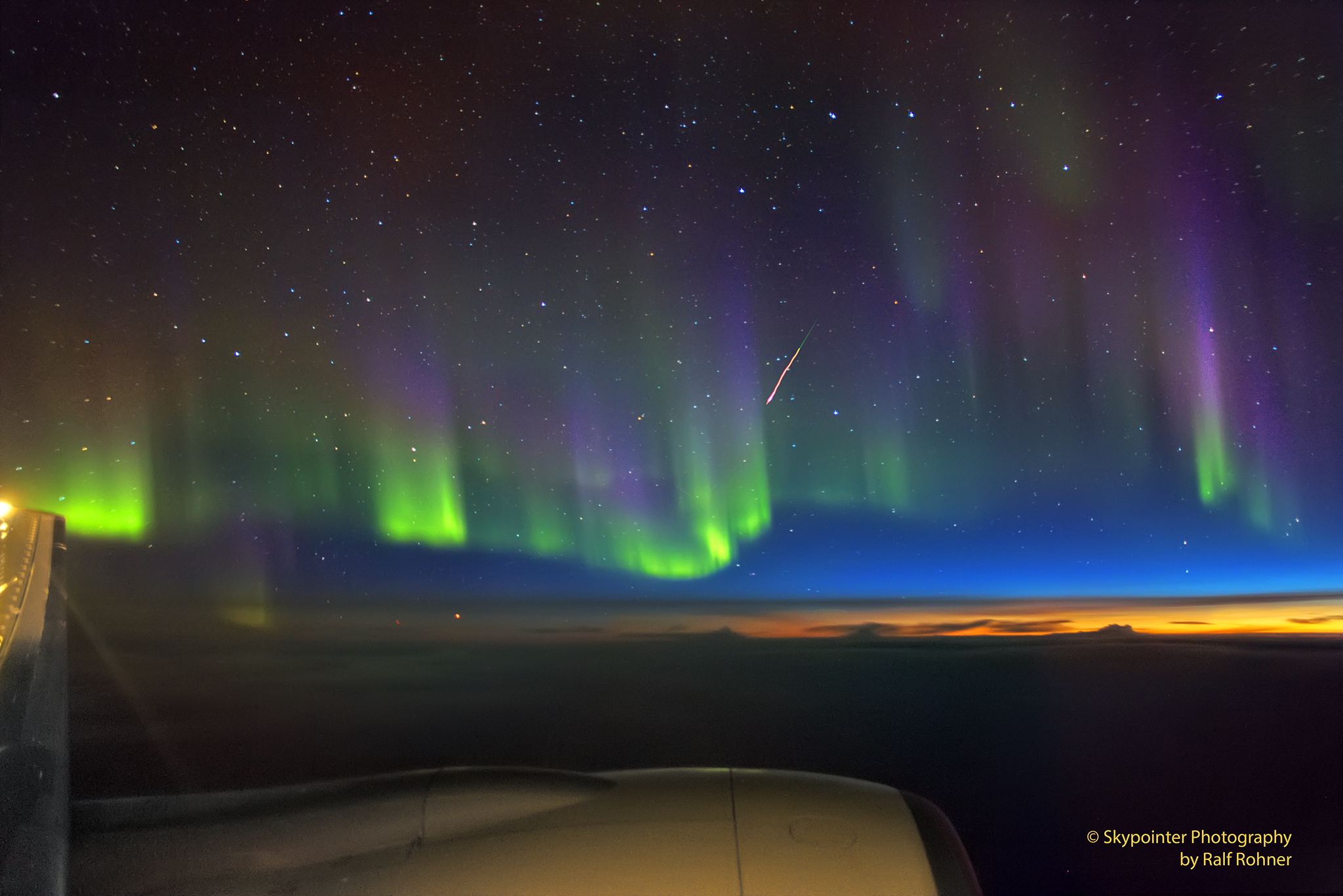
On the August 18 night flight from San Francisco to Zurich, a window seat offered this tantalizing view when curtains of light draped a colorful glow across the sky over Hudson Bay. Constructed by digitally stacking six short exposures made with a hand held camera, the scene records the shimmering aurora borealis or northern lights just as the approaching high altitude sunrise illuminated the northeastern horizon. It also caught the flash of a Perseid meteor streaking beneath the handle stars of the Big Dipper of the north. A few days past the meteor shower's peak, its trail still points across the sky toward Perseus. Beautiful aurorae and shower meteors both occur in Earth's upper atmosphere at altitudes of 100 kilometers or so, far above commercial airline flights. The aurora are caused by energetic charged particles from the magnetosphere, while meteors are trails of comet dust.
Durante el vuelo nocturno del día 18 de agosto desde San Francisco a Zúrich, un asiento con ventanilla ofreció esta fascinante vista cuando cortinas de luz cubrieron con un resplandor colorido el cielo sobre la Bahía de Hudson. La escena, construida mediante la superposición digital de seis exposiciones cortas tomadas con una cámara de mano, registra la danzante aurora boreal o luces del norte justo cuando el amanecer de alta altitud iluminó el horizonte nordeste. También captó el destello de un meteoro Perseídeo que se deslizaba bajo las estrellas que forman el mango de la Osa Mayor del norte. A unos días del pico de la lluvia de meteoros, su rastro aún apunta a través del cielo hacia Perseo. Tanto las hermosas auroras como los meteoros de la lluvia ocurren en la atmósfera superior de la Tierra, a altitudes de unos 100 kilómetros, muy por encima de los vuelos de las líneas aéreas comerciales. Las auroras son causadas por partículas cargadas energéticas provenientes del magnetosfera, mientras que los meteoros son rastros de polvo de cometa.