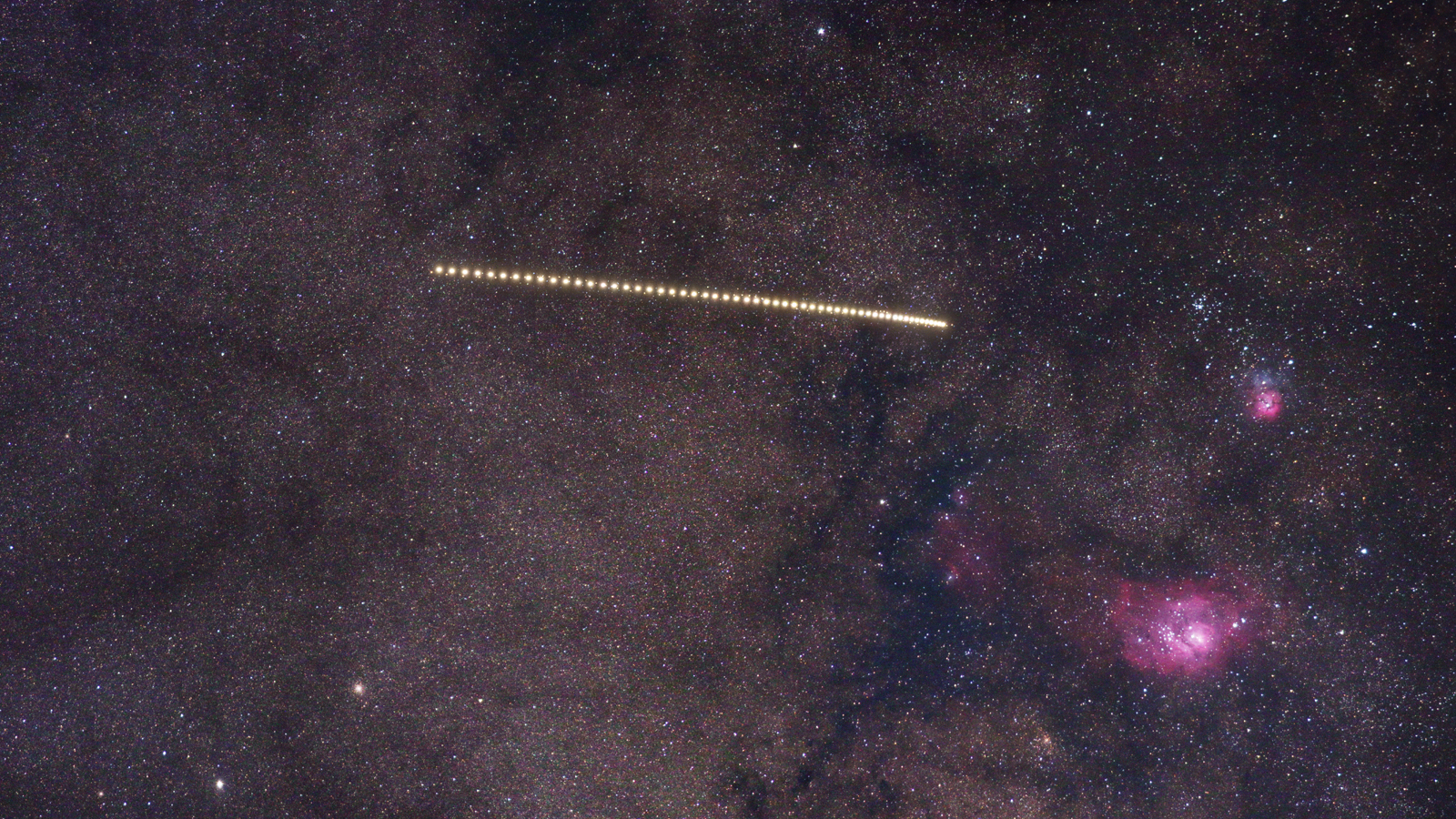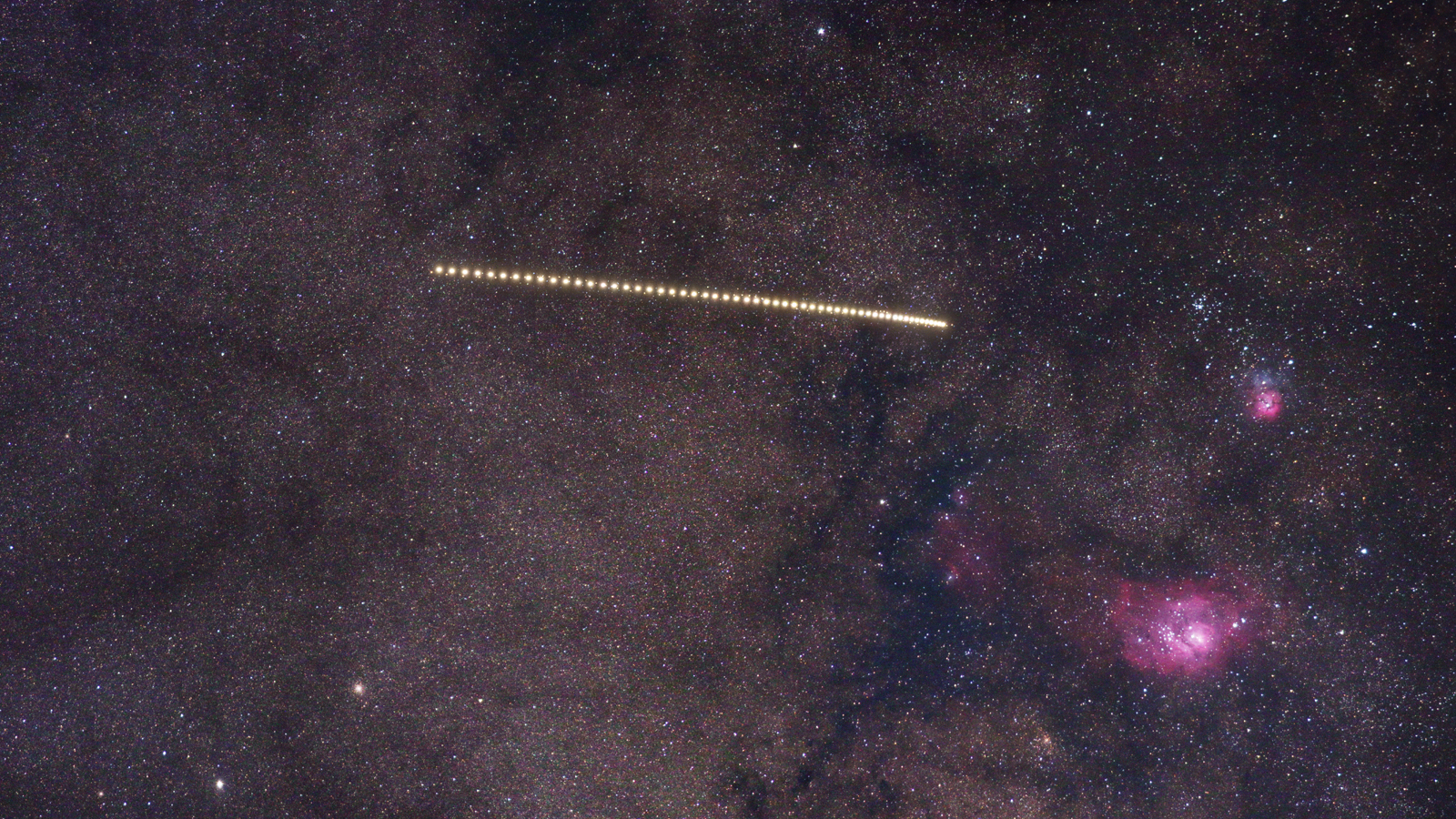
For 55 consecutive nights Mediterranean skies were at least partly clear this summer, from the 1st of July to the 24th of August 2018. An exposure from each night was incorporated in this composited telephoto and telescopic image to follow bright planet Saturn as it wandered through the generous evening skies. Through August, the outer planet's seasonal apparent retrograde motion slowed and drifted to the right, framed by a starry background. That brought it near the line-of-sight to the central Milky Way, and the beautiful Lagoon (M8) and Trifid (M20) nebulae. Of course Saturn's largest moon Titan was also along for the ride. Swinging around the gas giant in a 16 day long orbit, Titan's resulting wave-like motion is easier to spot when the almost-too-bright Saturn is digitally edited from the scene.
Durante 55 noches consecutivas, los cielos del Mediterráneo estuvieron al menos parcialmente despejados este verano, desde el 1 de julio hasta el 24 de agosto de 2018. Una exposición de cada noche fue incorporada en esta imagen compuesta de teleobjetivo y telescopio para seguir al brillante planeta Saturno mientras se movía a través de los generosos cielos de la tarde. A lo largo de agosto, el movimiento aparente retrogrado estacional del planeta exterior se ralentizó y se desplazó hacia la derecha, enmarcado por un fondo estrellado. Eso lo acercó a la línea de visión hacia el centro de la Vía Láctea, y a las hermosas nebulosas del Lago (M8) y Trífida (M20). Por supuesto, la luna más grande de Saturno, Titán, también estuvo presente en el viaje. Girando alrededor del gigante gaseoso en una órbita de 16 días, el movimiento ondulante resultante de Titán es más fácil de observar cuando Saturno, casi demasiado brillante, se edita digitalmente de la escena.