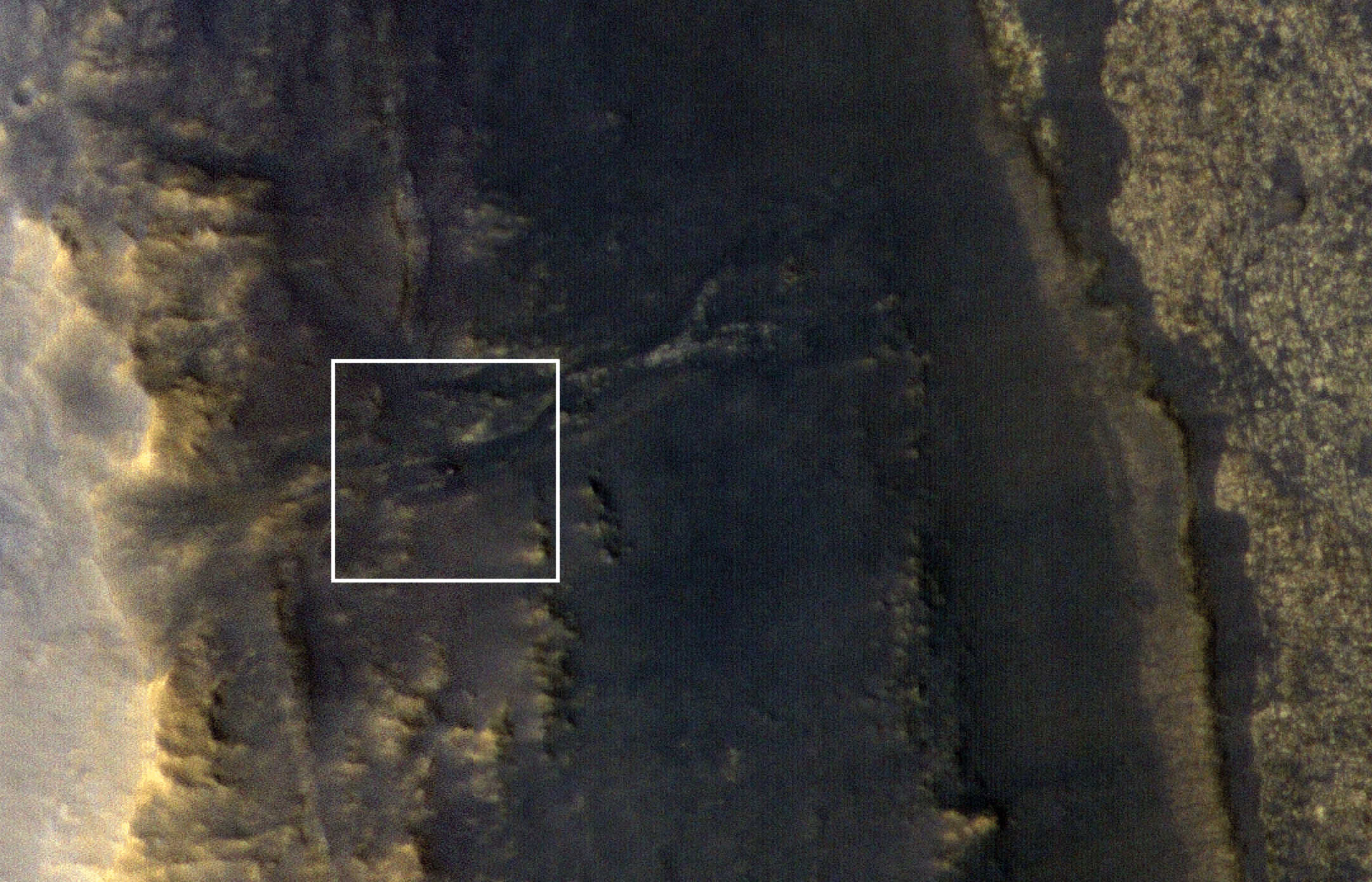
On Mars dust storms can't actually blow spacecraft over, but they can blot out the Sun. Over three months ago a planet-wide dust storm caused a severe lack of sunlight for the Mars rover Opportunity at its location near the west rim of Endeavour crater. The lack of sunlight sent the solar-powered Opportunity into hibernation and for over 115 sols controllers have not received any communication from the rover. The dust is clearing as the storm subsides though. On September 20th, when this image was taken by the Mars Reconnaissance Orbiter's HiRISE camera, about 25 percent of the sunlight was reaching the surface again. The white box marks a 47-meter-wide (154-foot-wide) area centered on a blip identified as the silent-for-now Opportunity rover.
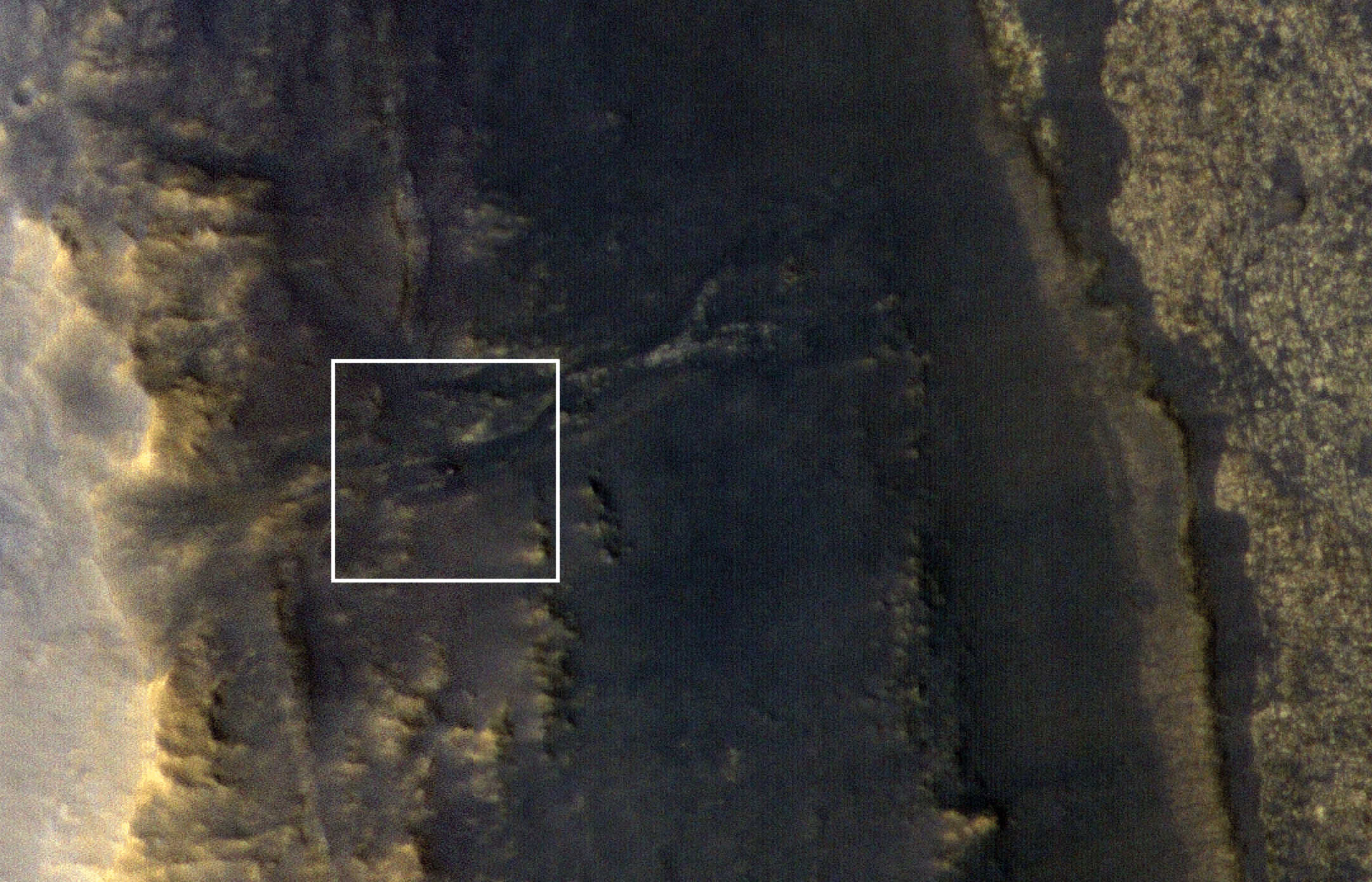
En Marte, las tormentas de polvo no pueden derribar realmente las naves espaciales, pero sí pueden tapar al Sol. Hace más de tres meses, una tormenta de polvo a escala planetaria causó una severa falta de luz solar para el rover de Marte Opportunity en su ubicación cerca del borde oeste del cráter Endeavour. La falta de luz solar hizo que el Opportunity, alimentado por energía solar, entrara en hibernación y, durante más de 115 días marcianos, los controladores no recibieron ninguna comunicación del rover. Sin embargo, el polvo se está disipando a medida que la tormenta cede. El 20 de septiembre, cuando se tomó esta imagen con la cámara HiRISE de la nave orbital Mars Reconnaissance Orbiter, aproximadamente el 25 por ciento de la luz solar volvía a llegar a la superficie. El cuadro blanco marca un área de 47 metros de ancho (154 pies) centrada en un destello identificado como el rover Opportunity, que hasta ahora permanece en silencio.