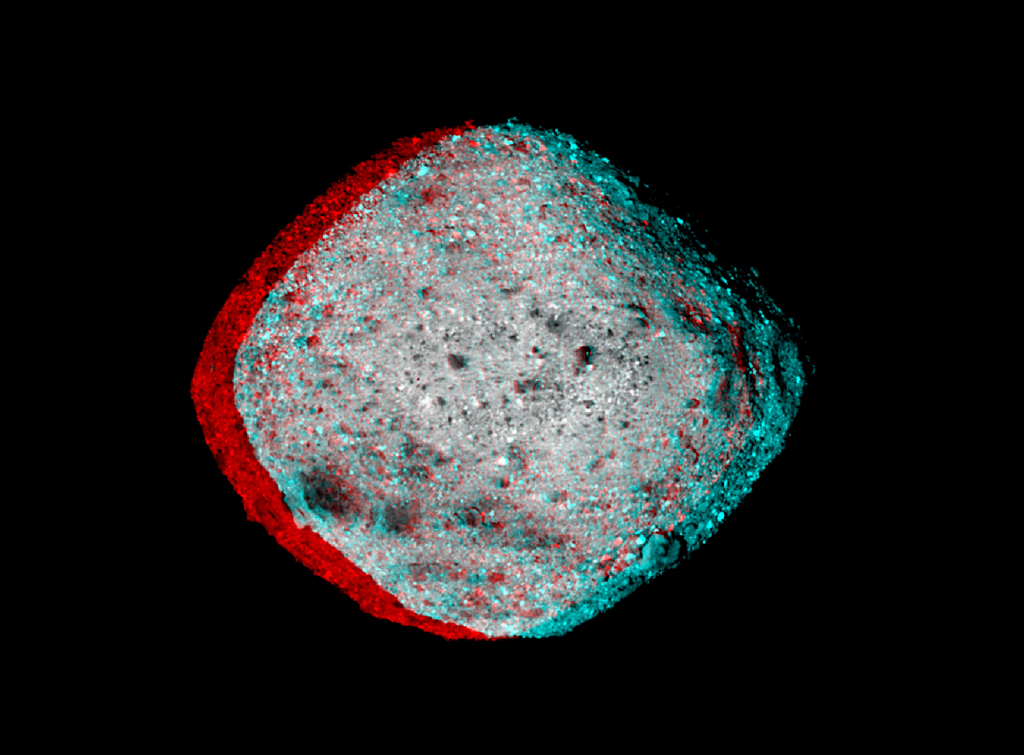
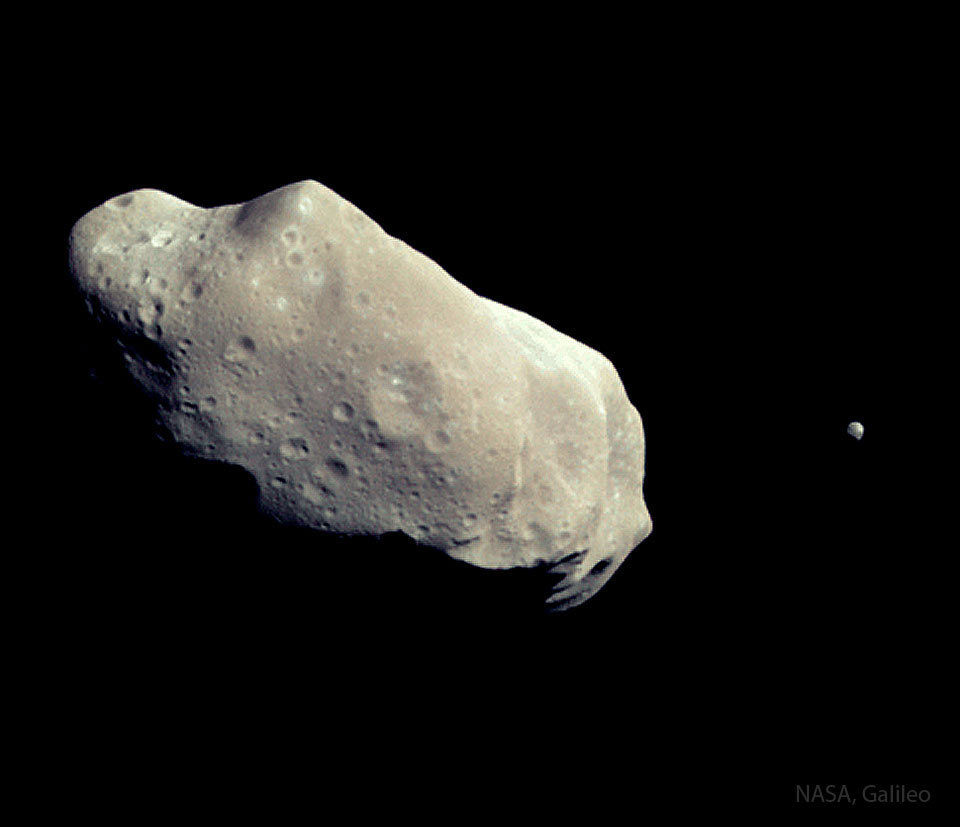
Why is 'Oumuamua differing from its expected trajectory? Last year, 1I/2017 U1 'Oumuamua became the first known asteroid from interstellar space to pass through our Solar System. Just over a year ago, this tumbling interstellar rock even passed rather close to the Earth. The asteroid's future path should have been easy to predict given standard gravity -- but 'Oumuamua's path has proven to be slightly different. In the featured animation, 'Oumuamua is shown approaching and exiting the vicinity of our Sun, with the expected gravitational and observed trajectories labelled. The leading natural hypothesis for this unexpected deviation is internal gas jets becoming active on the Sun-warmed asteroid -- but speculation and further computer simulations are ongoing. 'Oumuamua will never return, but modern sky monitors are expected to find and track similar interstellar asteroids within the next few years.
¿Por qué 'Oumuamua se desvía de su trayectoria esperada? El año pasado, 1I/2017 U1 'Oumuamua se convirtió en el primer asteroide conocido proveniente del espacio interestelar que atravesaba nuestro Sistema Solar. Justo hace más de un año, esta roca interestelar giratoria pasó bastante cerca de la Tierra. La trayectoria futura del asteroide debería haber sido fácil de predecir dada la gravedad estándar, pero la trayectoria de 'Oumuamua ha resultado ser ligeramente diferente. En la animación destacada, se muestra a 'Oumuamua acercándose y alejándose de la vecindad de nuestro Sol, con las trayectorias gravitacionales esperadas y observadas etiquetadas. La hipótesis natural más plausible para esta desviación inesperada es la activación de chorros internos de gas en el asteroide calentado por el Sol, pero la especulación y las simulaciones por computadora continúan. 'Oumuamua no regresará, pero los modernos monitores del cielo se espera que encuentren y sigan asteroides interestelares similares en los próximos años.