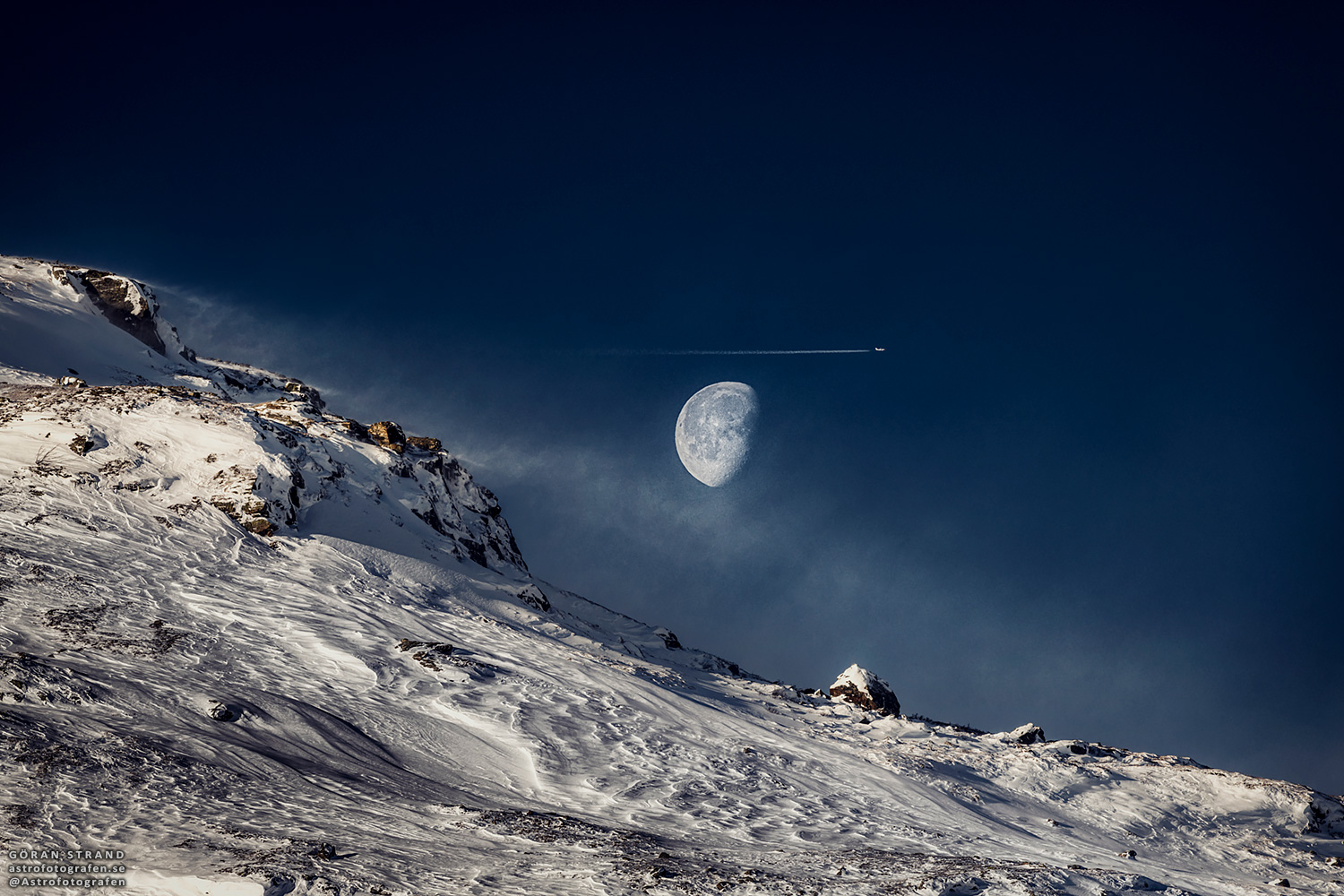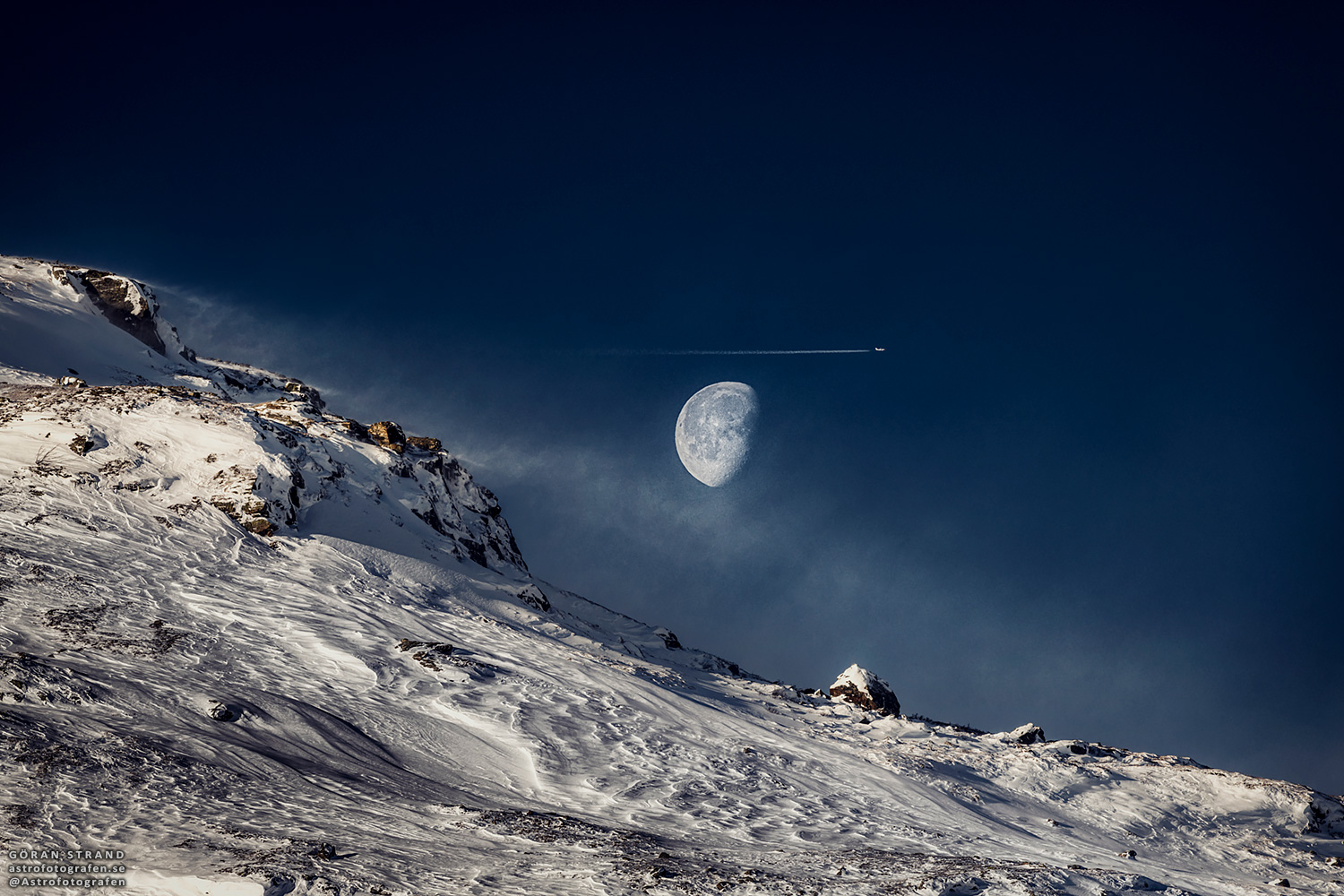
This is a gibbous Moon. More Earthlings are familiar with a full moon, when the entire face of Luna is lit by the Sun, and a crescent moon, when only a sliver of the Moon's face is lit. When more than half of the Moon is illuminated, though, but still short of full illumination, the phase is called gibbous. Rarely seen in television and movies, gibbous moons are quite common in the actual night sky. The featured image was taken in J�mtland, Sweden near the end of last month. That gibbous moon turned, in a few days, into a crescent moon, and then a new moon, then back to a crescent, and a few days ago back to gibbous. And this same gibbous moon is visible again tonight, leading up to the Full Beaver Moon that occurs Friday night. Setting up to capture a picturesque gibbous moonscape, the photographer was quite surprised to find an airplane, surely well in the foreground, appearing to fly past it.
Crédito: NASA, APOD Esta es una luna gibosa. Más terrestres son familiares con una luna llena, cuando toda la cara de la Luna está iluminada por el Sol, y con una luna creciente, cuando solo una porción de la cara de la Luna está iluminada. Cuando más de la mitad de la Luna está iluminada, pero aún no es completa, la fase se llama gibosa. Raramente se ven en la televisión y en las películas, las lunas gibosas son bastante comunes en el cielo nocturno real. La imagen destacada fue tomada en Jämtland, Suecia, cerca del final del mes pasado. Esa luna gibosa se convirtió, en unos pocos días, en una luna creciente, y luego en una luna nueva, y luego de vuelta a una creciente, y hace unos días de vuelta a gibosa. Y esta misma luna gibosa es visible nuevamente esta noche, conduciendo hacia la Luna Llena del Castor que ocurre la noche del viernes. Al configurar para capturar un paisaje lunar giboso pintoresco, el fotógrafo se sorprendió al encontrar un avión, seguramente en primer plano, apareciendo a volar frente a ella.