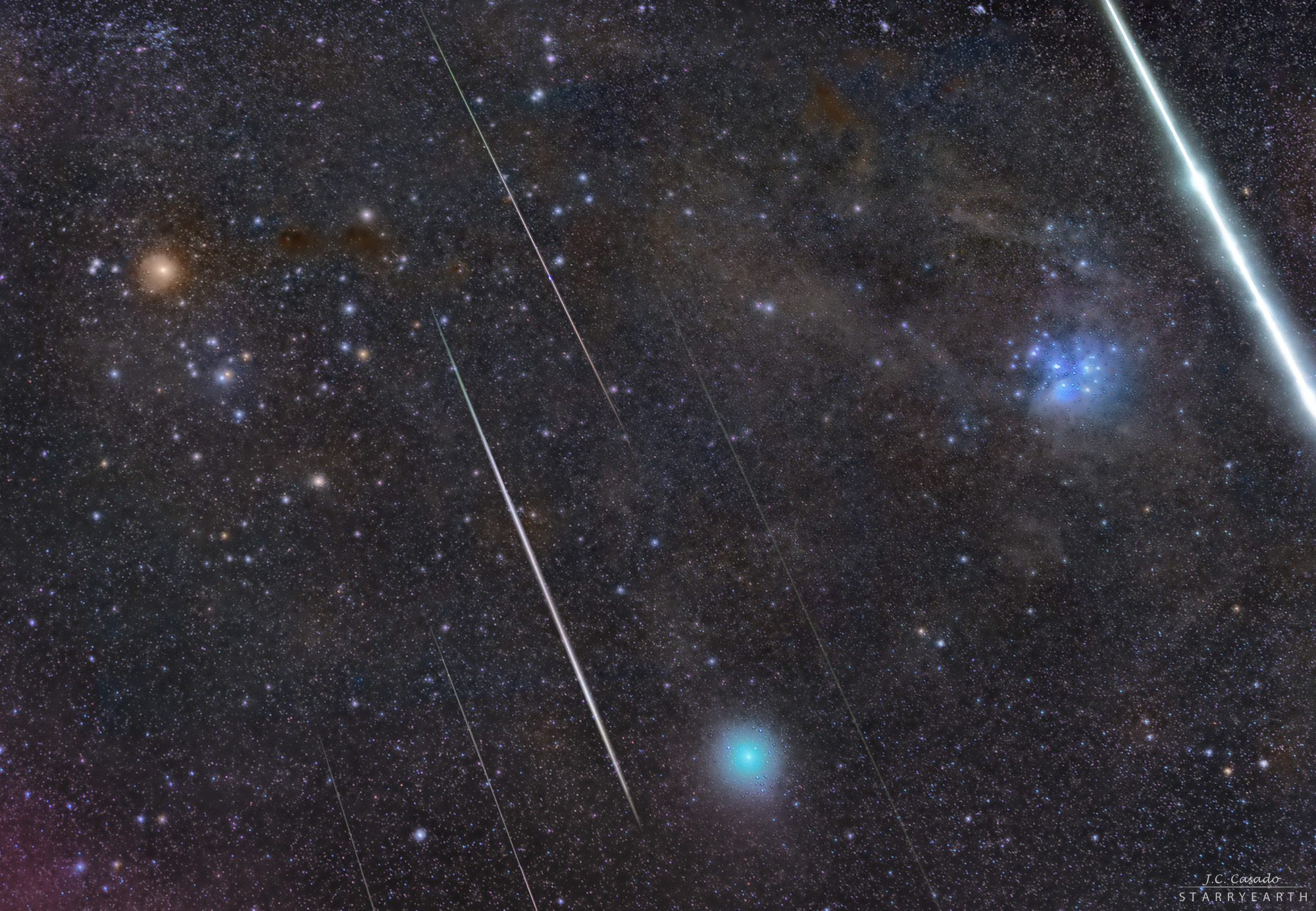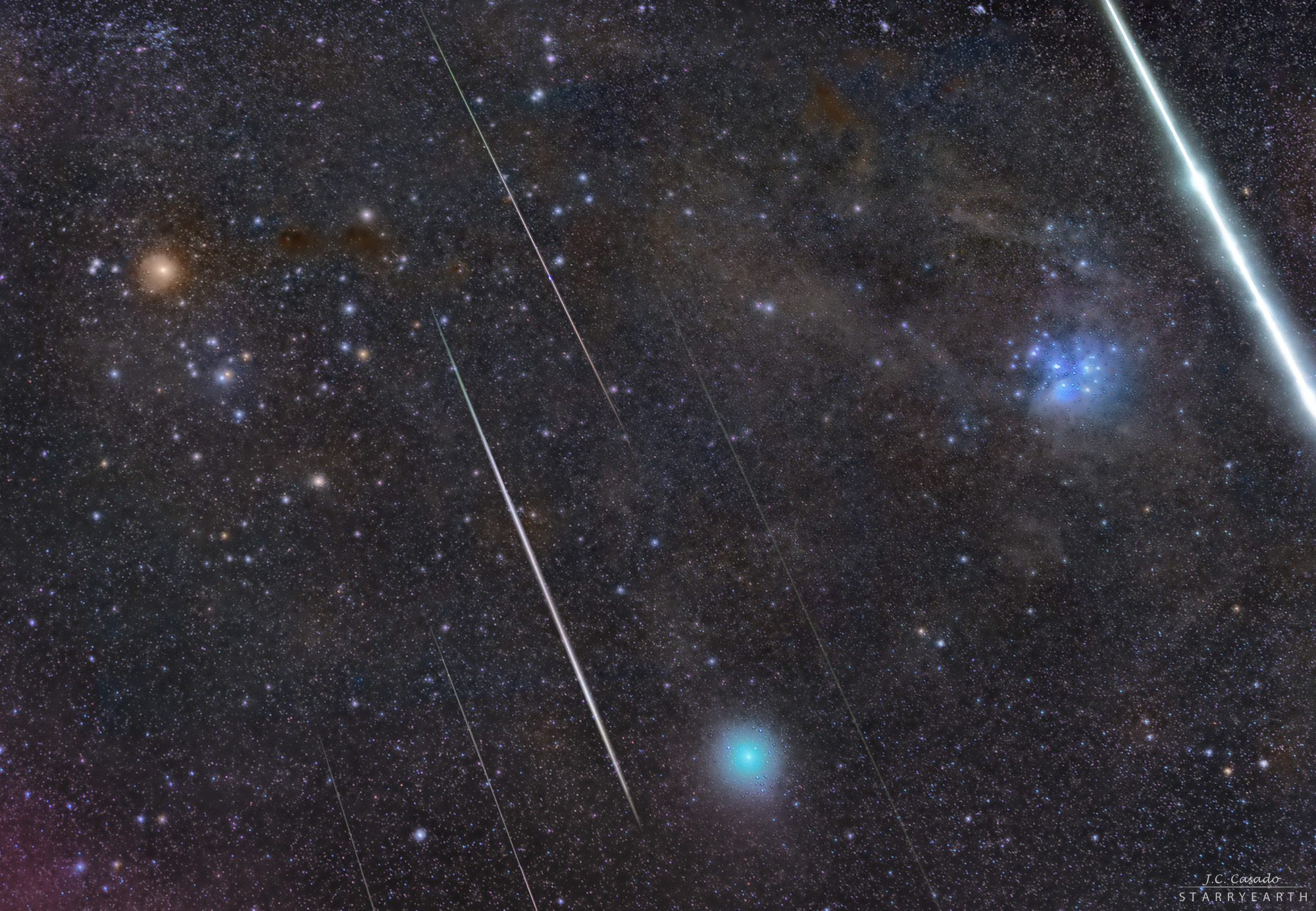
This was an unusual night to look in the direction of the Bull. The constellation Taurus is always well known for hosting two bright star clusters -- the Pleaides, visible on the right, and the comparatively diffuse Hyades, visible on the left. This night last month, however, was atypically the peak of the Geminid meteor shower, and so several meteors were caught shooting through the constellation with parallel trails. More unusually still, Comet Wirtanen was drifting through the constellation, here appearing near the image bottom surrounded by a greenish coma. The comet was near its brightest as it sped past the Earth. The orange star on the upper left is Aldebaran, considered to be the eye of the Bull. Aldebaran is the brightest star in Taurus and the 15th brightest star in the sky. The featured image is a combination of nearly 800 exposures taken from the Spanish village Albany�. Follow APOD on: Instagram, Facebook, Reddit, or Twitter
Crédito: Spanish village Albany Esta fue una noche inusual para mirar en la dirección del Toro. La constelación de Tauro es siempre bien conocida por albergar dos brillantes agrupaciones estelares: las Pléyades, visibles a la derecha, y las comparativamente difusas Híades, visibles a la izquierda. Esta noche del mes pasado, sin embargo, fue inusualmente el pico de la lluvia de meteoros Géminidas, por lo que varios meteoros fueron captados atravesando la constelación con trayectorias paralelas. Aún más inusualmente, el cometa Wirtanen estaba pasando por la constelación, apareciendo aquí cerca de la parte inferior de la imagen rodeado por una coma de color verde. El cometa estaba cerca de su máxima brillantez mientras se acercaba rápidamente a la Tierra. La estrella naranja en la esquina superior izquierda es Aldebarán, considerada como el ojo del Toro. Aldebarán es la estrella más brillante de Tauro y la decimoquinta más brillante del cielo. La imagen destacada es una combinación de casi 800 exposiciones tomadas desde el pueblo español Albany.