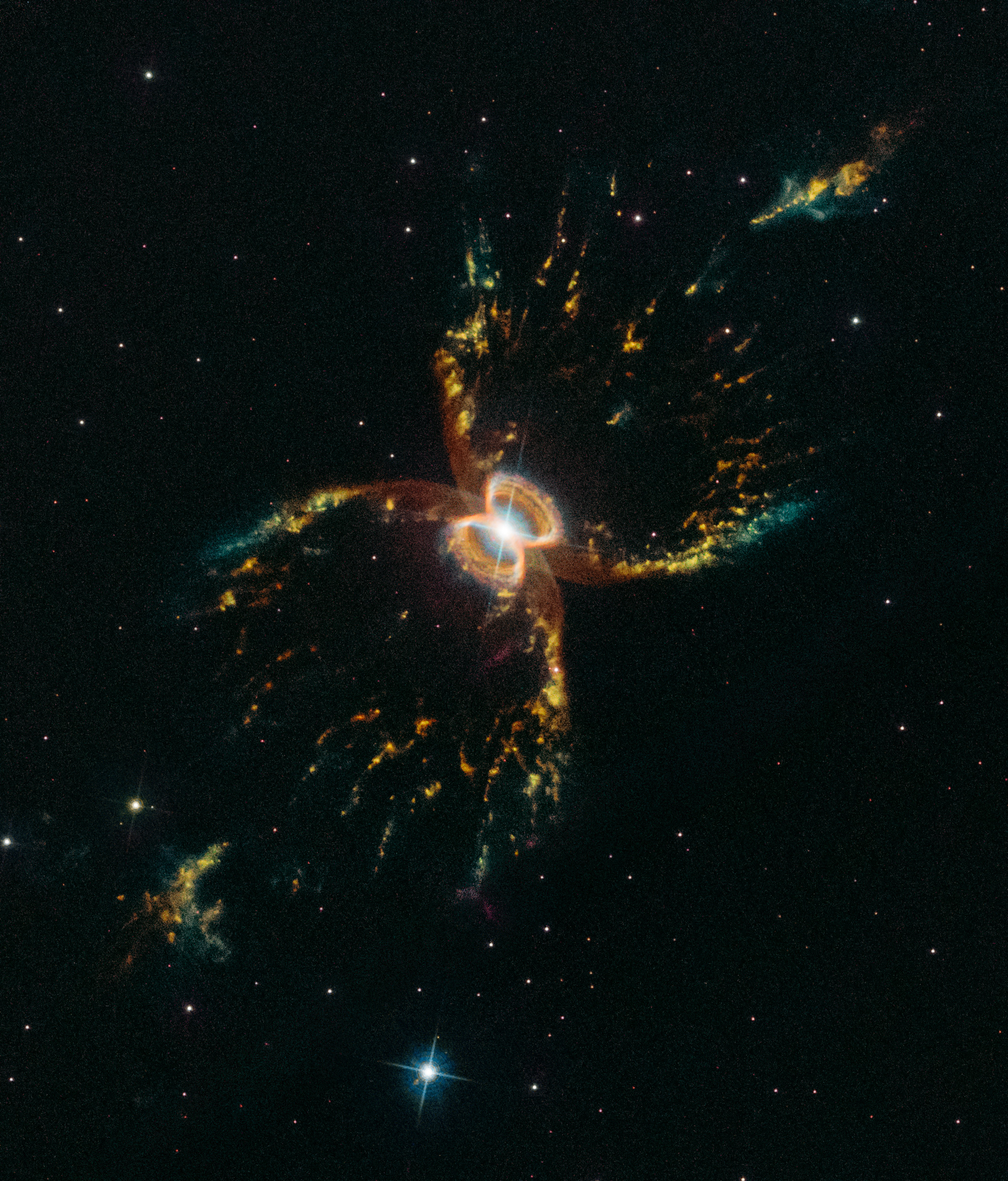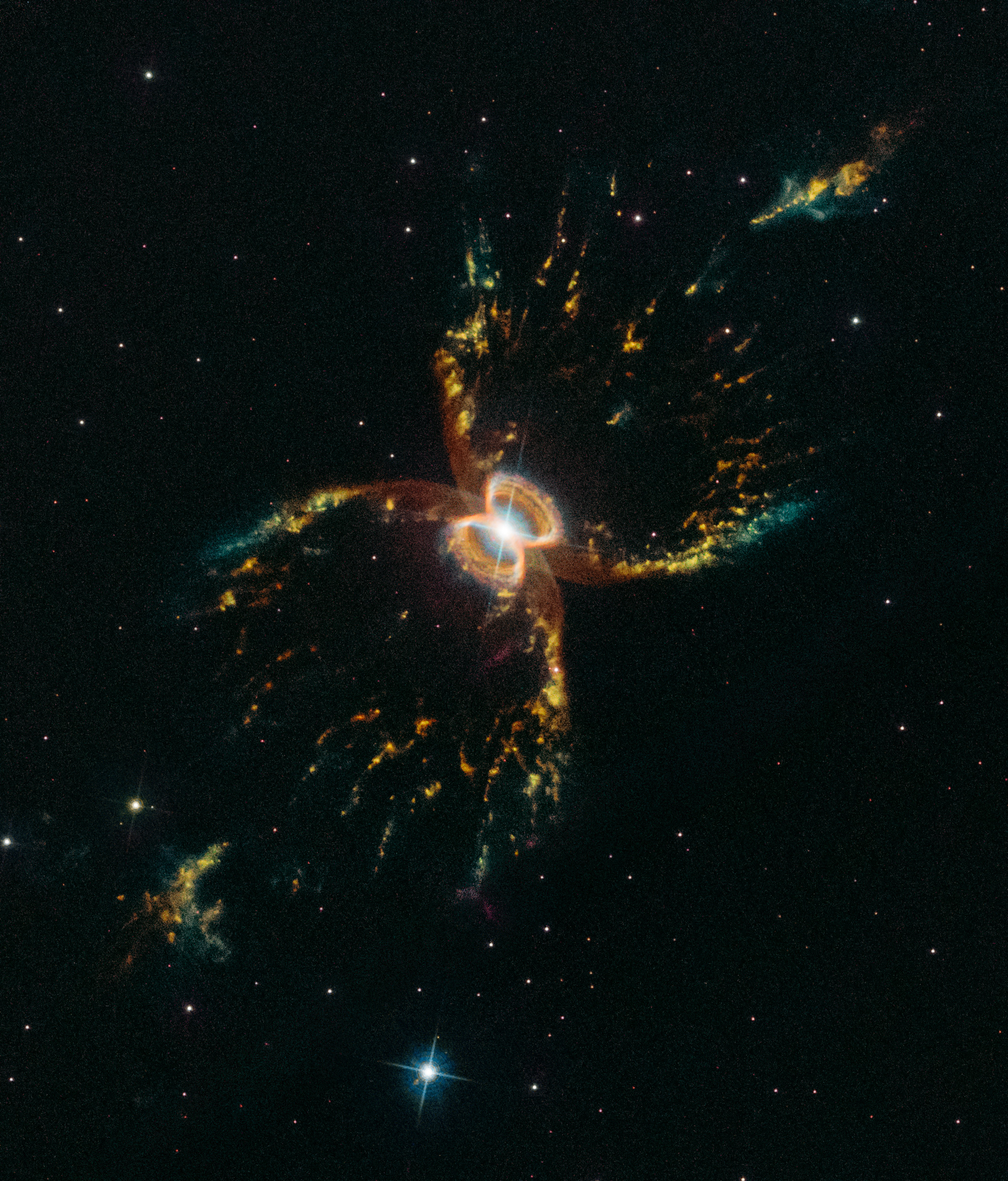
The symmetric, multi-legged appearance of the Southern Crab Nebula is certainly distinctive. About 7,000 light-years distant toward the southern sky constellation Centaurus, its glowing nested hourglass shapes are produced by the remarkable symbiotic binary star system at its center. The nebula's dramatic stellar duo consists of a hot white dwarf star and cool, pulsating red giant star shedding outer layers that fall onto the smaller, much hotter companion. Embedded in a disk of material, outbursts from the white dwarf cause an outflow of gas driven away both above and below the disk resulting in the bipolar hourglass shapes. The bright central shape is about half a light-year across. This new Hubble Space Telescope image celebrates the 29th anniversary of Hubble's launch on April 24, 1990 on board the Space Shuttle Discovery.
La apariencia simétrica y de múltiples patas de la Nebulosa del Cangrejo del Sur es ciertamente distintiva. A unos 7000 años luz de distancia hacia la constelación del sur Centauro, sus formas brillantes en forma de huevo de arena anidado son producidas por el sorprendente sistema binario simbiótico de estrellas en su centro. El dúo estelar dramático de la nebulosa consiste en una estrella enana blanca caliente y una estrella gigante roja fría y pulsante que pierde sus capas externas que caen sobre la compañera más pequeña y mucho más caliente. Incrustado en un disco de material, las erupciones de la enana blanca causan un flujo de gas que se aleja tanto por encima como por debajo del disco, resultando en las formas en forma de huevo de arena bipolares. La forma brillante central tiene aproximadamente medio año luz de diámetro. Esta nueva imagen del Telescopio Espacial Hubble celebra el 29 aniversario del lanzamiento de Hubble el 24 de abril de 1990 a bordo del transbordador espacial Discovery.