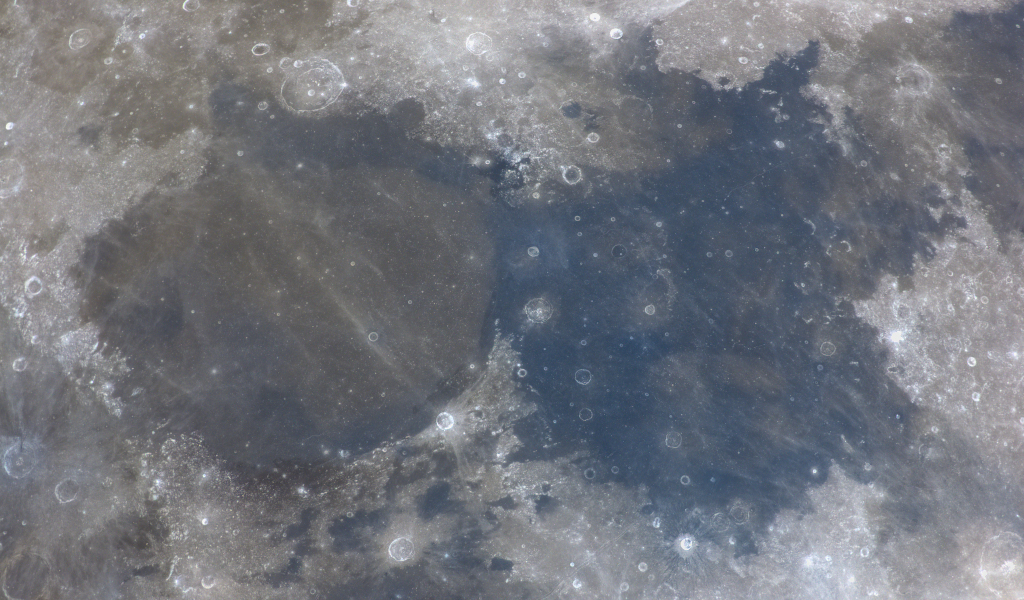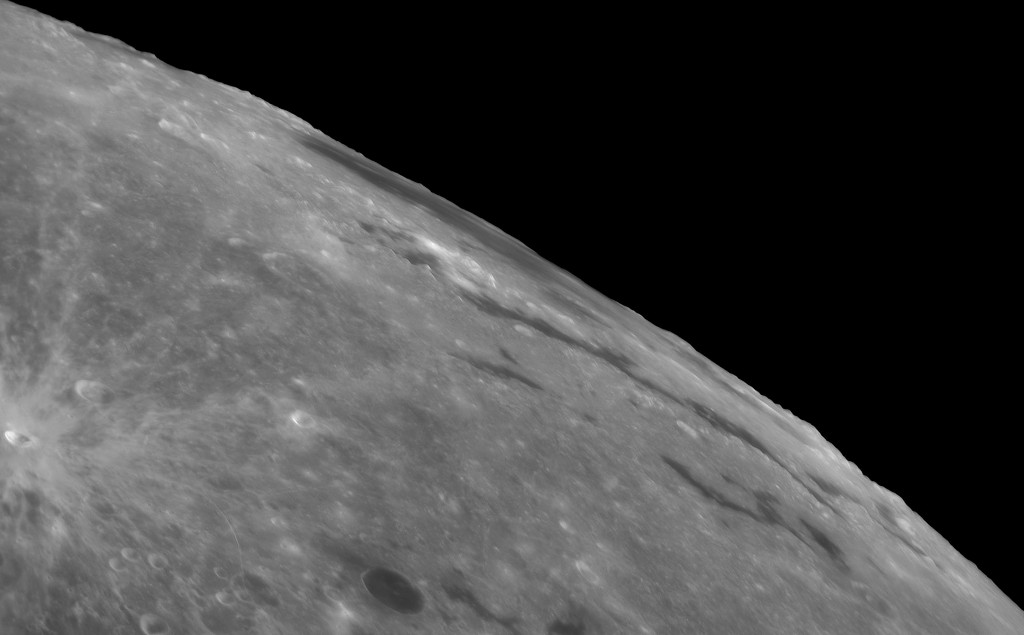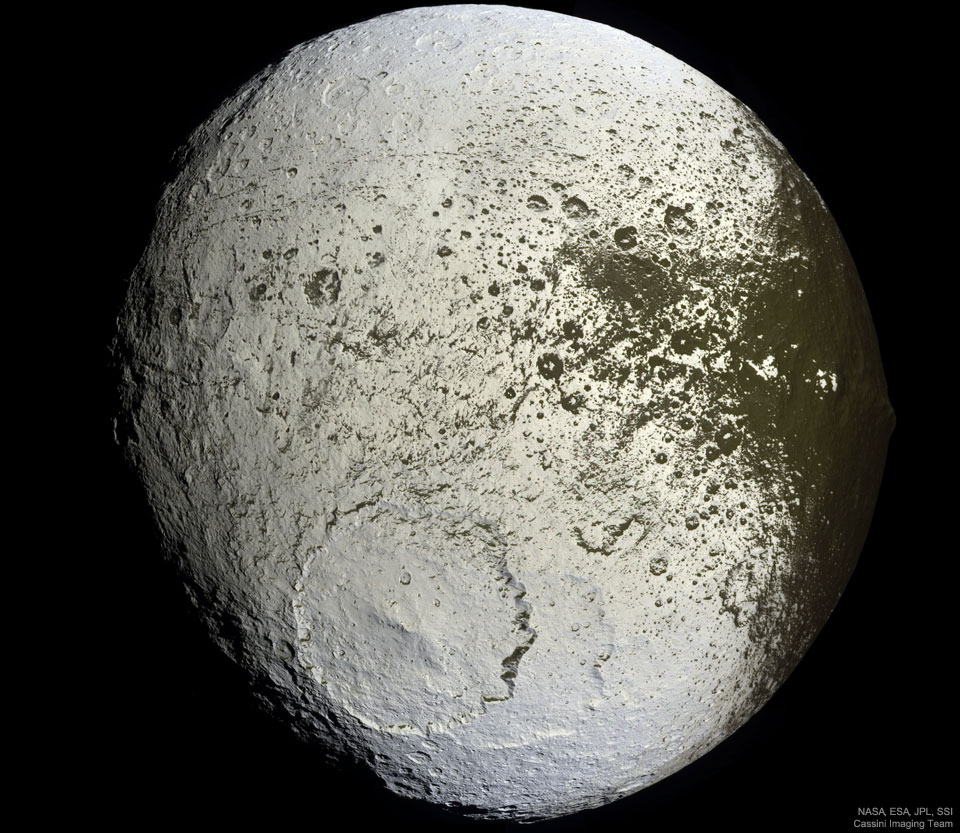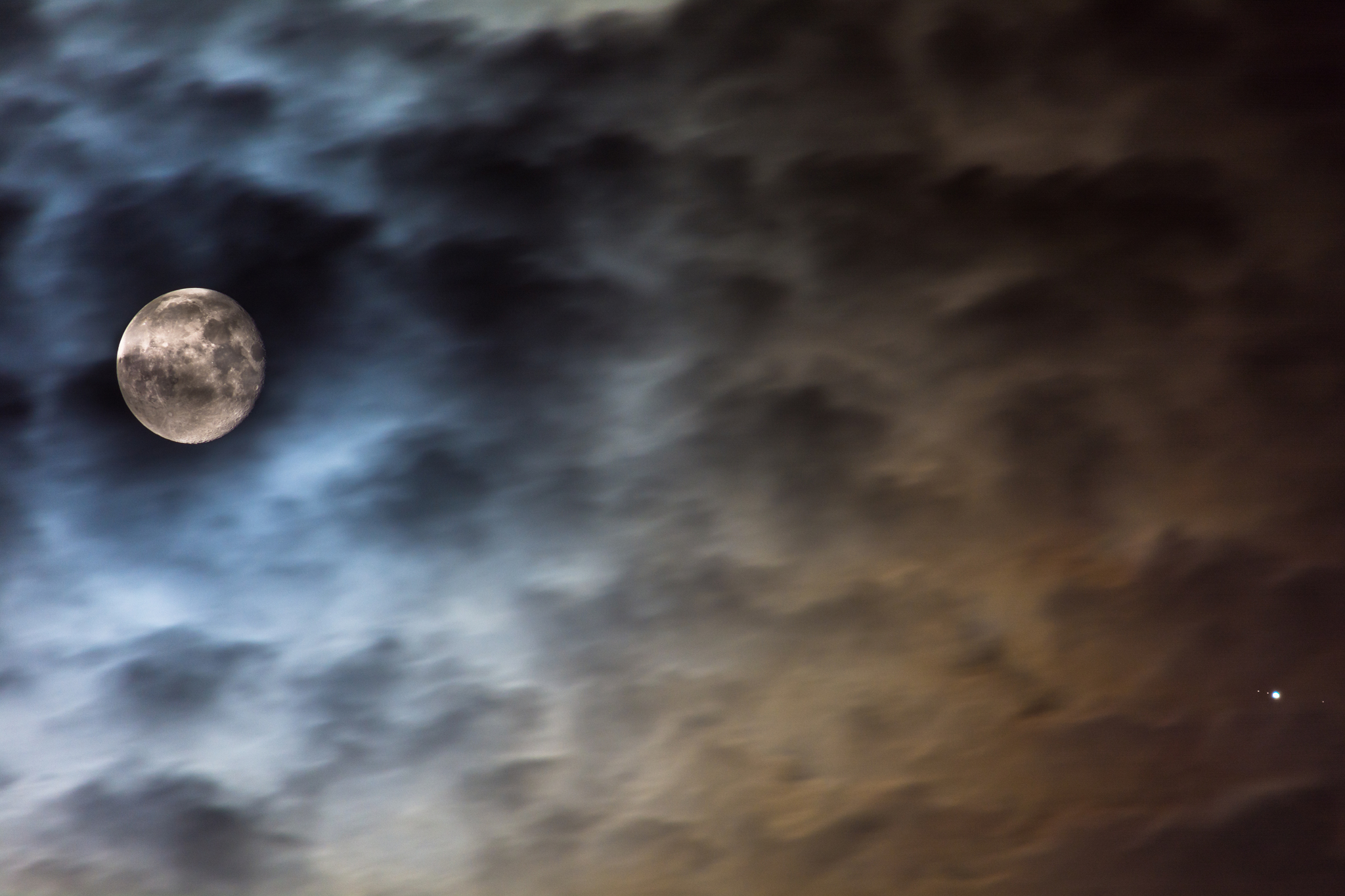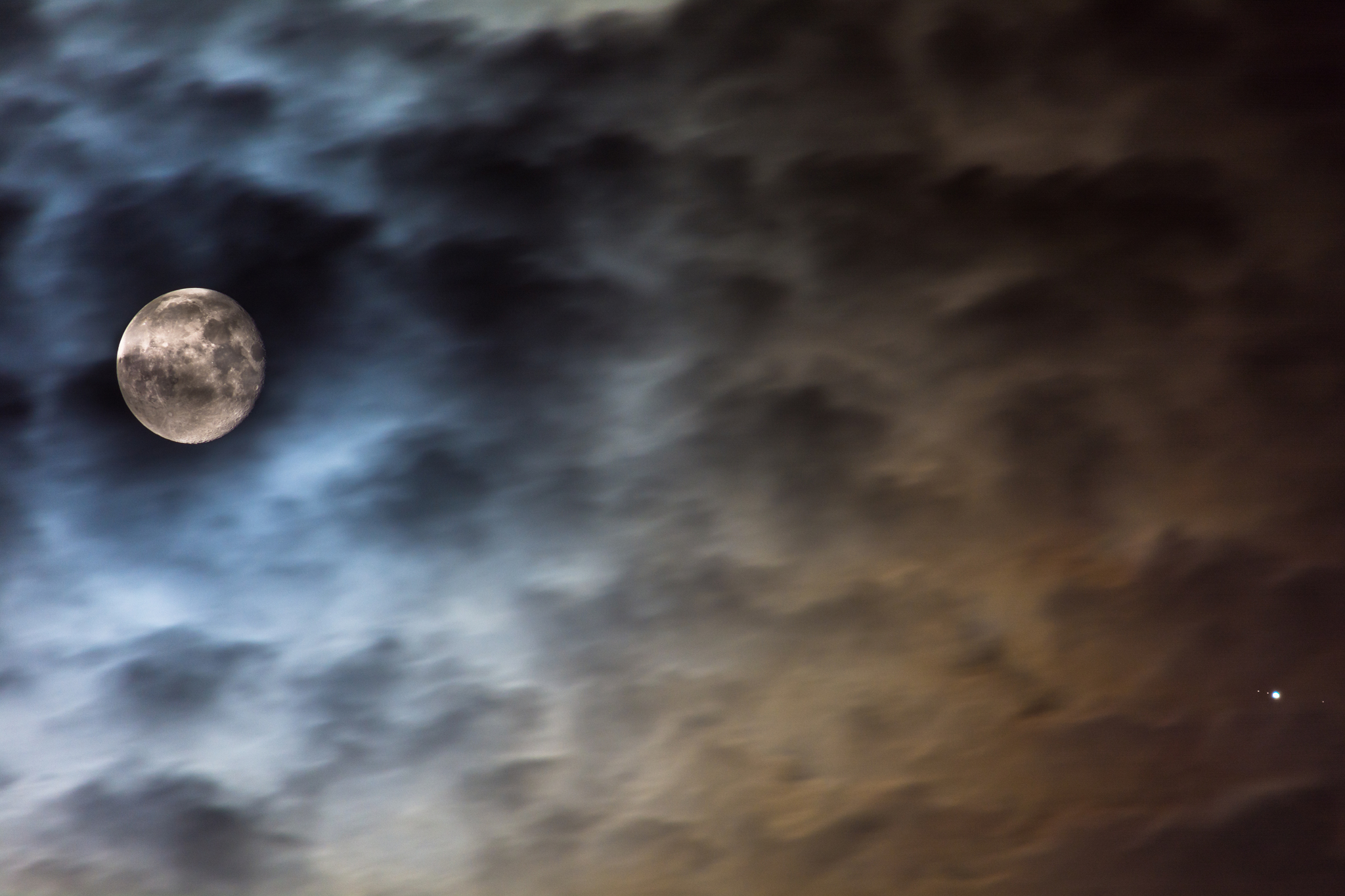
On May 20, a nearly Full Moon and Jupiter shared this telephoto field of view. Captured when a passing cloud bank dimmed the moonlight, the single exposure reveals the familiar face of our fair planet's own large natural satellite, along with bright Jupiter (lower right) and some of its Galilean moons. Lined up left to right the tiny pinpricks of light near Jupiter are Ganymede, Europa, [Jupiter] and Callisto. (That's not just dust on your screen ...) Closer and brighter, our own natural satellite appears to loom large. But Ganymede, and Callisto are physically larger than Earth's Moon, while water world Europa is only slightly smaller. In fact, of the Solar System's six largest planetary satellites, Saturn's moon Titan is missing from the scene and a fourth Galilean moon, Io, is hidden by our ruling gas giant.
El 20 de mayo, una Luna casi llena y Júpiter compartieron este campo de visión capturado con teleobjetivo. Capturada cuando una nube pasajera atenuó la luz de la luna, la exposición única revela la cara familiar de nuestro satélite natural, junto con el brillante Júpiter (en la parte inferior derecha) y algunas de sus lunas galileanas. Alineadas de izquierda a derecha, las diminutas pinceladas de luz cerca de Júpiter son Ganímedes, Europa, [Júpiter] y Calisto. (Eso no es solo polvo en tu pantalla...) Más cerca y brillante, nuestro propio satélite natural parece aparecer de tamaño grande. Pero Ganímedes y Calisto son físicamente más grandes que la Luna de la Tierra, mientras que el mundo acuático Europa es solo ligeramente más pequeño. De hecho, de las seis lunas más grandes del sistema solar, la luna de Saturno Titán falta en la escena y una cuarta luna galileana, Io, está oculta por nuestro gigante gaseoso que domina el cielo.