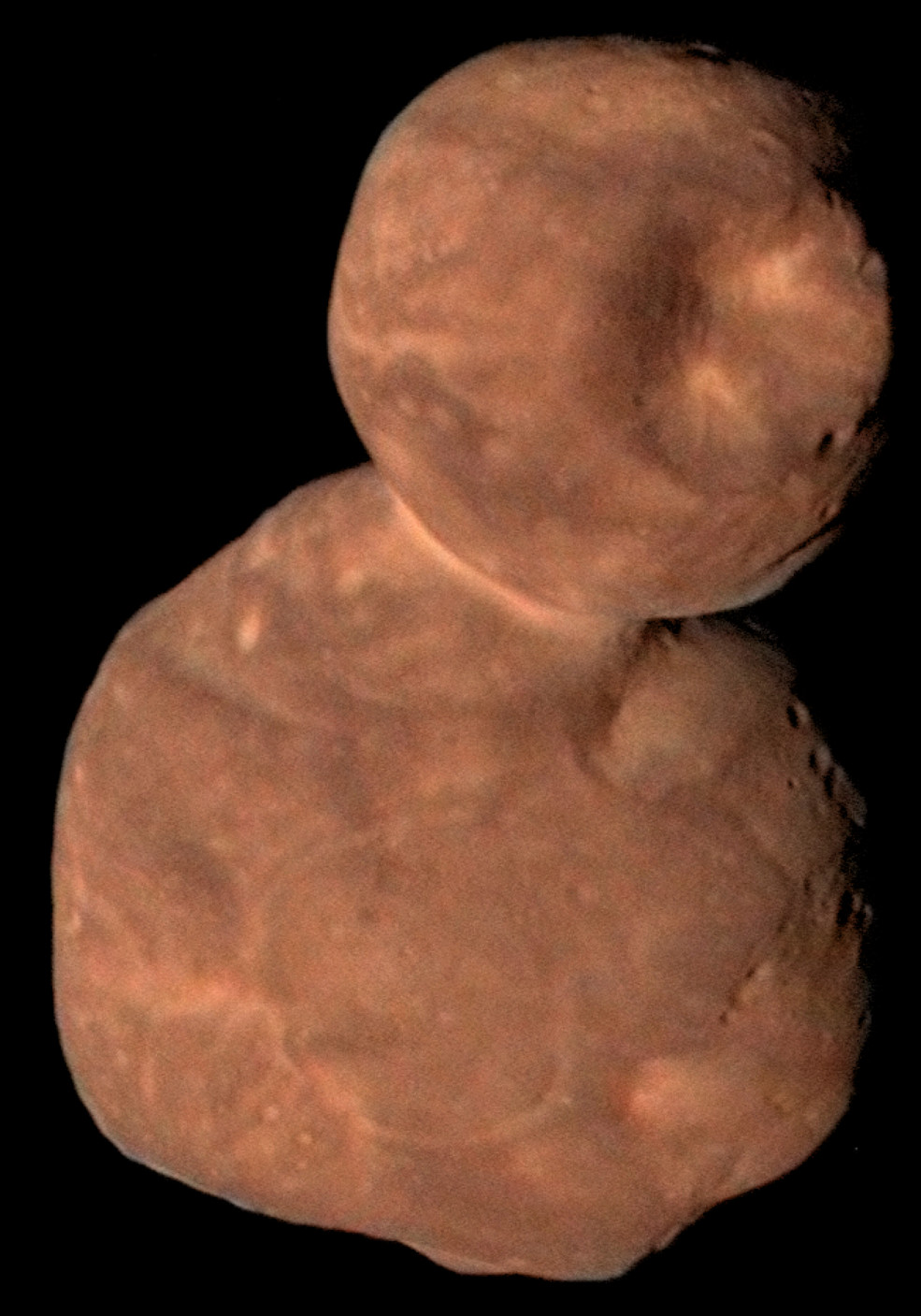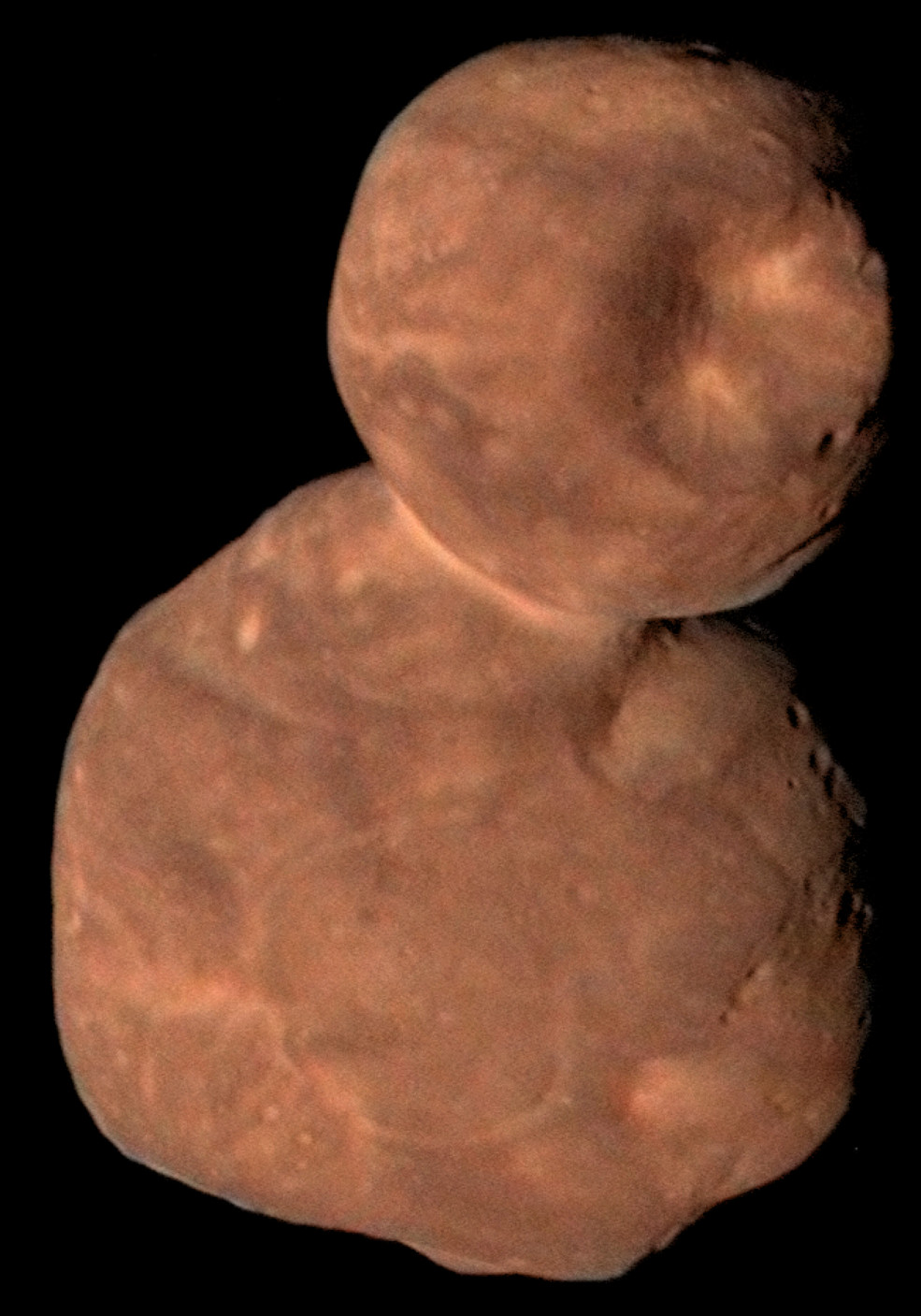
Primordial contact binary 2014 MU69, also known as Ultima Thule, really is very red. In fact, it's the reddest outer solar system object ever visited by a spacecraft from Earth. Its reddish hue is believed to be due to organic materials on its surface. Ruddy color and tantalizing surface details seen in this composite image are based on data from the New Horizons spacecraft recorded during the January 1 flyby of the farthest world yet explored. Embedded in the smaller lobe Thule (top), the 8 kilometer wide feature nicknamed Maryland crater is the largest depression known on the surface of Ultima Thule. Transmission of data collected from the flyby continues, and will go on until the late summer 2020 as New Horizons speeds deeper into the dim and distant Kuiper Belt.
El binario de contacto primordial 2014 MU69, también conocido como Ultima Thule, realmente es muy rojo. De hecho, es el objeto más rojo del sistema solar exterior jamás visitado por una nave espacial desde la Tierra. Su tono rojizo se cree que se debe a materiales orgánicos en su superficie. El color rojizo y los detalles superficiales sugerentes vistos en esta imagen compuesta se basan en datos de la nave espacial New Horizons registrados durante el sobrevuelo del 1 de enero al mundo más lejano explorado hasta la fecha. Incrustado en el lóbulo más pequeño Thule (arriba), el rasgo de 8 kilómetros de ancho apodado el cráter Maryland es la mayor depresión conocida en la superficie de Ultima Thule. La transmisión de los datos recopilados durante el sobrevuelo continúa, y se prolongará hasta finales del verano de 2020, a medida que New Horizons se adentre más en el oscuro y distante cinturón de Kuiper.