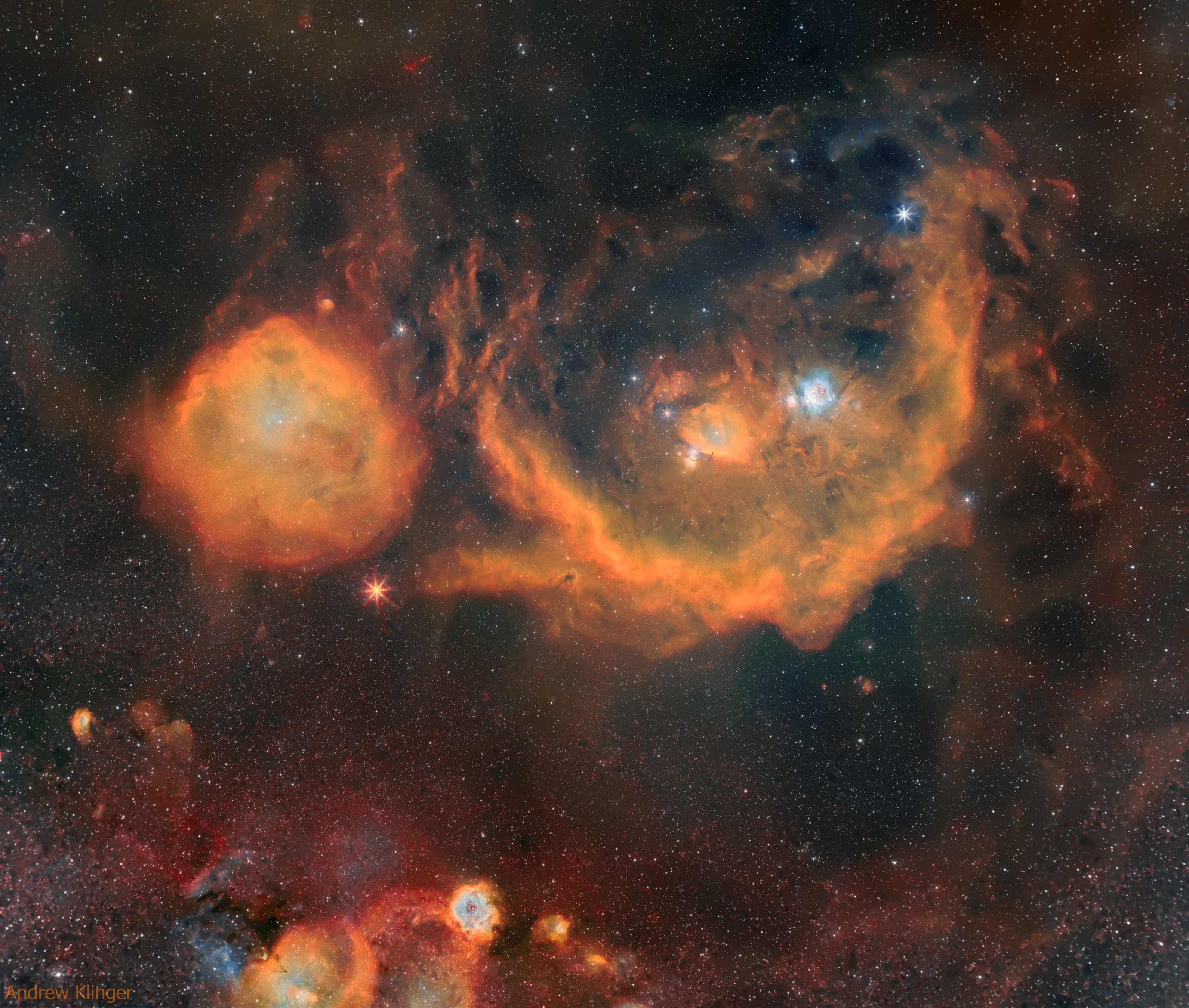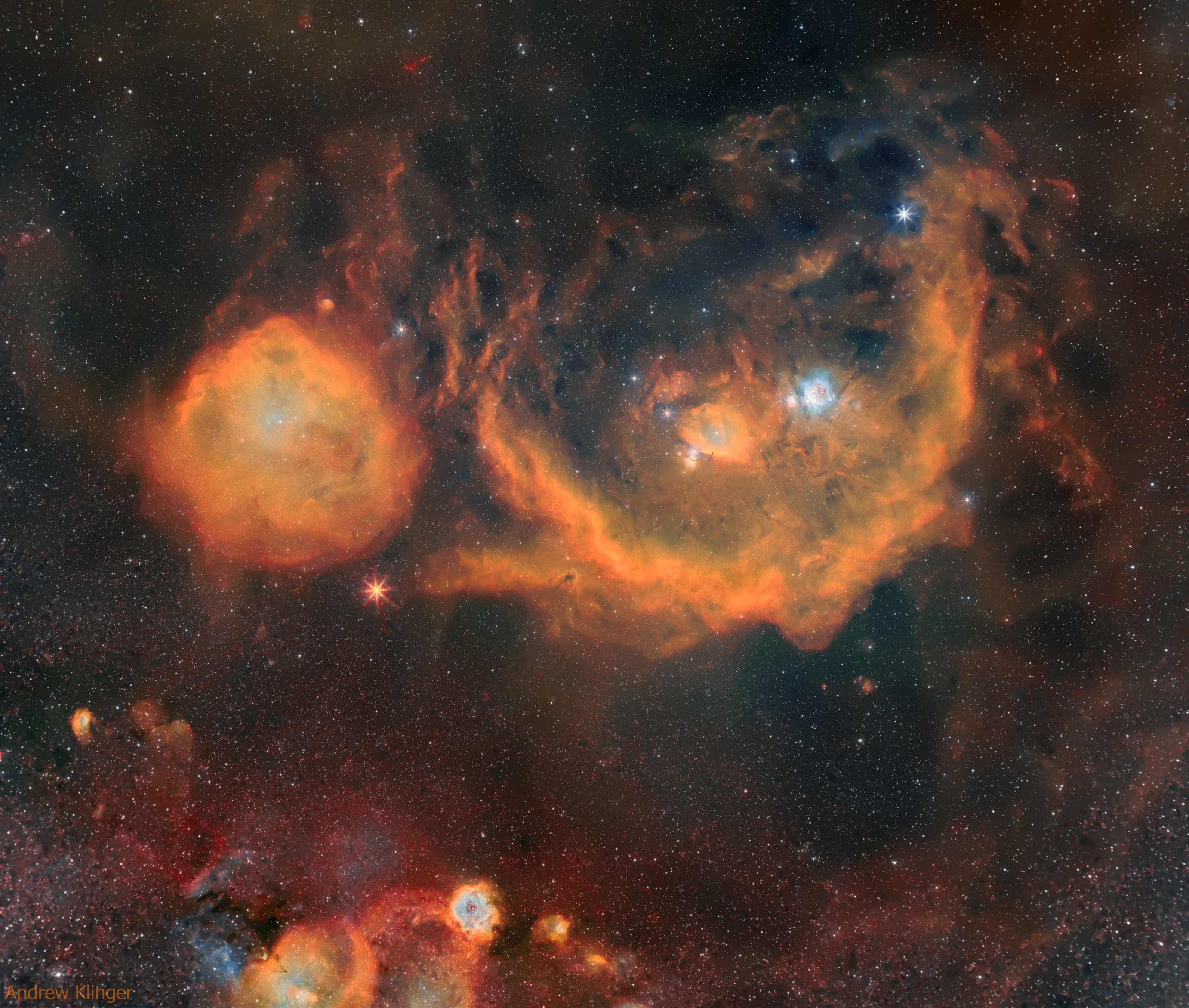
The constellation of Orion is much more than three stars in a row. It is a direction in space that is rich with impressive nebulas. To better appreciate this well-known swath of sky, a new long exposure image was taken over several clear nights in January, February and March. After 23 hours of camera time and untold hours of image processing, the featured collage in the light of hydrogen, oxygen, and sulfur was produced spanning over 40 times the angular diameter of the Moon. Of the many interesting details that have become visible, one that particularly draws the eye is Barnard's Loop, the bright red orange arc just to the right of the image center. The Rosette Nebula is not the giant orange nebula just to the left of the image center -- that is larger but lesser known nebula known as the Meissa Ring. The Rosette Nebula is visible, though: it is the bright orange, blue and white nebula near the image bottom. The bright orange star just left of the frame center is Betelgeuse, while the bright blue star on the upper right is Rigel. About those famous three stars that cross the belt of Orion the Hunter -- in this busy frame they can be hard to locate, but a discerning eye will find them just to the right of the image center.
La constelación de Orión es mucho más que tres estrellas alineadas. Es una dirección en el espacio rica en impresionantes nebulosas. Para apreciar mejor esta bien conocida porción del cielo, se tomó una nueva imagen con exposición prolongada durante varias noches despejadas en enero, febrero y marzo. Después de 23 horas de tiempo de cámara y horas incontables de procesamiento de imagen, se produjo el collage destacado en la luz del hidrógeno, oxígeno y azufre, que abarca más de 40 veces el diámetro angular de la Luna. De los muchos detalles interesantes que ahora son visibles, uno que particularmente llama la atención es el Bucle de Barnard, el arco brillante de color naranja rojizo justo a la derecha del centro de la imagen. La Nebulosa Roseta no es la gran nebulosa naranja justo a la izquierda del centro de la imagen — esa es una nebulosa más grande pero menos conocida llamada el Anillo de Meissa. La Nebulosa Roseta es visible, aunque: es la nebulosa brillante de color naranja, azul y blanco cerca de la parte inferior de la imagen. La estrella brillante de color naranja justo a la izquierda del centro del marco es Betelgeuse, mientras que la estrella brillante de color azul en la parte superior derecha es Rigel. En cuanto a esas tres famosas estrellas que cruzan el cinturón de Orión el Cazador — en este marco animado pueden ser difíciles de localizar, pero un ojo perspicaz las encontrará justo a la derecha del centro de la imagen.