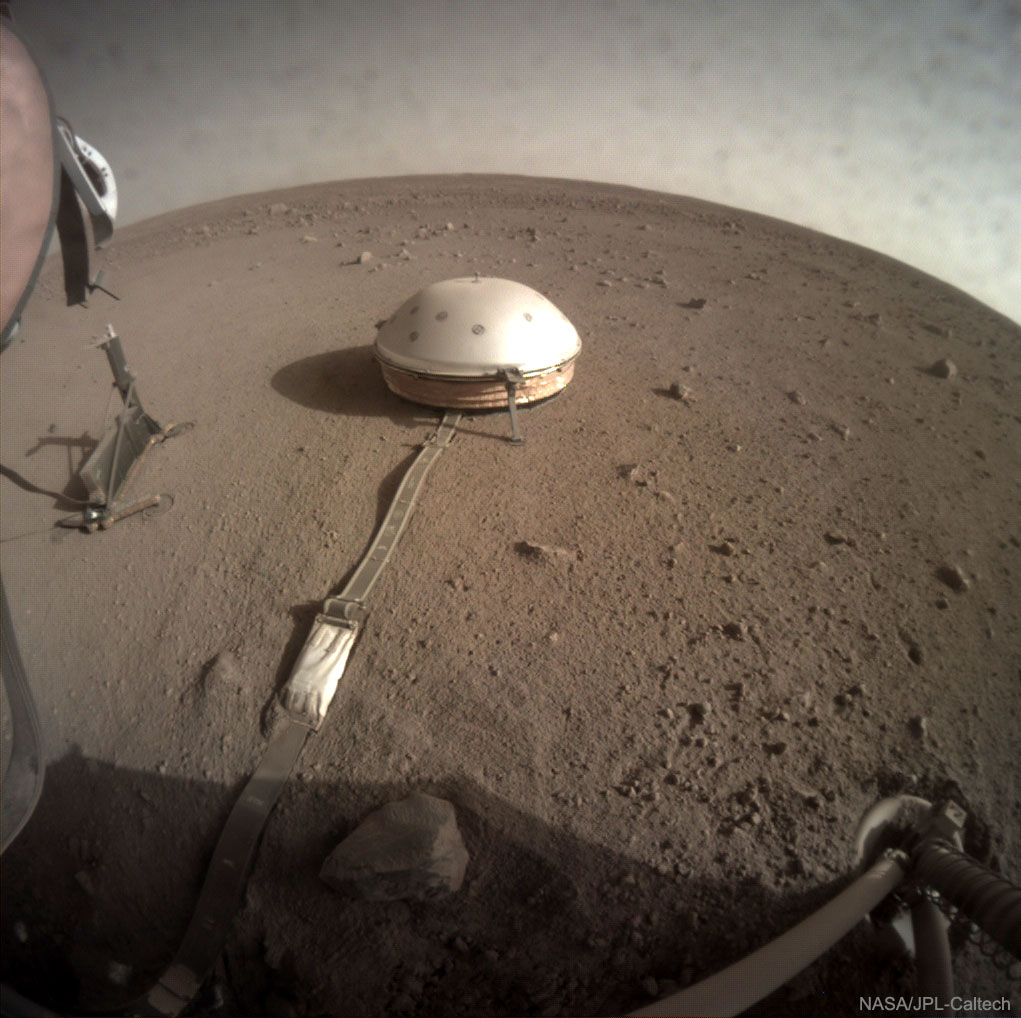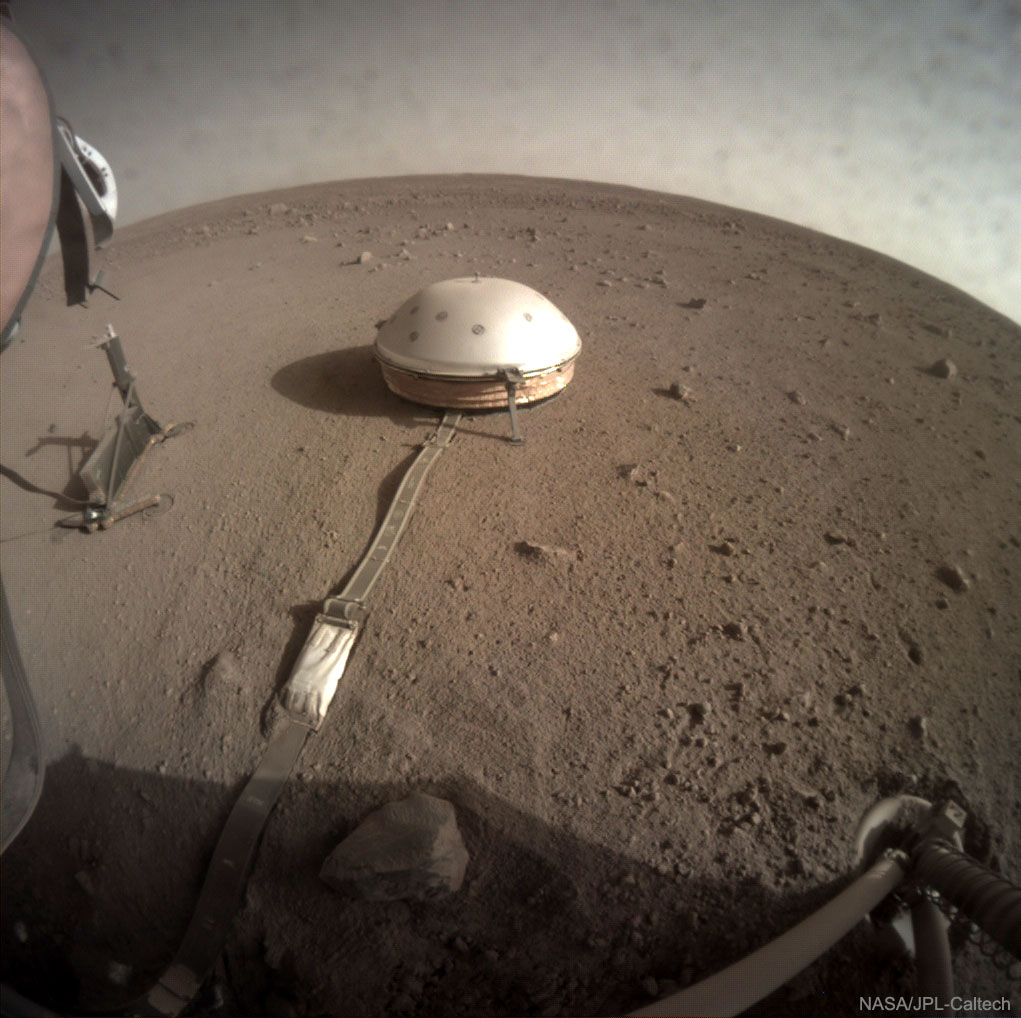
If you put your ear to Mars, what would you hear? To find out, and to explore the unknown interior of Mars, NASA's Insight Lander deployed SEIS late last year, a sensitive seismometer that can detect marsquakes. In early April, after hearing the wind and motions initiated by the lander itself, SEIS recorded an unprecedented event that matches what was expected for a marsquake. This event can be heard on this YouTube video. Although Mars is not thought to have tectonic plates like the Earth, numerous faults are visible on the Martian surface which likely occurred as the hot interior of Mars cooled -- and continues to cool. Were strong enough marsquakes to occur, SEIS could hear their rumbles reflected from large structures internal to Mars, like a liquid core, if one exists. Pictured last week, SEIS sits quietly on the Martian surface, taking in some Sun while light clouds are visible over the horizon. Create a Distant Legacy: Send your name to Mars
Si pusieras tu oído en Marte, ¿qué oirías? Para descubrirlo y explorar su interior desconocido, la nave de aterrizaje InSight de la NASA desplegó el año pasado SEIS, un sismómetro sensible capaz de detectar terremotos marcianos. A principios de abril, después de escuchar el viento y los movimientos generados por la propia nave, SEIS registró un evento sin precedentes que coincide con lo esperado para un terremoto marciano. Este evento se puede escuchar en este video de YouTube. Aunque Marte no se cree que tenga placas tectónicas como la Tierra, numerosas fallas son visibles en la superficie marciana, las cuales probablemente ocurrieron a medida que el interior caliente de Marte se enfrió — y continúa enfriándose. Si ocurrieran terremotos marcianos lo suficientemente fuertes, SEIS podría escuchar sus rumores reflejados desde estructuras grandes internas a Marte, como un núcleo líquido, si existe. La semana pasada, SEIS permaneció en silencio sobre la superficie marciana, recibiendo algo de luz solar mientras nubes leves eran visibles en el horizonte.