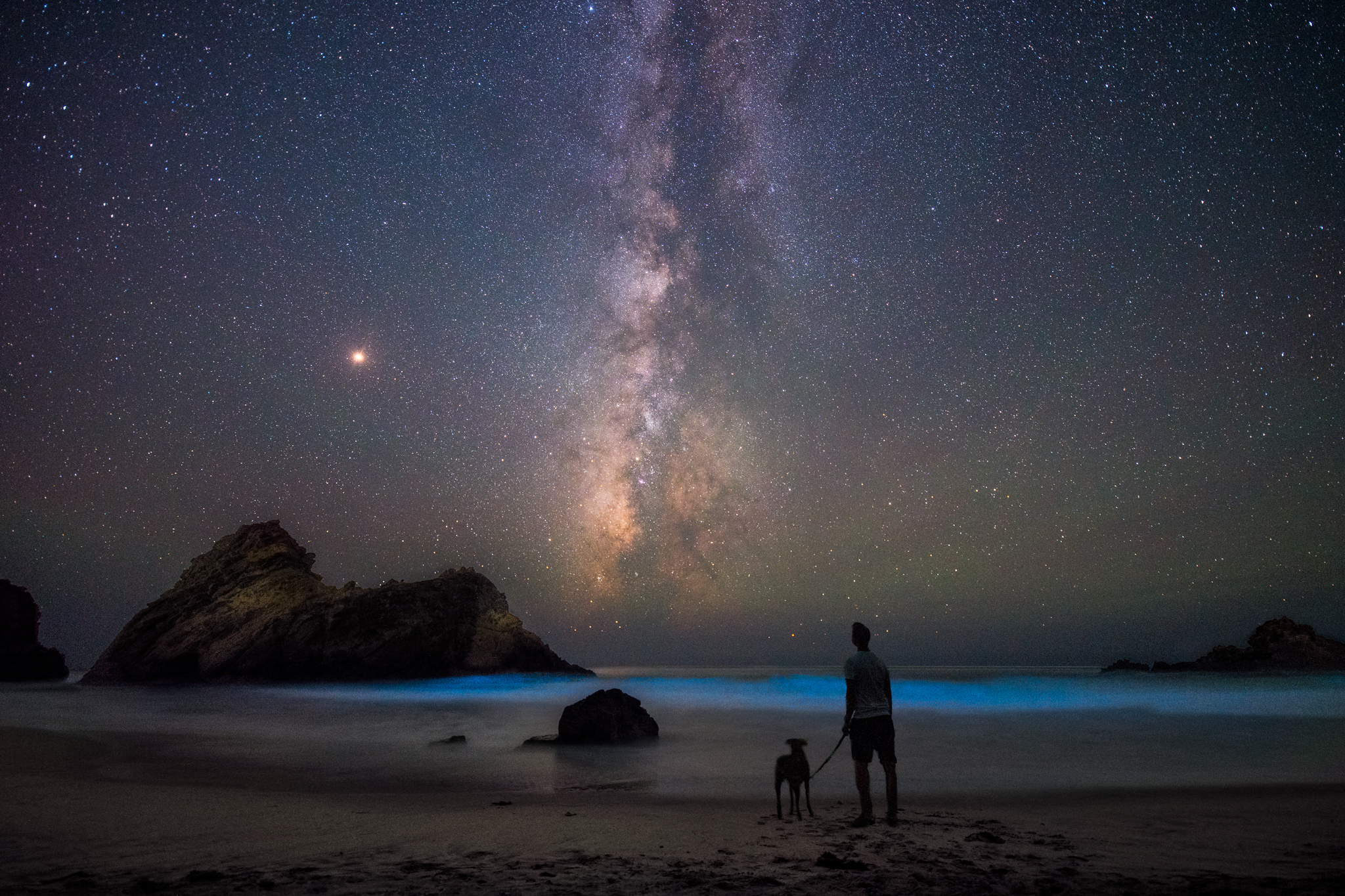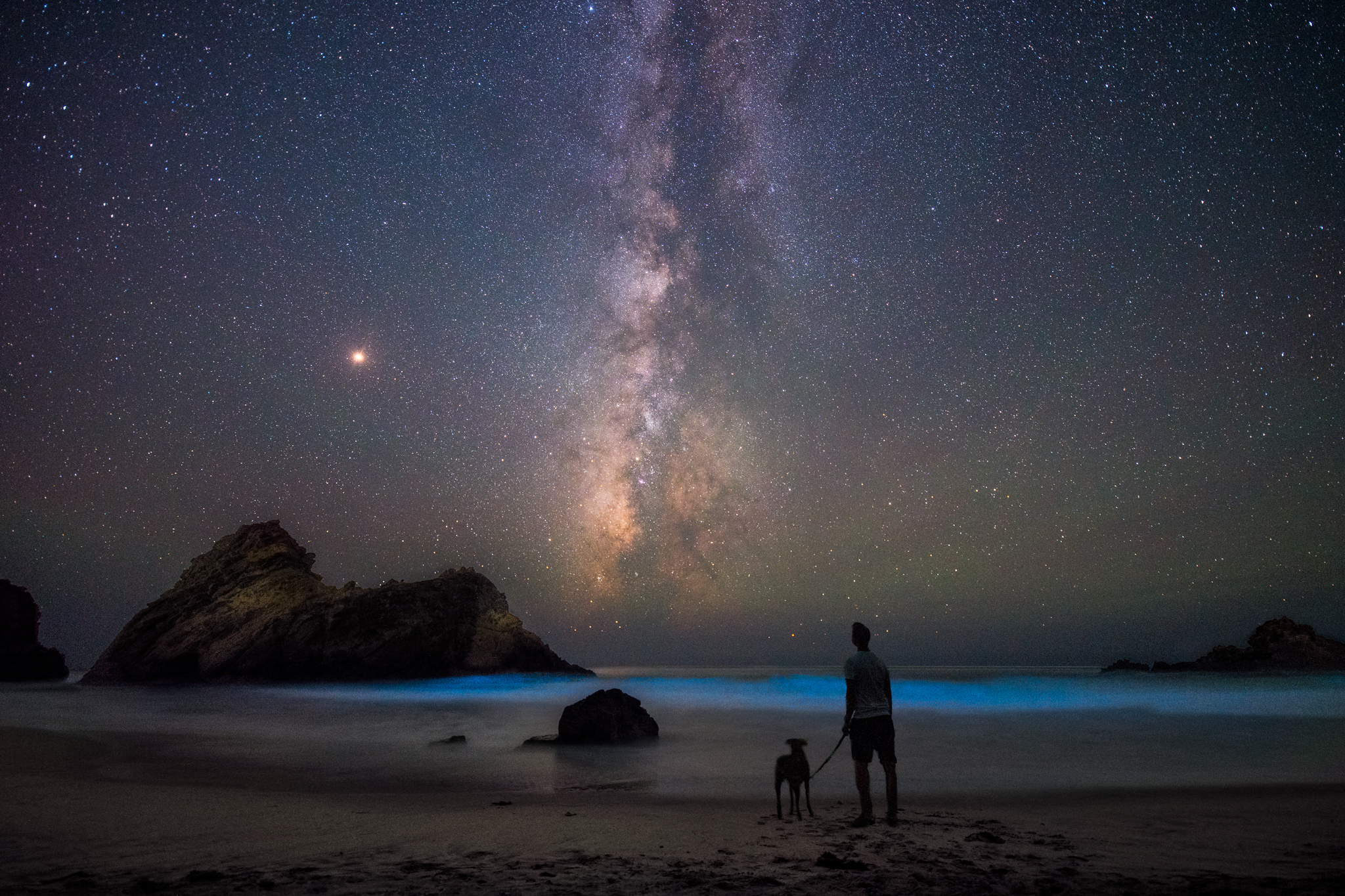
At the end of last year's northern summer, after its dazzling opposition, Mars still shone brightly in the night. The celestial beacon easily attracted the attention of these two night skygazers who stood still for just a while, but long enough to be captured in the sea and night skyscape from Big Sur, planet Earth. Its central bulge near the southwestern horizon, the Milky Way runs through the scene too, while the long exposure also reveals a faint blue bioluminescence blooming in the waves along Pfeiffer Beach. Now much fainter, Mars can be spotted near the western horizon after sunset, but this month Jupiter is near its closest and brightest, reaching its own opposition on June 10. Night skygazers can spot brilliant Jupiter over southern horizons, glaring next to the stars toward the central Milky Way.
Al final del verano boreal del año pasado, después de su brillante oposición, Marte aún brillaba intensamente en la noche. Esta luz celestial atrajo fácilmente la atención de estos dos observadores del cielo nocturno, quienes se quedaron quietos por un momento breve, pero suficiente como para ser capturados en esta escena de mar y cielo nocturno desde Big Sur, en la Tierra. Su abultamiento central cerca del horizonte suroeste, la Vía Láctea atraviesa también la escena, mientras que la larga exposición revela además una tenue bioluminiscencia azulada que florece en las olas a lo largo de la playa Pfeiffer. Ahora mucho más tenue, Marte puede ser observado cerca del horizonte occidental después de la puesta de sol, pero este mes Júpiter está cerca de su punto más cercano y brillante, alcanzando su propia oposición el 10 de junio. Los observadores del cielo nocturno pueden localizar a Júpiter brillante sobre los horizontes meridionales, brillando junto a las estrellas hacia la Vía Láctea central.