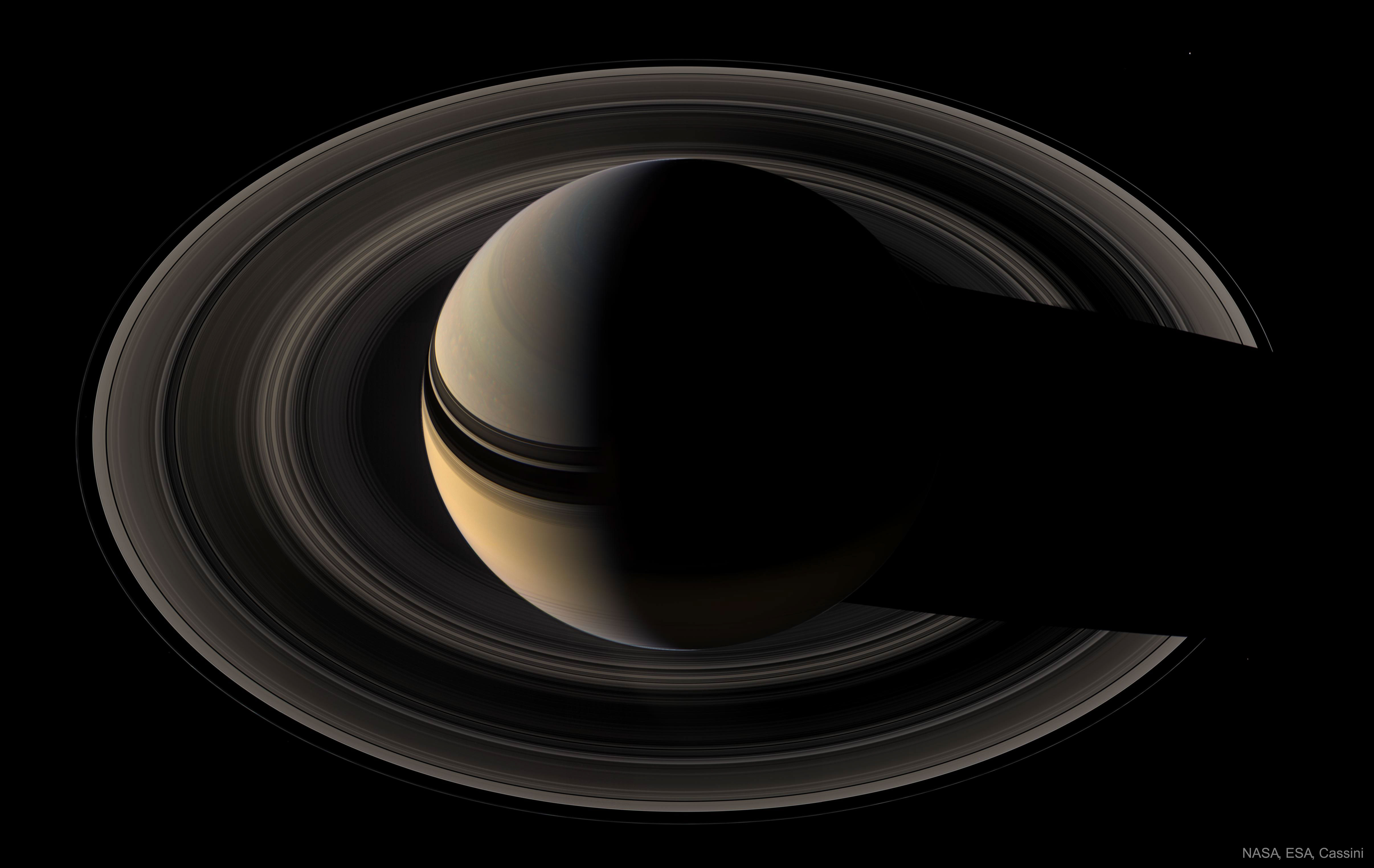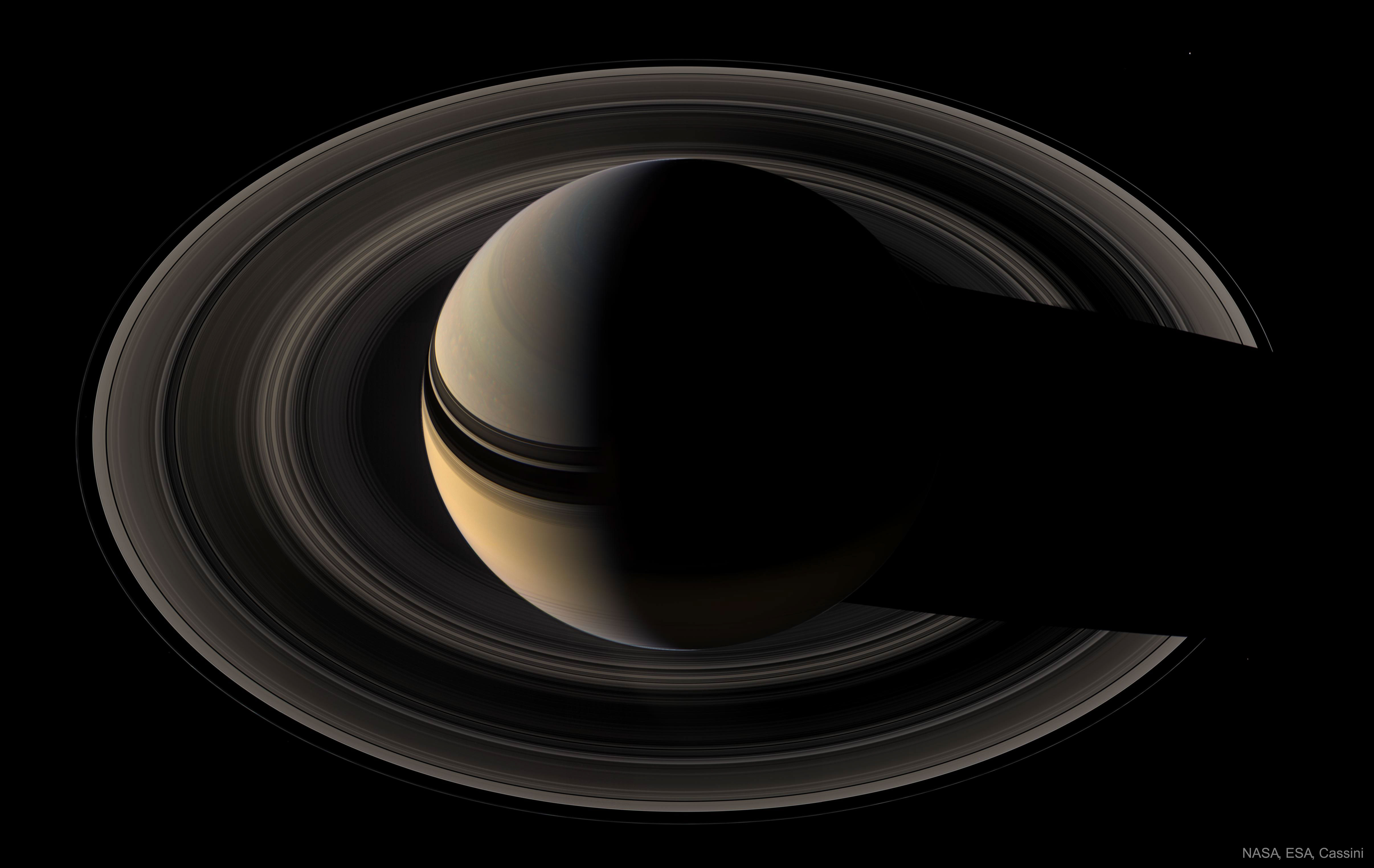
Saturn never shows a crescent phase -- from Earth. But when viewed from beyond, the majestic giant planet can show an unfamiliar diminutive sliver. This image of crescent Saturn in natural color was taken by the robotic Cassini spacecraft in 2007. The featured image captures Saturn's majestic rings from the side of the ring plane opposite the Sun -- the unilluminated side -- another vista not visible from Earth. Pictured are many of Saturn's photogenic wonders, including the subtle colors of cloud bands, the complex shadows of the rings on the planet, and the shadow of the planet on the rings. A careful eye will find the moons Mimas (2 o'clock) and Janus (4 o'clock), but the real challenge is to find Pandora (8 o'clock). Saturn is now nearly opposite from the Sun in the Earth's sky and so can be seen in the evening starting just after sunset for the rest of the night.
Saturno nunca muestra una fase creciente -- desde la Tierra. Pero cuando se observa desde más allá, el majestuoso planeta gigante puede mostrar un diminuto fragmento inusual. Esta imagen de Saturno en cuarto creciente en color natural fue tomada por la nave espacial robótica Cassini en 2007. La imagen destacada captura los majestuosos anillos de Saturno desde el lado del plano de los anillos opuesto al Sol -- el lado no iluminado -- otra vista que no es visible desde la Tierra. Se muestran muchas de las maravillas fotogénicas de Saturno, incluyendo los sutiles colores de las bandas de nubes, las sombras complejas de los anillos sobre el planeta, y la sombra del planeta sobre los anillos. Un ojo atento encontrará las lunas Mimas (2 en punto) y Janus (4 en punto), pero el verdadero desafío es encontrar a Pandora (8 en punto). Saturno ahora está casi opuesto al Sol en el cielo terrestre y por lo tanto puede verse por la noche, comenzando justo después de la puesta de sol, durante el resto de la noche.