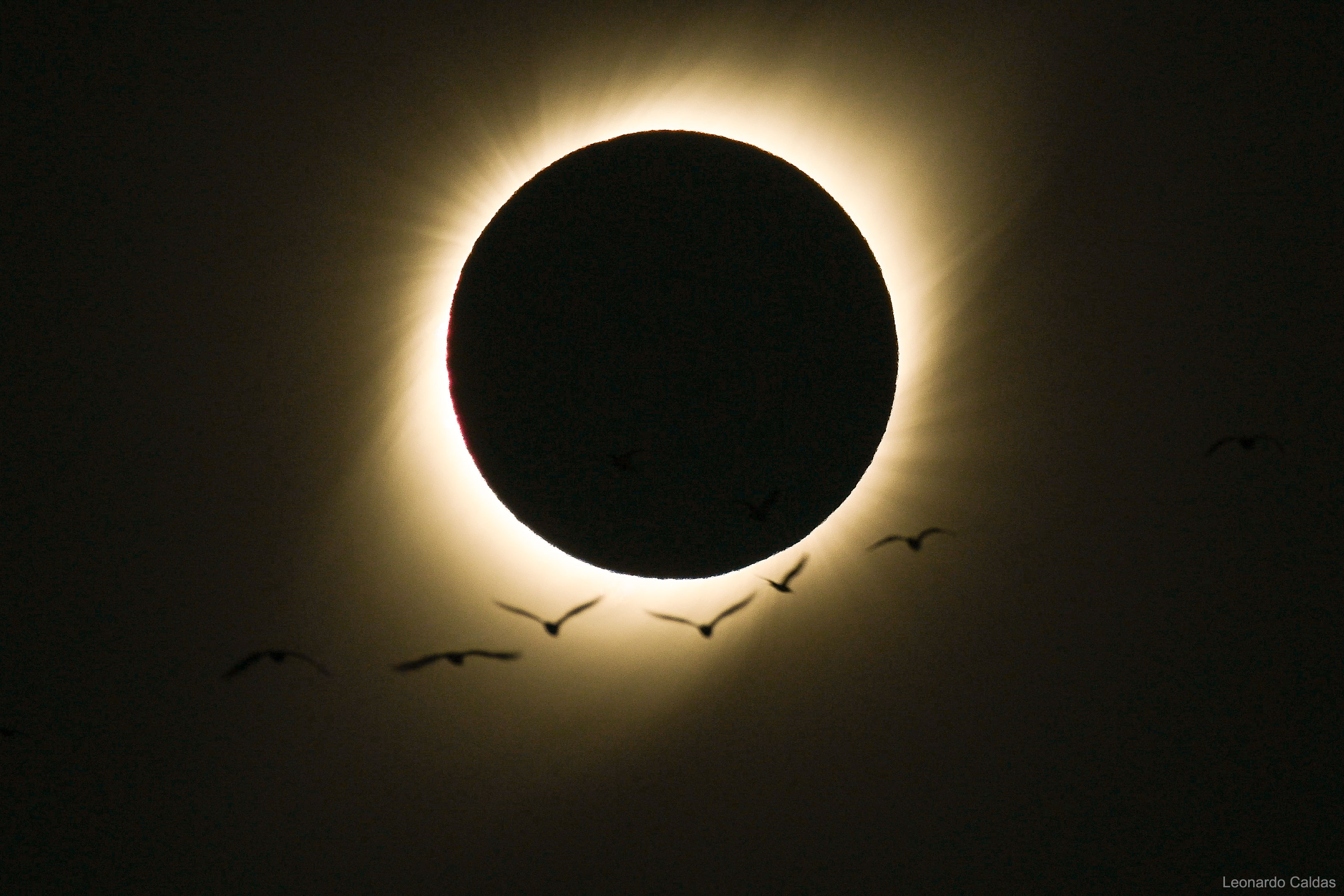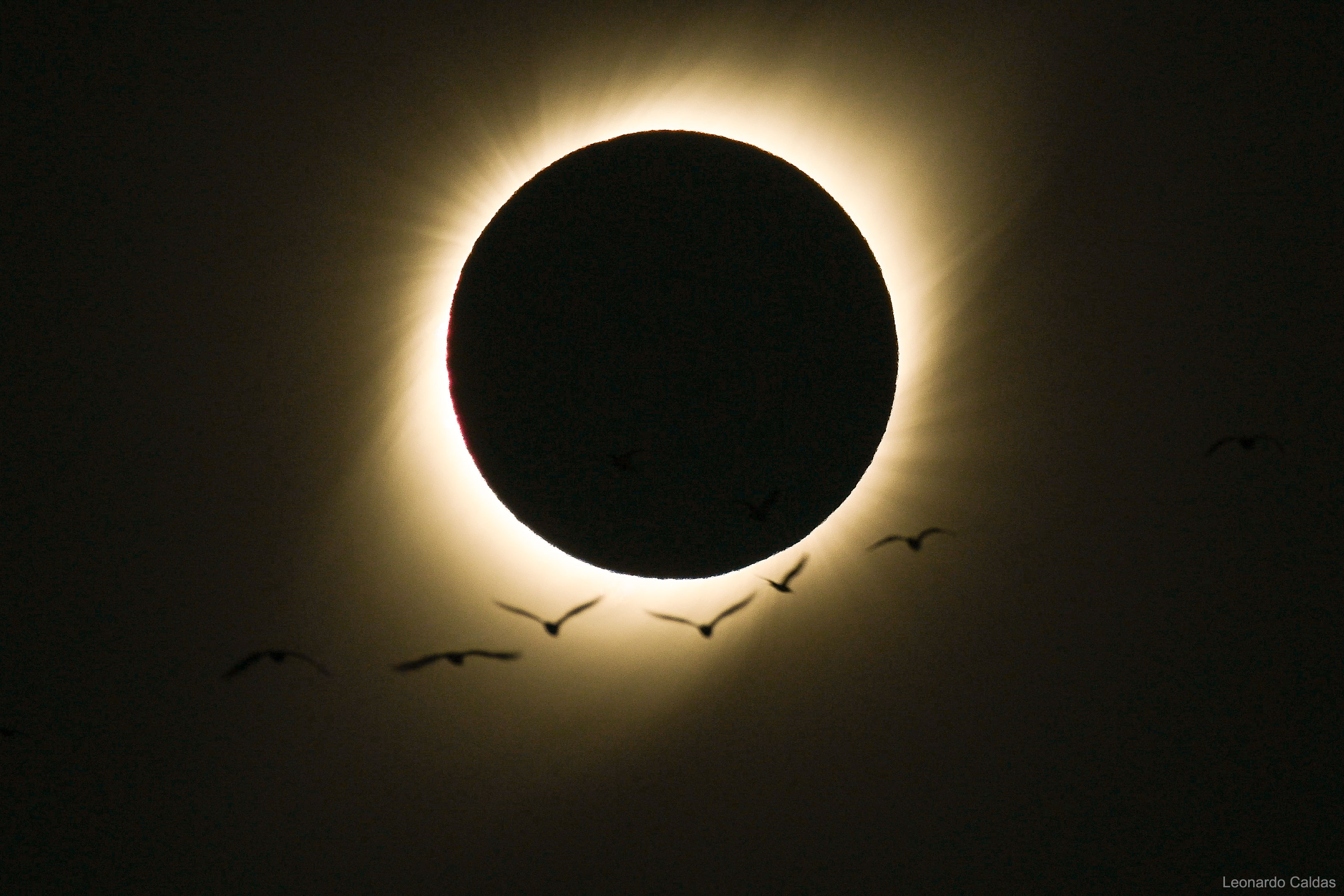
What do birds do during a total solar eclipse? Darkness descends more quickly in a total eclipse than during sunset, but returns just as quickly -- and perhaps unexpectedly to the avians -- just a few minutes later. Stories about the unusual behavior of birds during eclipses have been told for centuries, but bird reactions were recorded and studied systematically by citizen scientists participating in an eBird project during the total solar eclipse that crossed the USA in 2017 August. Although some unusual behaviors were observed, many observers noted birds acting like it was dusk and either landing or flying low to the ground. Radar confirmed a significant decrease in high-flying birds and insects during and just after totality. Conversely, several sightings of normally nocturnal birds were reported. Pictured, a flock of birds in La Serena, Chile flew through the air together during the total solar eclipse that crossed South America last week. The photographer captured the scene in frames from an eclipse video. The next total solar eclipse in 2020 December will also cross South America, while in 2024 April a total solar eclipse will cross North America from Mexico through New England, USA. Gallery 2019: Notable total eclipse images submitted to APOD
¿Qué hacen las aves durante un eclipse solar total? La oscuridad cae con mayor rapidez durante un eclipse total que durante la puesta de sol, pero vuelve con la misma rapidez — y quizás de forma inesperada para las aves — solo unos minutos después. Las historias sobre el comportamiento inusual de las aves durante los eclipses se han contado durante siglos, pero las reacciones de las aves fueron registradas y estudiadas sistemáticamente por científicos ciudadanos participando en un proyecto eBird durante el eclipse solar total que atravesó Estados Unidos en agosto de 2017. Aunque se observaron algunos comportamientos inusuales, muchos observadores notaron que las aves actuaban como si fuera la hora de la puesta de sol y ya fueran a posarse o volaban cerca del suelo. Los radares confirmaron una disminución significativa de aves y insectos volando a gran altura durante y justo después del momento de totalidad. Por el contrario, se reportaron varias avistaciones de aves normalmente nocturnas. En la imagen, una bandada de aves en La Serena, Chile, voló juntas por el aire durante el eclipse solar total que atravesó Sudamérica la semana pasada. El fotógrafo capturó la escena en fotogramas de un video del eclipse. El próximo eclipse solar total de diciembre de 2020 también atravesará Sudamérica, mientras que en abril de 2024 un eclipse solar total atravesará Norteamérica desde México hasta el noreste de Estados Unidos.