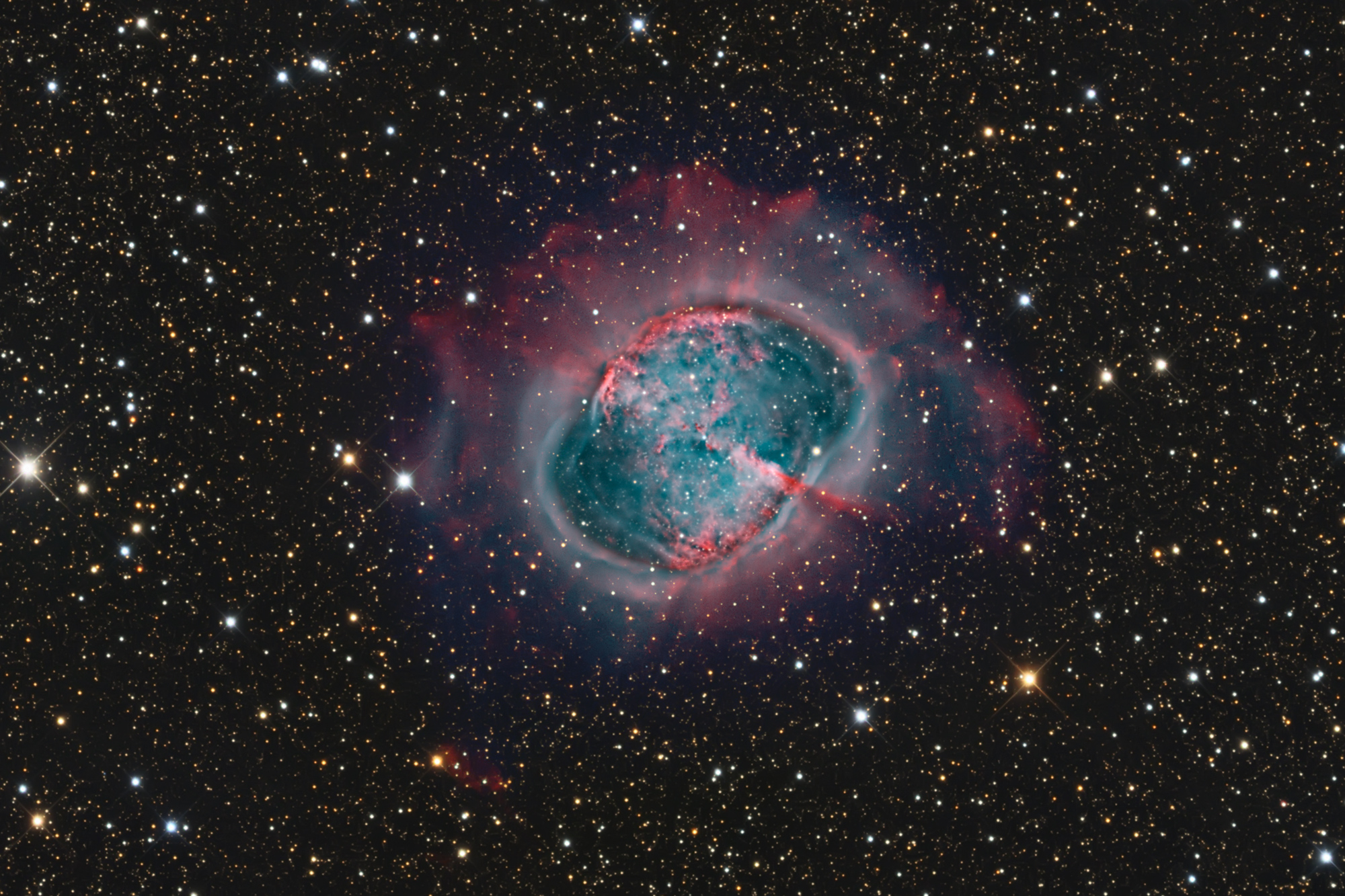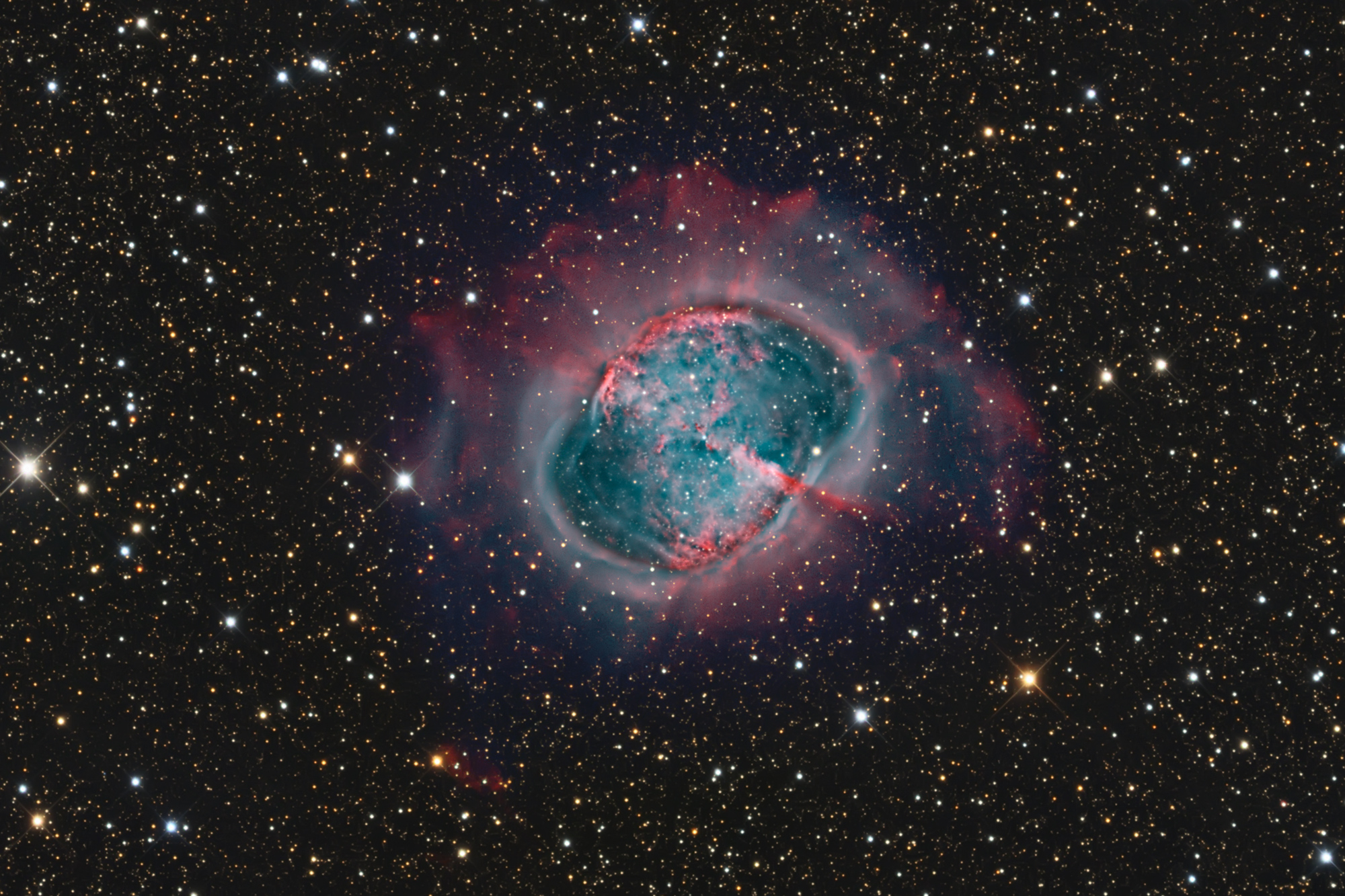
While hunting for comets in the skies above 18th century France, astronomer Charles Messier diligently kept a list of the things he encountered that were definitely not comets. This is number 27 on his now famous not-a-comet list. In fact, 21st century astronomers would identify it as a planetary nebula, but it's not a planet either, even though it may appear round and planet-like in a small telescope. Messier 27 (M27) is an excellent example of a gaseous emission nebula created as a sun-like star runs out of nuclear fuel in its core. The nebula forms as the star's outer layers are expelled into space, with a visible glow generated by atoms excited by the dying star's intense but invisible ultraviolet light. Known by the popular name of the Dumbbell Nebula, the beautifully symmetric interstellar gas cloud is over 2.5 light-years across and about 1,200 light-years away in the constellation Vulpecula. This impressive color composite highlights details within the well-studied central region and fainter, seldom imaged features in the nebula's outer halo. It incorporates broad and narrowband images recorded using filters sensitive to emission from hydrogen and oxygen atoms.
Crédito: NASA, CGRO SSC Mientras buscaba cometas en los cielos sobre Francia del siglo XVIII, el astrónomo Charles Messier mantuvo diligentemente una lista de los objetos que encontró y que definitivamente no eran cometas. Este es el número 27 en su famosa lista de no-cometas. De hecho, los astrónomos del siglo XXI lo identificarían como una nebulosa planetaria, pero tampoco es un planeta, aunque pueda parecer redondo y similar a un planeta en un telescopio pequeño. Messier 27 (M27) es un excelente ejemplo de una nebulosa de emisión gaseosa creada cuando una estrella similar al Sol agota su combustible nuclear en su núcleo. La nebulosa se forma cuando las capas externas de la estrella son expulsadas al espacio, con un brillo visible generado por átomos excitados por la intensa luz ultravioleta invisible de la estrella moribunda. Conocida por el nombre popular de la Nebulosa del Doble Cilindro, esta nube simétrica de gas interestelar tiene más de 2,5 años luz de diámetro y se encuentra a unos 1.200 años luz de distancia en la constelación de Vulpecula. Esta impresionante composición en color resalta detalles en la región central bien estudiada y características más tenues y raramente fotografiadas en el halo exterior de la nebulosa. Incorpora imágenes de banda ancha y estrecha registradas utilizando filtros sensibles a la emisión de átomos de hidrógeno y oxígeno.