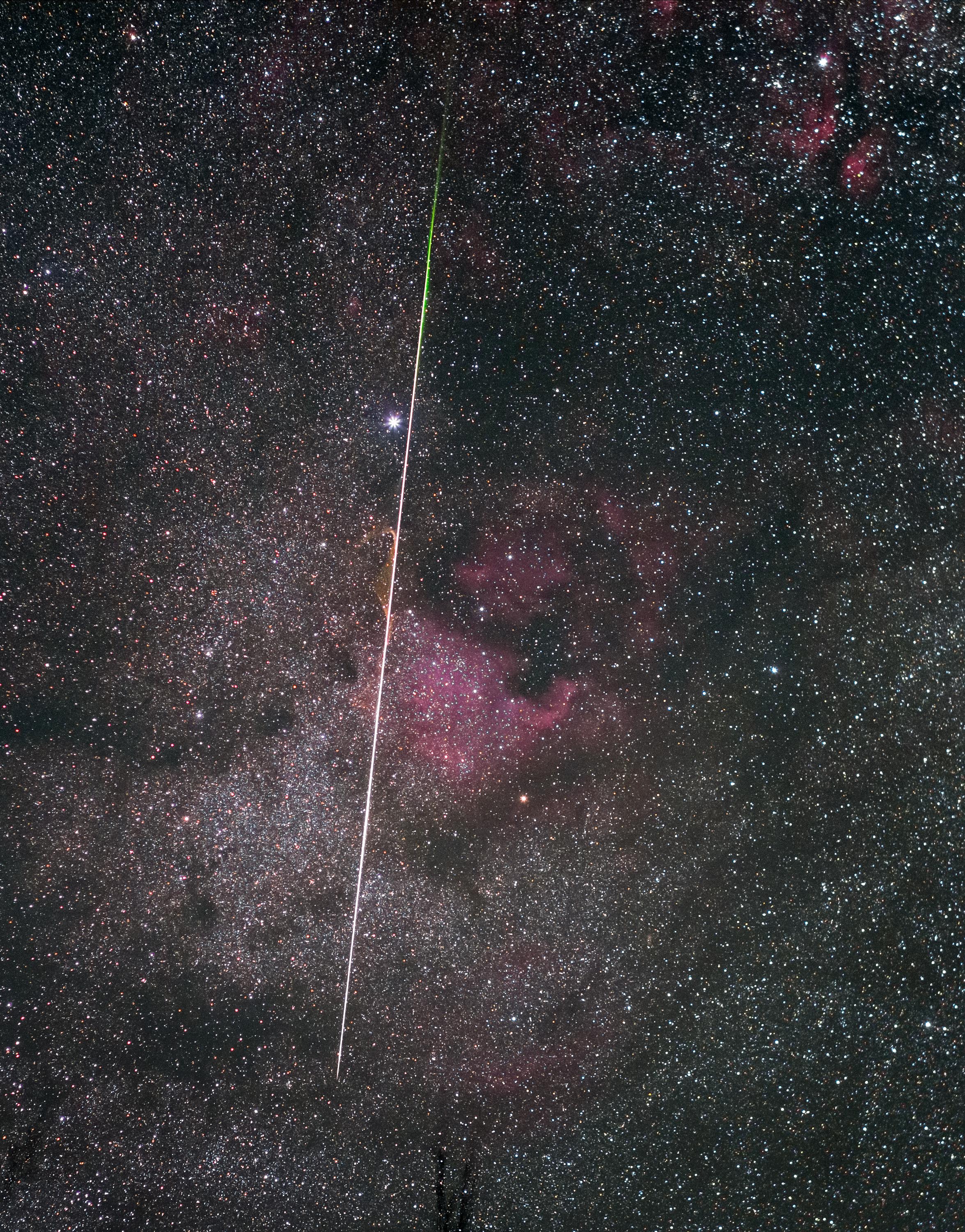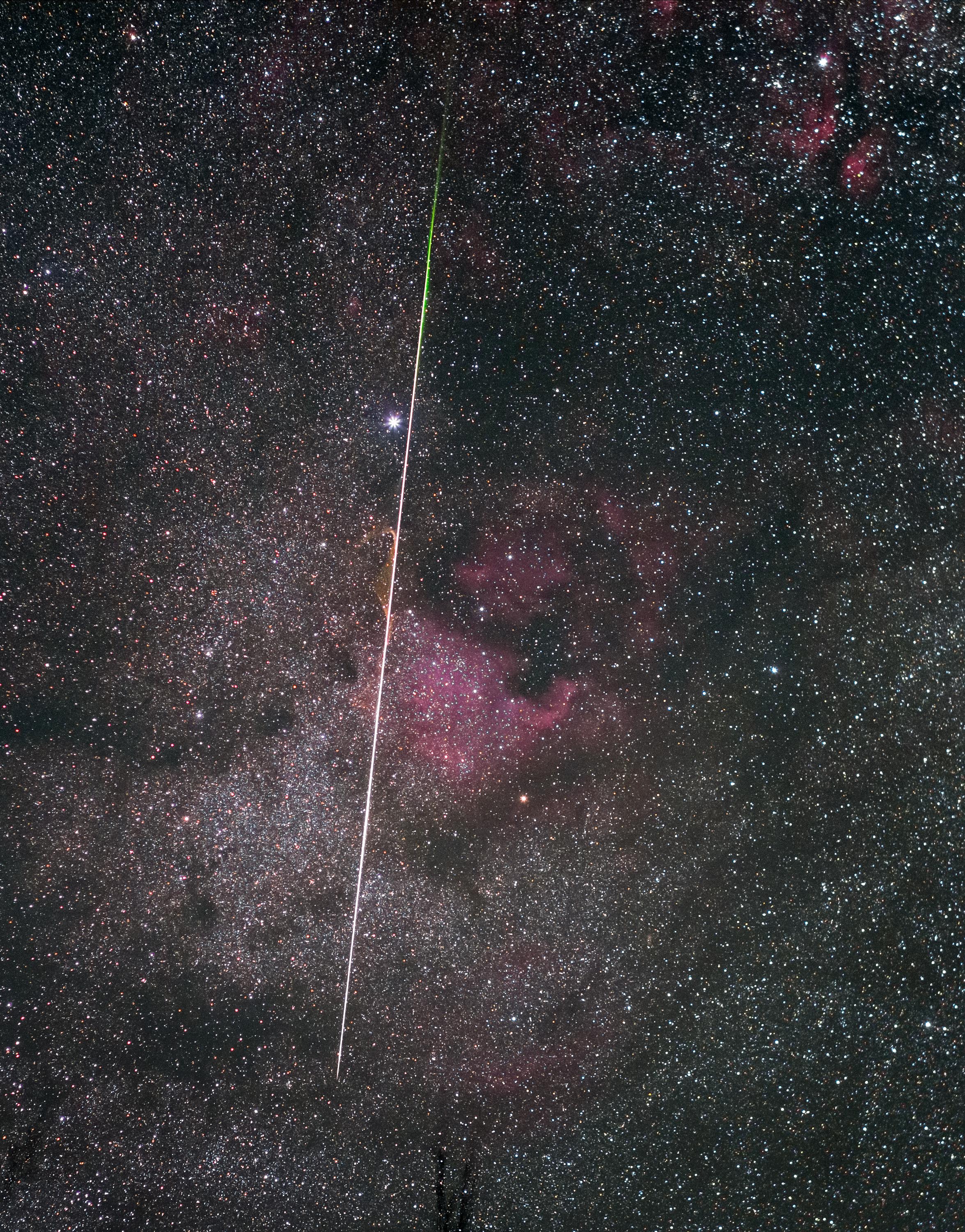
rth's annual Lyrid Meteor Shower peaked before dawn yesterday, as our fair planet plowed through debris from the tail of long-period comet Thatcher. In crisp, clear and moonless predawn skies over Brown County, Indiana this streak of vaporizing comet dust briefly shared a telephoto field of view with stars and nebulae along the Milky Way. Alpha star of the constellation Cygnus, Deneb lies near the bright meteor's path along with the region's dark interstellar clouds of dust and the recognizable glow of the North America nebula (NGC 7000). The meteor's streak points back to the shower's radiant, its apparent point of origin on the sky. That would be in the constellation Lyra, near bright star Vega and off the top edge of the frame. Celebrate the Night: International Dark Sky Week
Crédito: NASA, CGRO SSC El máximo de la lluvia anual de meteoritos Lyrid tuvo lugar antes del amanecer de ayer, cuando nuestro planeta atravesó los restos de la cola del cometa Thatcher de período largo. En cielos claros, fríos y sin luna antes del amanecer sobre el condado de Brown, en Indiana, esta raya de polvo comético en proceso de vaporización compartió brevemente un campo de visión telefoto con estrellas y nebulosas a lo largo de la Vía Láctea. La estrella alfa de la constelación de Cygnus, Deneb, se encuentra cerca del camino del meteorito brillante, junto con las nubes oscuras interestelares de polvo de la región y el reconocible brillo de la nebulosa de América del Norte (NGC 7000). La raya del meteorito apunta hacia el radiante de la lluvia, su punto aparente de origen en el cielo. Ese estaría en la constelación de Lyra, cerca de la brillante estrella Vega y fuera del borde superior del marco.