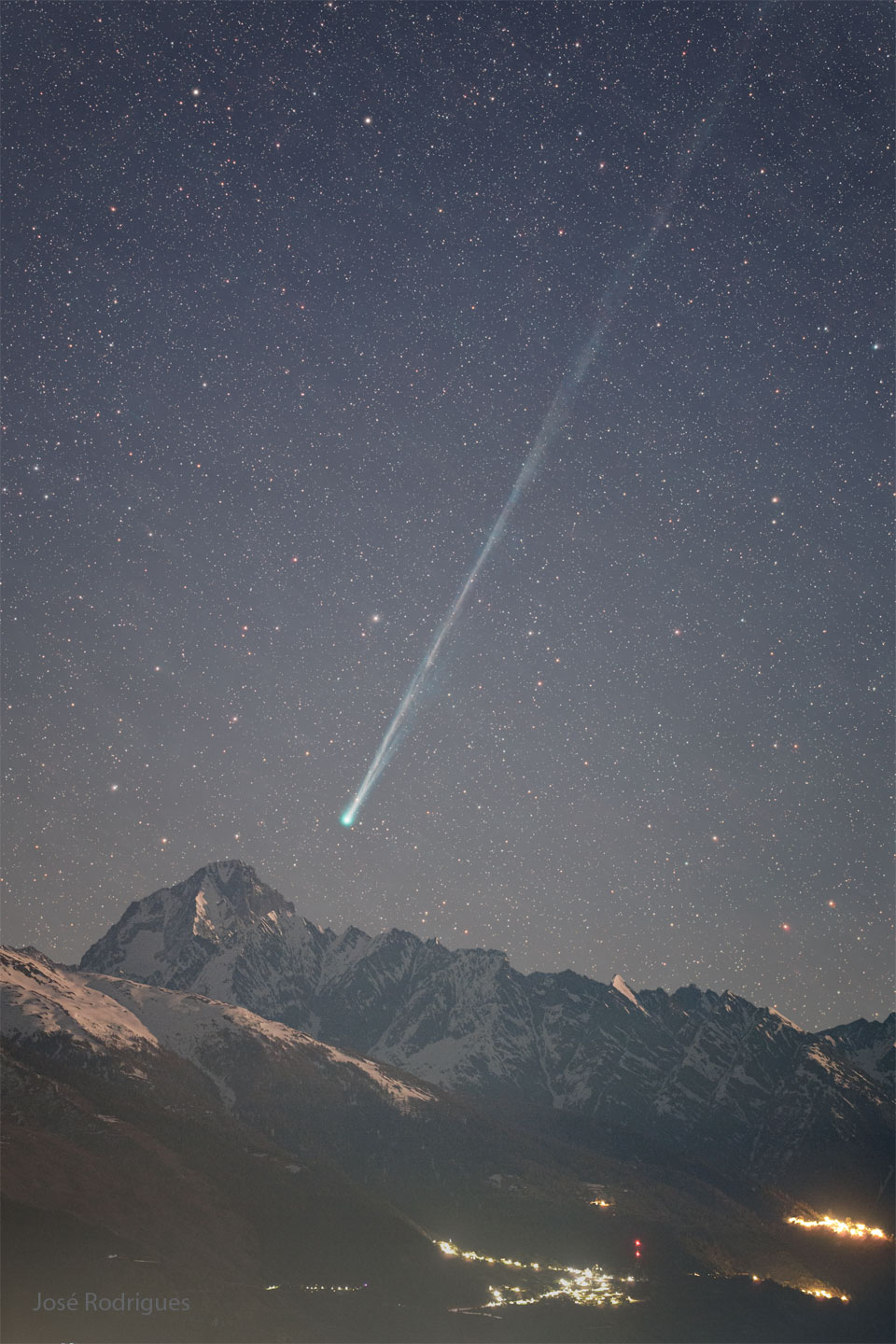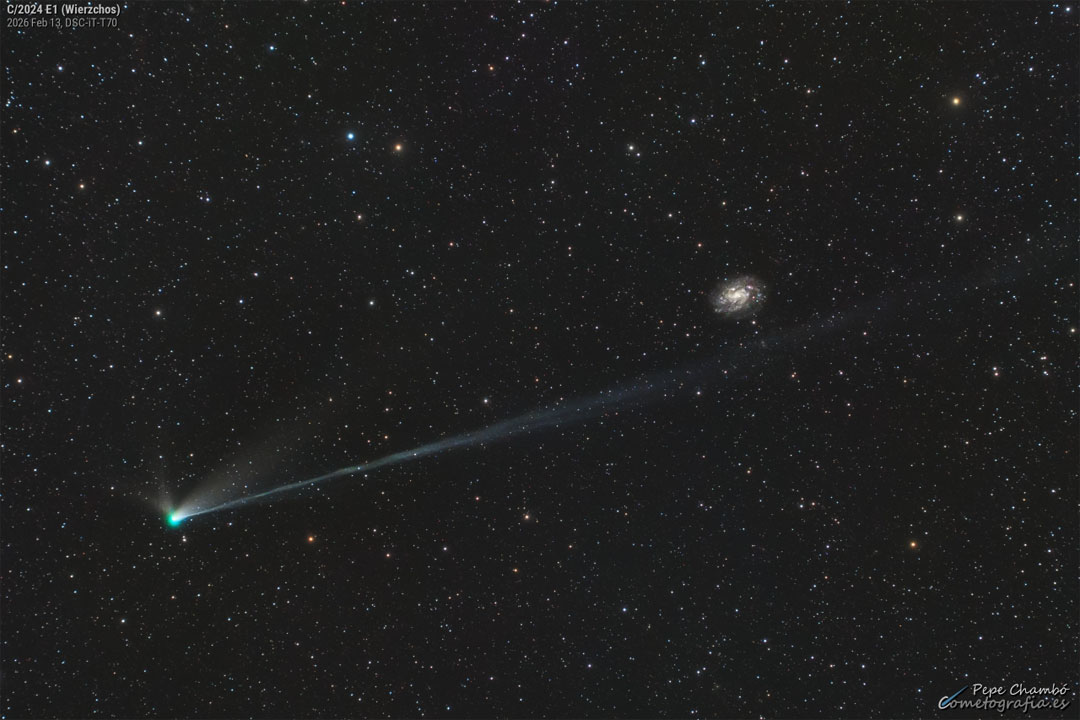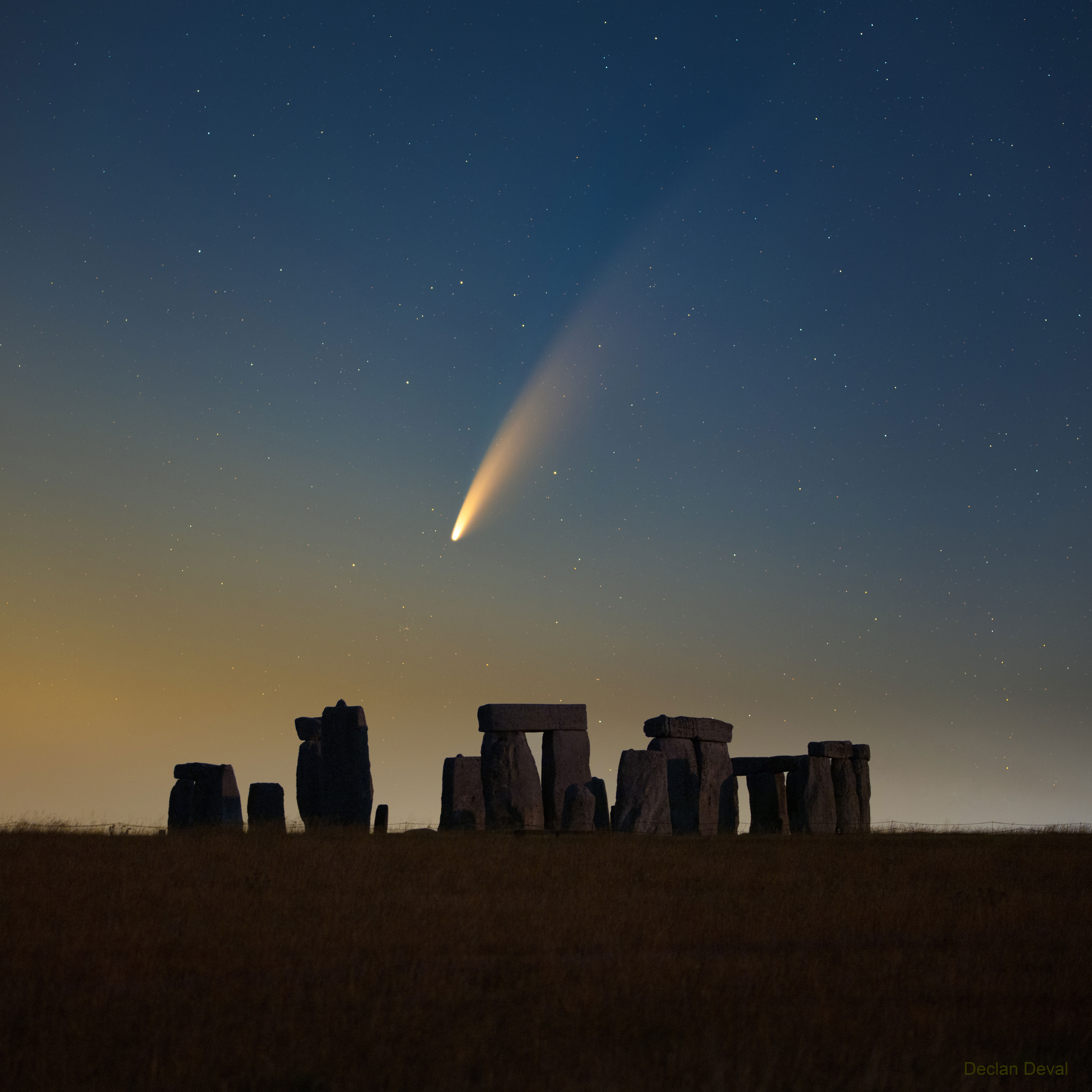
Have you ever seen a comet? Tonight -- and likely the next few nights -- should be a good chance. Go outside just at sunset and look to your northwest. The lower your horizon, the better. Binoculars may help, but if your sky is cloudless and dark, all you should need is your unaided eyes and patience. As the Sun sets, the sky will darken, and there will be an unusual faint streak pointing diagonally near the horizon. That is Comet NEOWISE. It is a 5-kilometer-wide evaporating dirty iceberg visiting from -- and returning to -- the outer Solar System. As the Earth turns, the comet will soon set, so you might want to take a picture. In the featured image, Comet C/2020 F3 (NEOWISE) was captured two mornings ago rising over Stonehenge in the UK. Discovered with the NASA satellite NEOWISE toward the end of March, Comet NEOWISE has surprised many by surviving its closest approach to the Sun, brightening dramatically, and developing impressive (blue) ion and (white) dust tails. Notable Images of Comet NEOWISE Submitted to APOD: || July 13 || July 12 || July 11 || July 10 & earlier ||
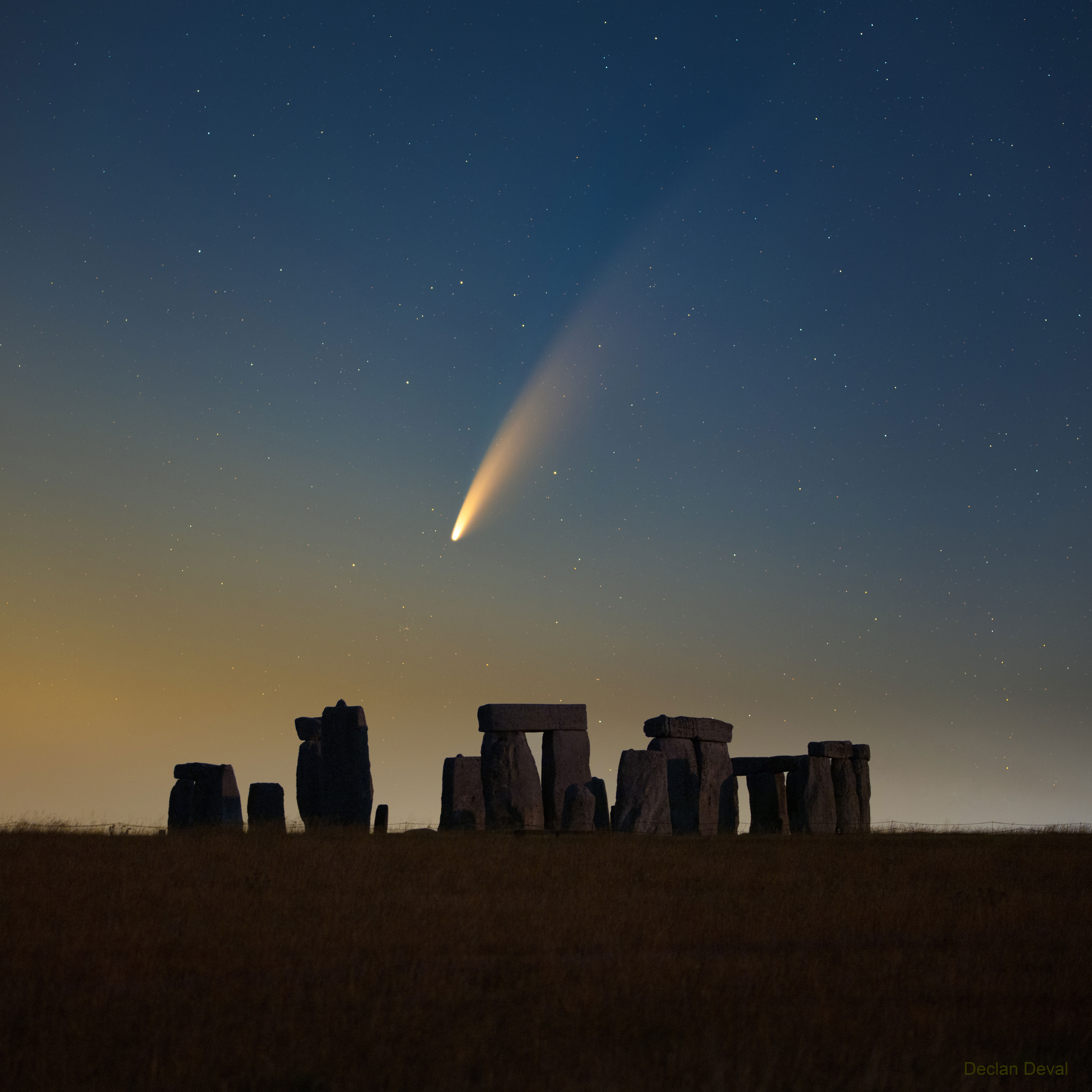
¿Alguna vez has visto un cometa? Esta noche — y probablemente las próximas noches — es una buena oportunidad. Sal afuera justo al atardecer y mira hacia el noroeste. Cuanto más bajo esté tu horizonte, mejor. Los binoculares pueden ayudar, pero si el cielo está despejado y oscuro, todo lo que necesitas es tu vista desnuda y paciencia. A medida que el Sol se ponga, el cielo se oscurecerá, y aparecerá una raya tenue y extraña apuntando diagonalmente cerca del horizonte. Ese es el cometa NEOWISE. Es un iceberg sucio y evaporándose de 5 kilómetros de ancho que visita desde — y regresa a — el sistema solar exterior. A medida que la Tierra gira, el cometa pronto se pondrá, por lo que quizás quieras tomar una foto. En la imagen destacada, el cometa C/2020 F3 (NEOWISE) fue capturado hace dos mañanas al salir sobre Stonehenge en el Reino Unido. Descubierto con el satélite de la NASA NEOWISE a finales de marzo, el cometa NEOWISE ha sorprendido a muchos al sobrevivir a su acercamiento más cercano al Sol, brillando dramáticamente y desarrollando colas de ionización (azul) y de polvo (blanco) impresionantes.