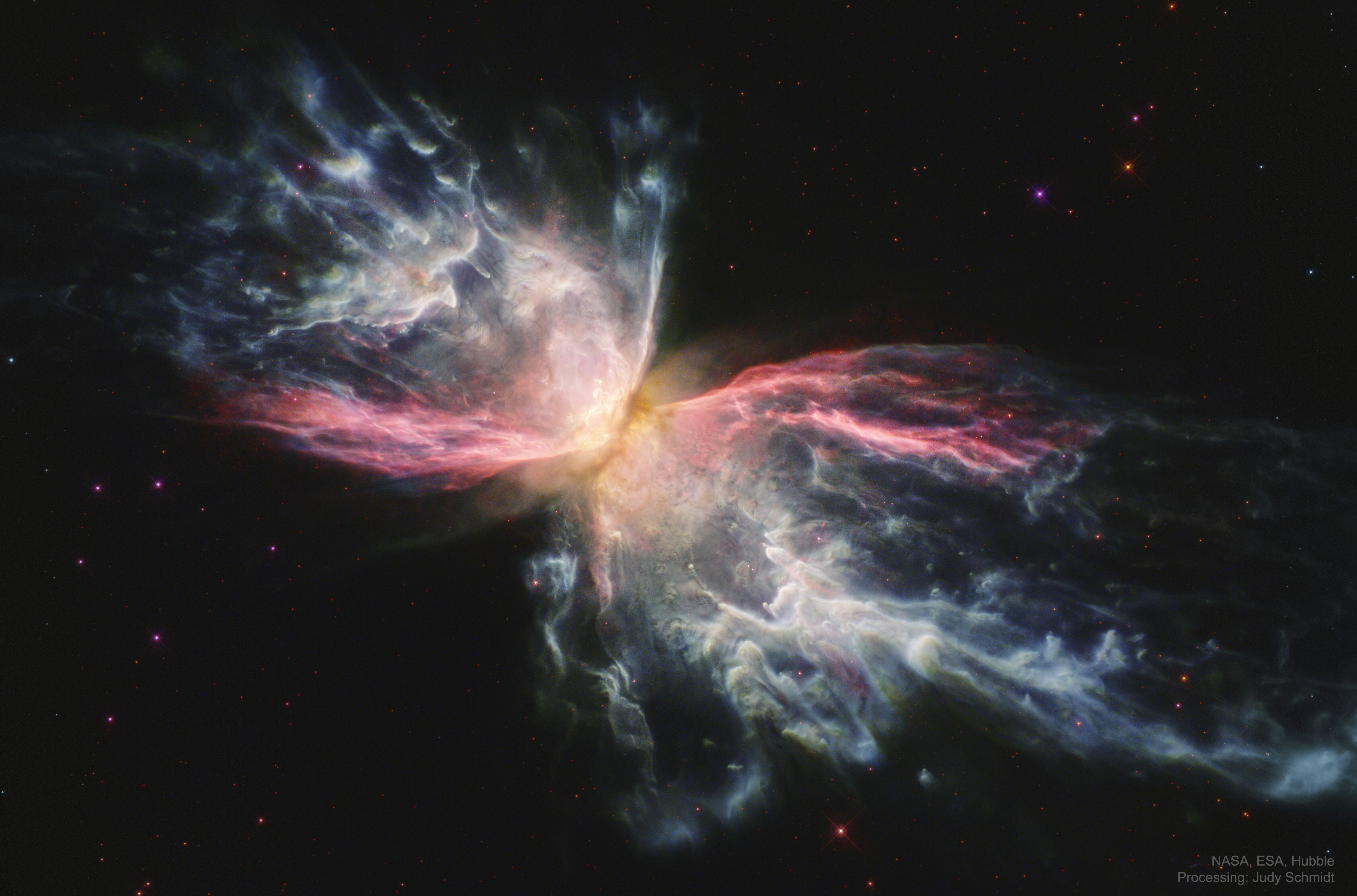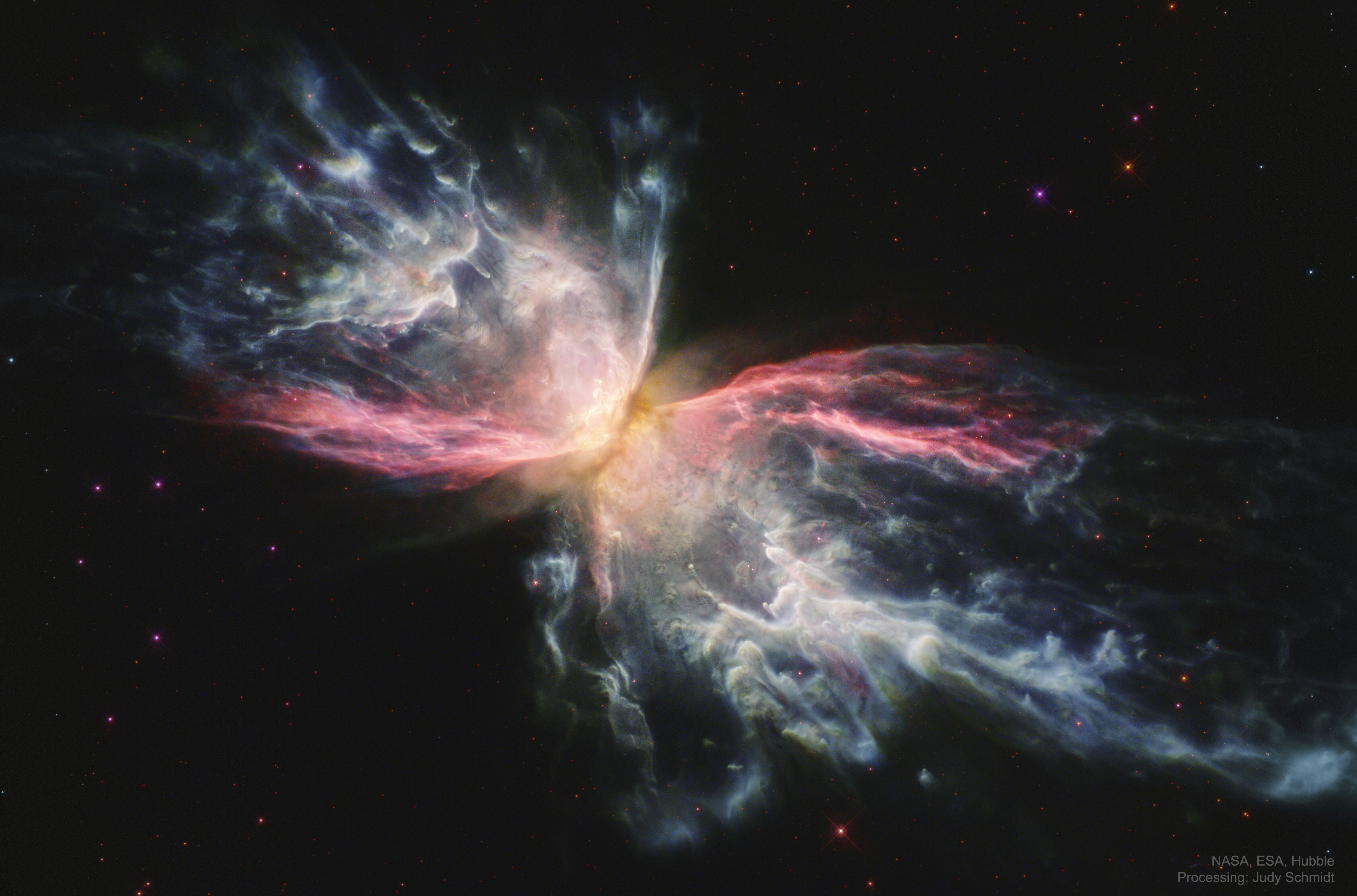
Can stars, like caterpillars, transform themselves into butterflies? No, but in the case of the Butterfly Nebula -- it sure looks like it. Though its wingspan covers over 3 light-years and its estimated surface temperature exceeds 200,000 degrees, C, the dying central star of NGC 6302, the featured planetary nebula, has become exceptionally hot, shining brightly in visible and ultraviolet light but hidden from direct view by a dense torus of dust. This sharp close-up was recorded by the Hubble Space Telescope and is reprocessed here to show off the remarkable details of the complex planetary nebula, highlighting in particular light emitted by iron, shown in red. NGC 6302 lies about 4,000 light-years away in the arachnologically correct constellation of the Scorpion (Scorpius). Planetary nebulas evolve from outer atmospheres of stars like our Sun, but usually fade in about 20,000 years. Great Debates in Astronomy: 2020: How will humanity first discover extraterrestrial life?
¿Pueden las estrellas, como las orugas, transformarse en mariposas? No, pero en el caso de la Nebulosa Mariposa, ciertamente parece que sí. Aunque su envergadura abarca más de 3 años luz y su temperatura superficial estimada supera los 200 000 grados Celsius, la estrella central moribunda de NGC 6302, la nebulosa planetaria destacada, se ha vuelto excepcionalmente caliente, brillando intensamente en luz visible y ultravioleta, pero oculta de la vista directa por un denso toro de polvo. Esta imagen nítida y de cerca fue capturada por el Telescopio Espacial Hubble y ha sido reprocesada aquí para mostrar los detalles sorprendentes de la compleja nebulosa planetaria, destacando en particular la luz emitida por el hierro, mostrada en rojo. NGC 6302 se encuentra a unos 4 000 años luz de distancia en la constelación aracnológicamente correcta de Escorpión (Scorpius). Las nebulosas planetarias evolucionan a partir de las atmósferas externas de estrellas como nuestro Sol, pero generalmente desaparecen en unos 20 000 años.