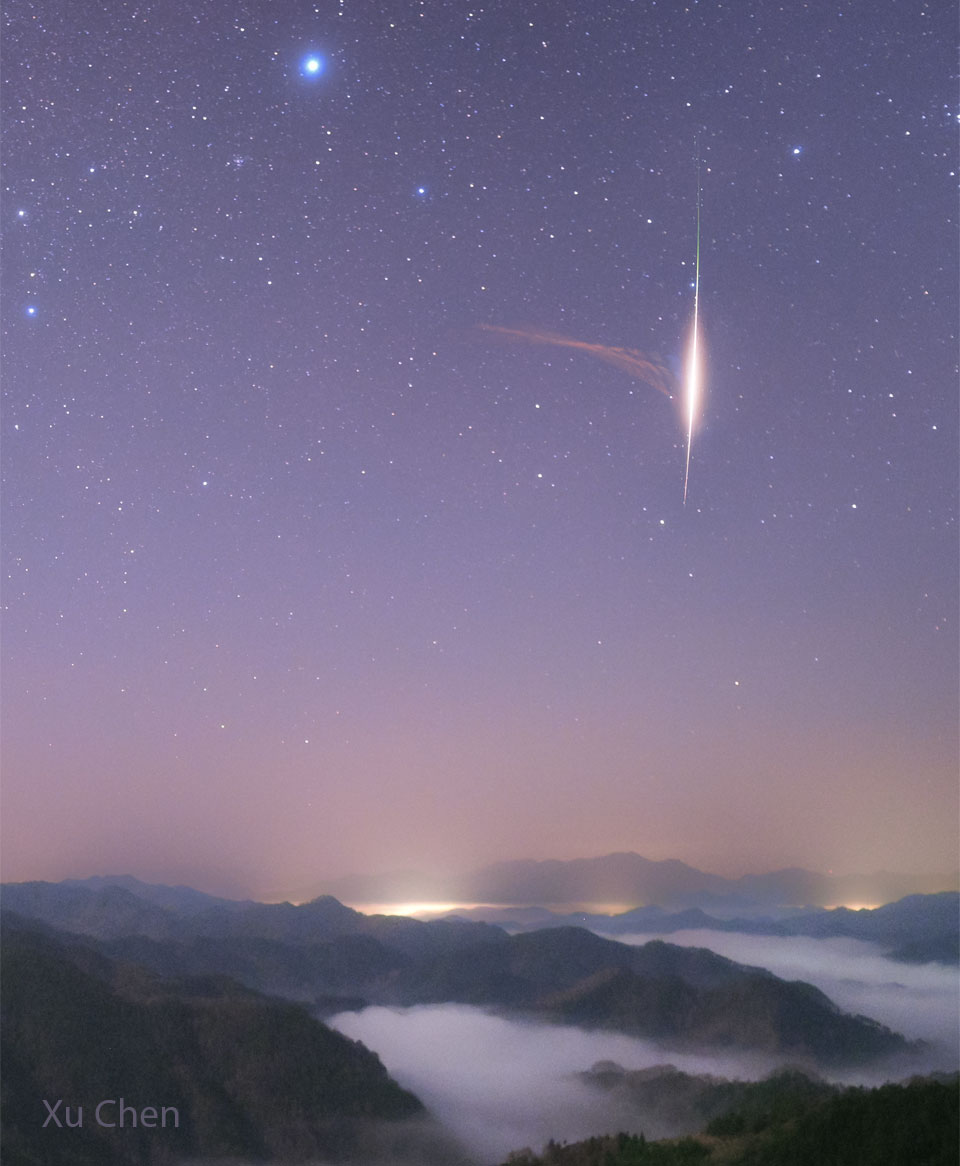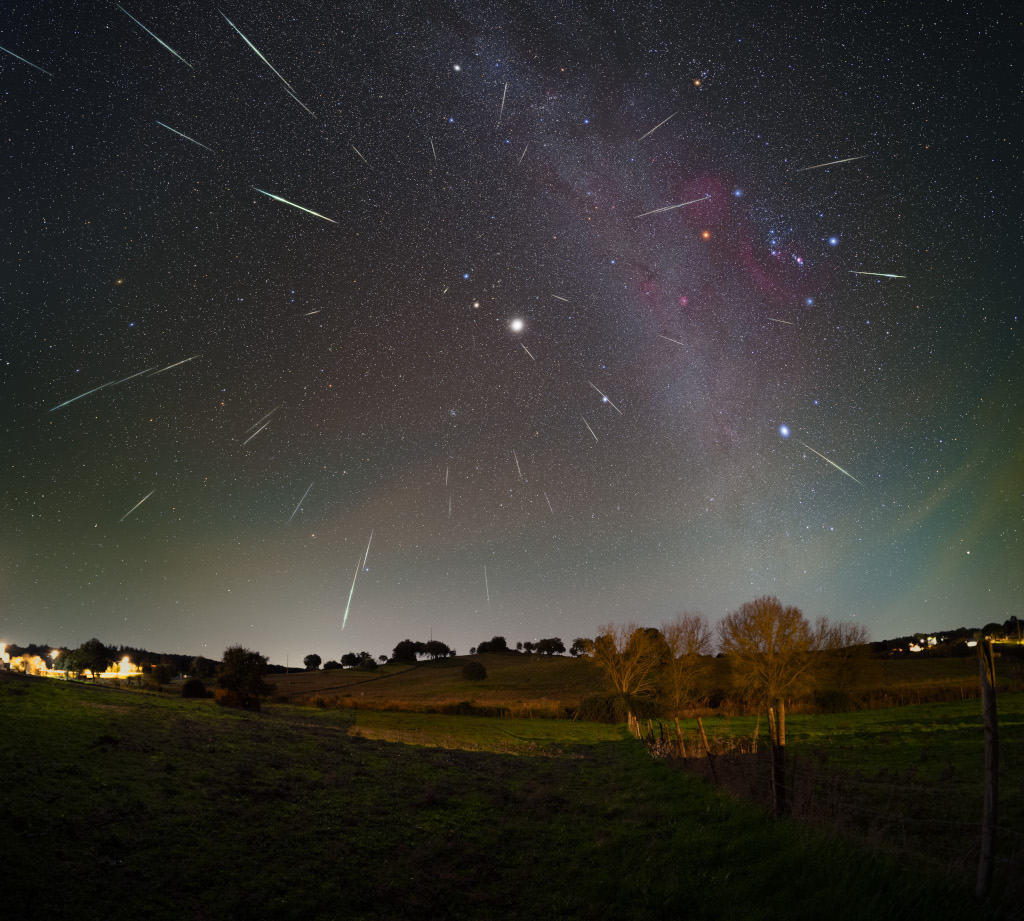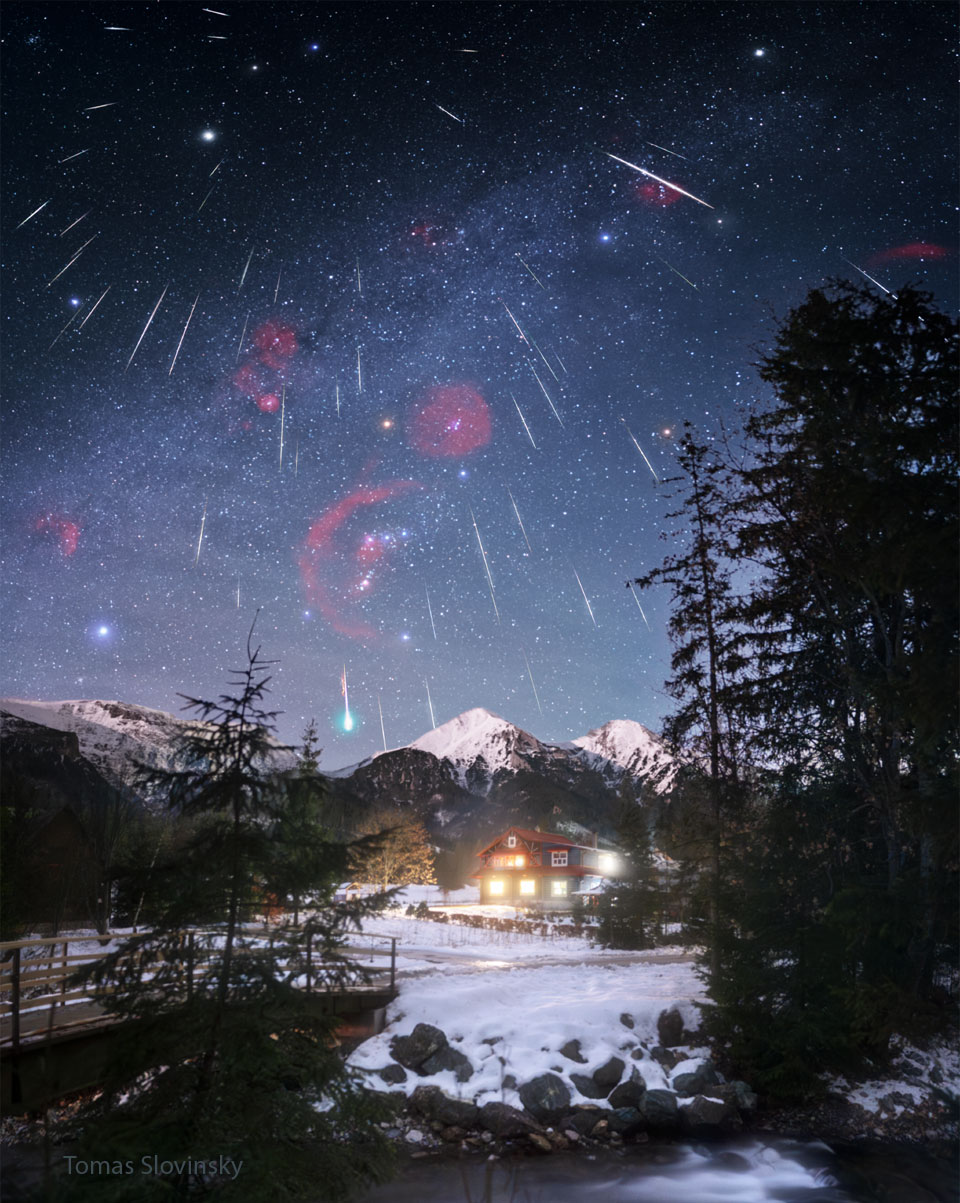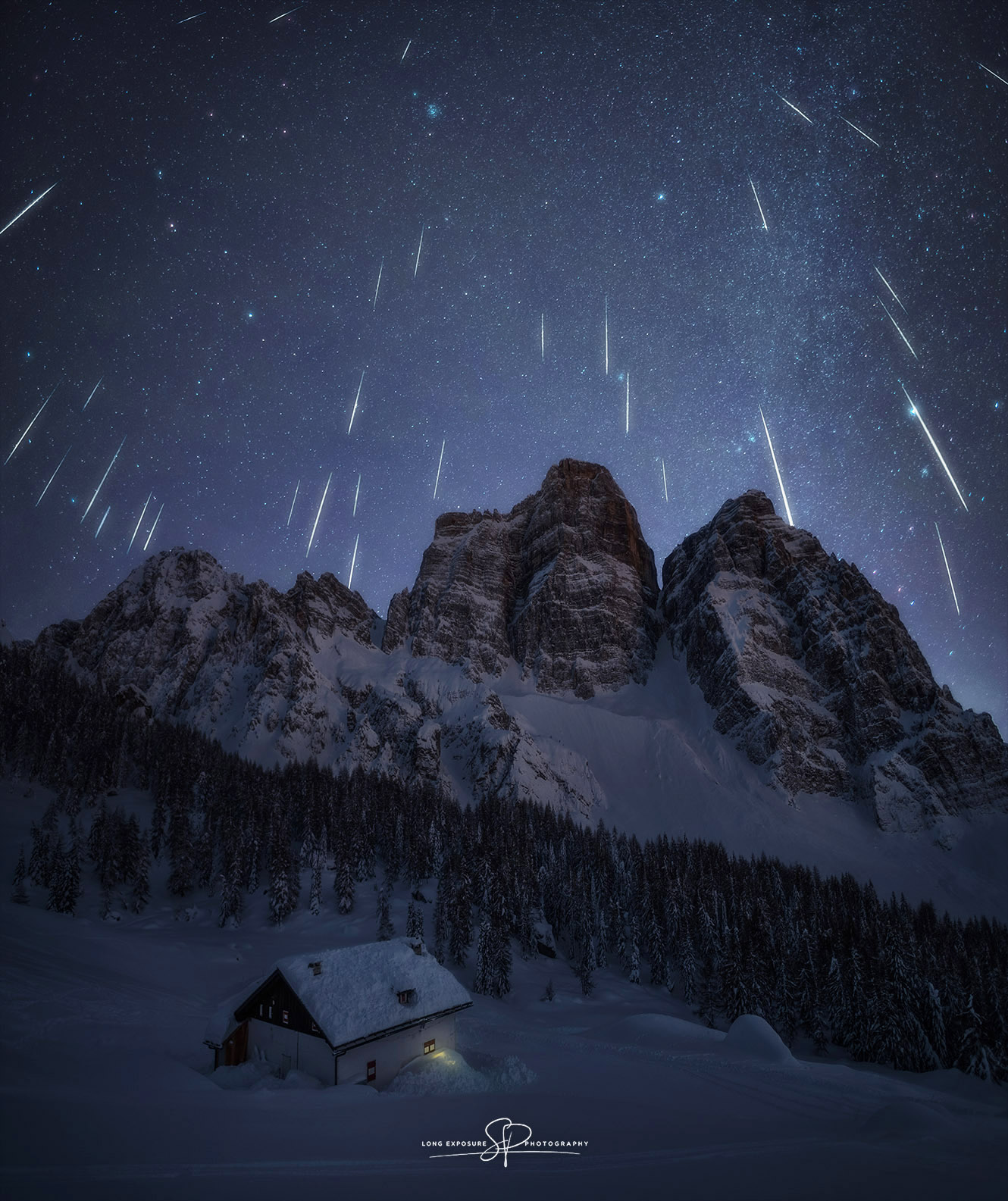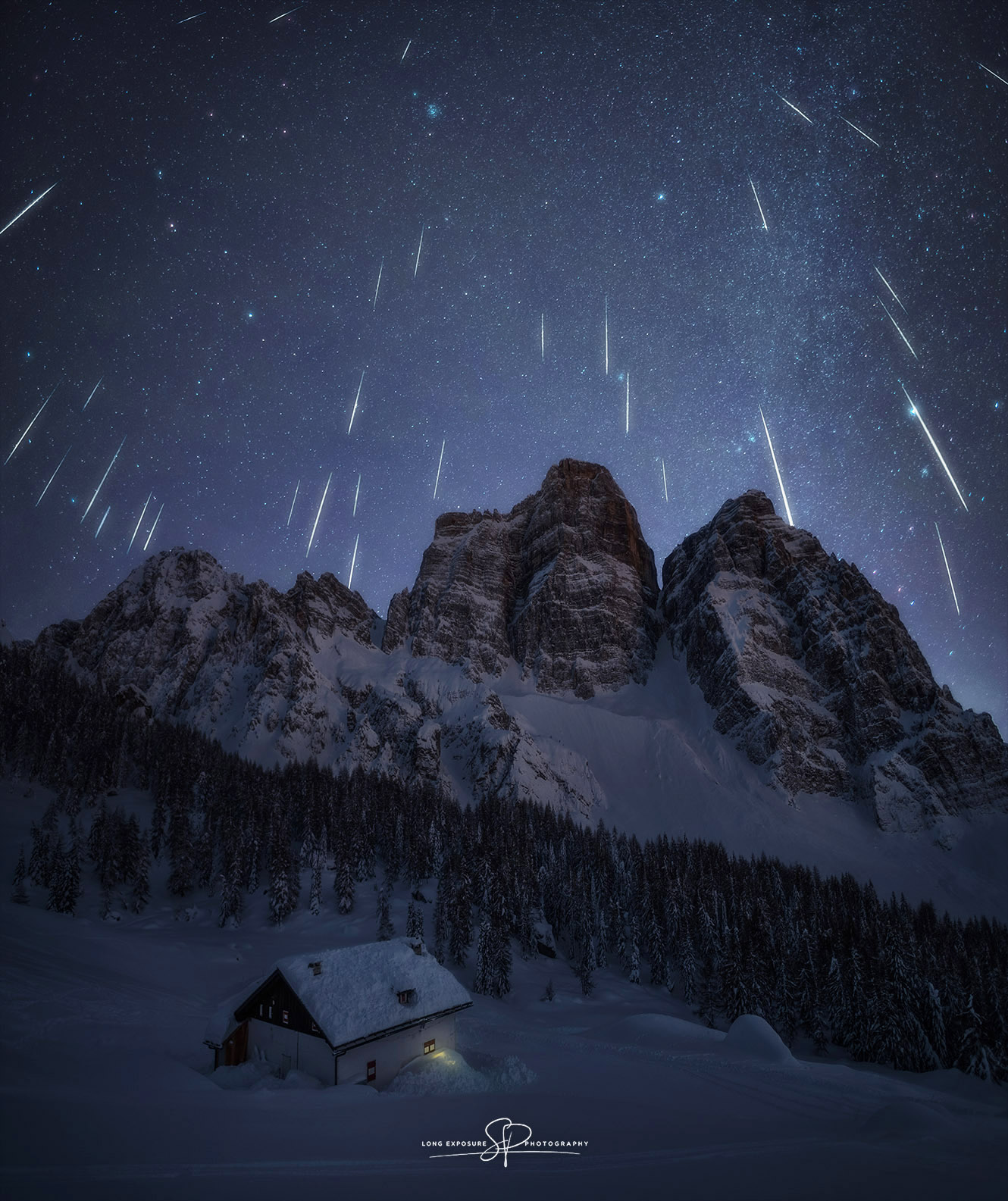
Taken over the course of an hour shortly after local midnight on December 13, 35 exposures were used to create this postcard from Earth. The composited night scene spans dark skies above the snowy Italian Dolomites during our fair planet's annual Geminid meteor shower. Sirius, alpha star of Canis Major and the brightest star in the night, is grazed by a meteor streak on the right. The Praesepe star cluster, also known as M44 or the Beehive cluster, itself contains about a thousand stars but appears as a smudge of light far above the southern alpine peaks near the top. The shower's radiant is off the top of the frame though, near Castor and Pollux the twin stars of Gemini. The radiant effect is due to perspective as the parallel meteor tracks appear to converge in the distance. As Earth sweeps through the dust trail of asteroid 3200 Phaethon, the dust that creates Gemini's meteors enters Earth's atmosphere traveling at about 22 kilometers per second. Submitted to APOD: Notable images of the 2020 Geminids Meteor Shower
Tomadas durante el transcurso de una hora poco después de la medianoche local del 13 de diciembre, 35 exposiciones se usaron para crear esta postal desde la Tierra. La escena nocturna compuesta abarca los cielos oscuros sobre las nevadas Dolomitas italianas durante la lluvia anual de meteoros de los Géminis de nuestro planeta. Sirio, la estrella alfa de Canis Major y la más brillante del cielo nocturno, es rozada por una estela de meteoro a la derecha. El cúmulo estelar Praesepe, también conocido como M44 o el cúmulo de la Colmena, contiene alrededor de mil estrellas pero aparece como una mancha de luz muy por encima de las cumbres alpinas del sur, cerca de la parte superior. El radiante de la lluvia está fuera del marco, cerca de Castor y Pollux, las estrellas gemelas de Géminis. El efecto de radiante se debe a la perspectiva, ya que las trayectorias paralelas de los meteoros parecen converger en la distancia. Mientras la Tierra atraviesa la estela de polvo del asteroide 3200 Fáeton, el polvo que crea los meteoros de Géminis entra en la atmósfera terrestre viajando a unos 22 kilómetros por segundo.