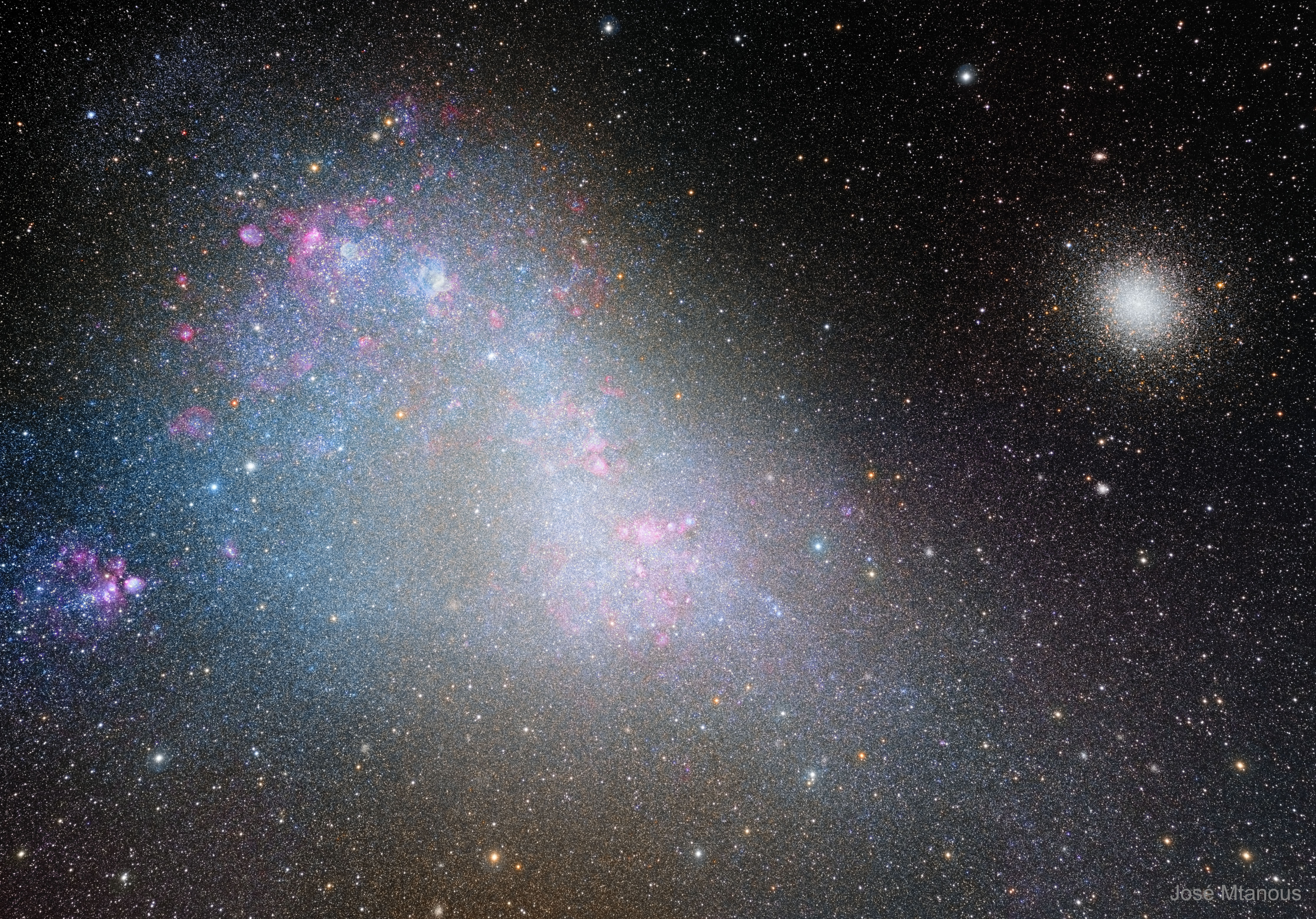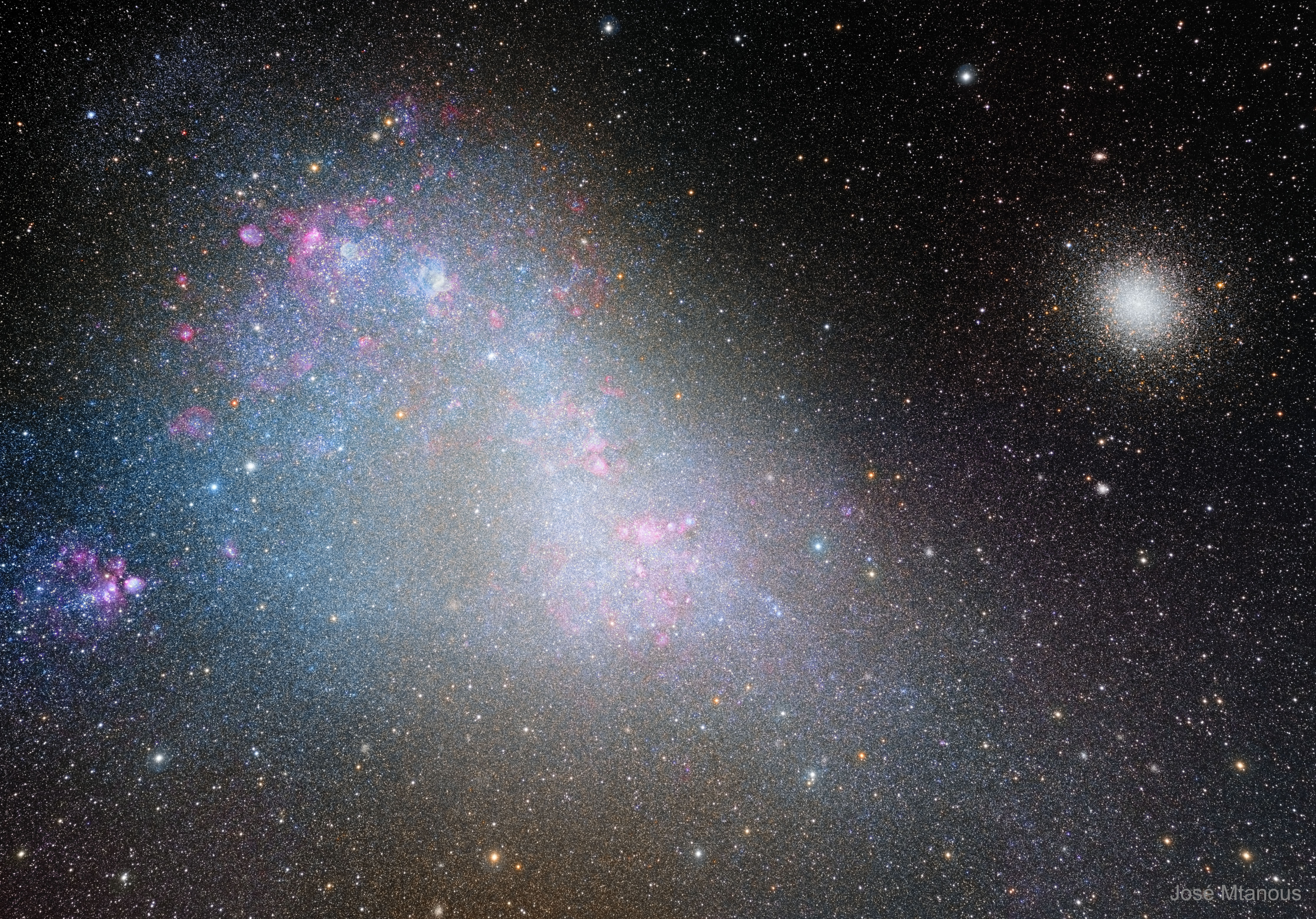
What is the Small Magellanic Cloud? It has turned out to be a galaxy. People who have wondered about this little fuzzy patch in the southern sky included Portuguese navigator Ferdinand Magellan and his crew, who had plenty of time to study the unfamiliar night sky of the south during the first circumnavigation of planet Earth in the early 1500s. As a result, two celestial wonders easily visible for southern hemisphere skygazers are now known in Western culture as the Clouds of Magellan. Within the past 100 years, research has shown that these cosmic clouds are dwarf irregular galaxies, satellites of our larger spiral Milky Way Galaxy. The Small Magellanic Cloud actually spans 15,000 light-years or so and contains several hundred million stars. About 210,000 light-years away in the constellation of the Tucan (Tucana), it is more distant than other known Milky Way satellite galaxies, including the Sagittarius Dwarf galaxy and the Large Magellanic Cloud. This sharp image also includes the foreground globular star cluster 47 Tucanae on the right.
¿Qué es la Pequeña Nube de Magallanes? Resulta que es una galaxia. Las personas que se preguntaron sobre este pequeño parche borroso en el cielo sur incluyeron al navegante portugués Fernando de Magallanes y su tripulación, quienes tuvieron mucho tiempo para estudiar el cielo nocturno desconocido del sur durante la primera circunnavegación del planeta Tierra a principios del siglo XVI. Como resultado, dos maravillas celestes fácilmente visibles para los observadores del hemisferio sur ahora se conocen en la cultura occidental como las Nubes de Magallanes. En los últimos 100 años, la investigación ha demostrado que estas nubes cósmicas son galaxias enanas irregulares, satélites de nuestra galaxia espiral más grande, la Vía Láctea. La Pequeña Nube de Magallanes tiene un diámetro de unos 15 000 años luz y contiene varios cientos de millones de estrellas. A unos 210 000 años luz de distancia en la constelación del Tucán (Tucana), se encuentra más lejos que otras galaxias satélite conocidas de la Vía Láctea, incluyendo la galaxia enana de Sagitario y la Gran Nube de Magallanes. Esta imagen nítida también incluye el cúmulo globular de estrellas 47 Tucanae en el lado derecho.