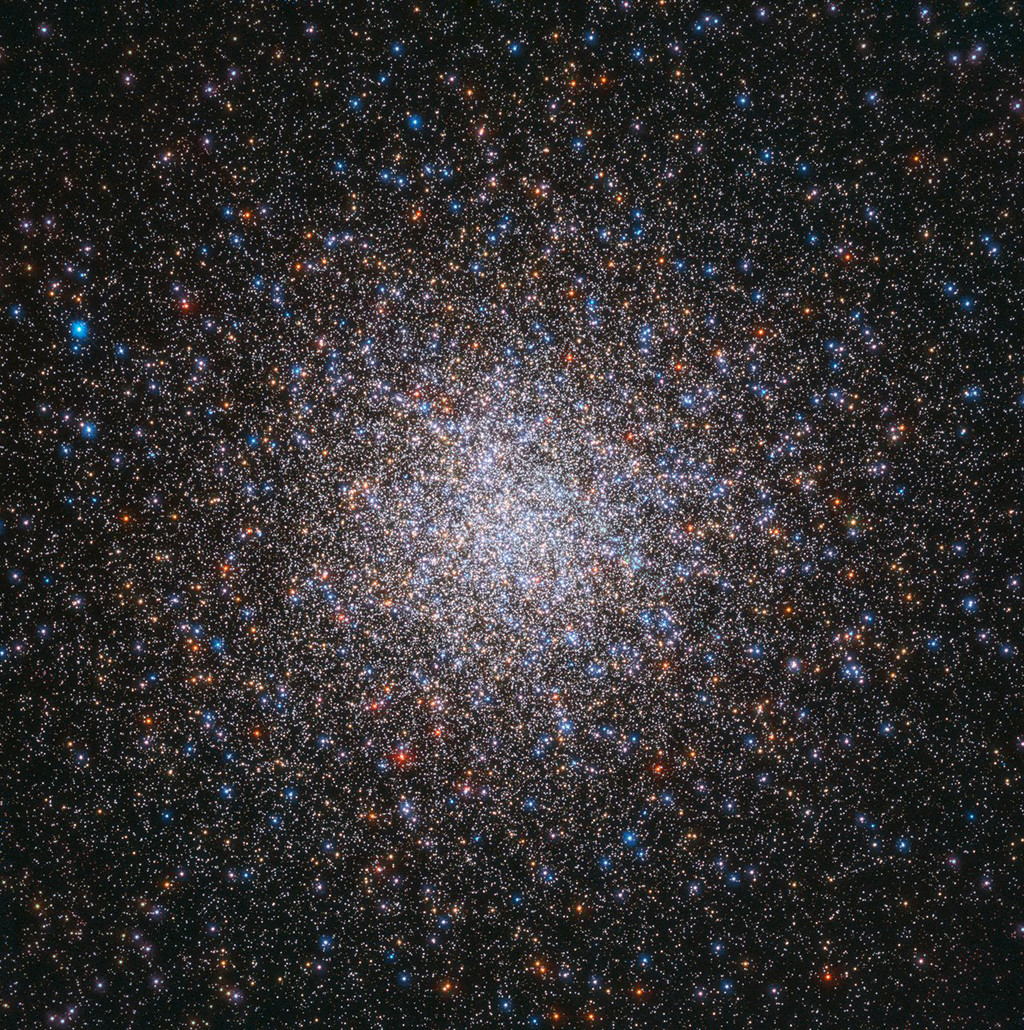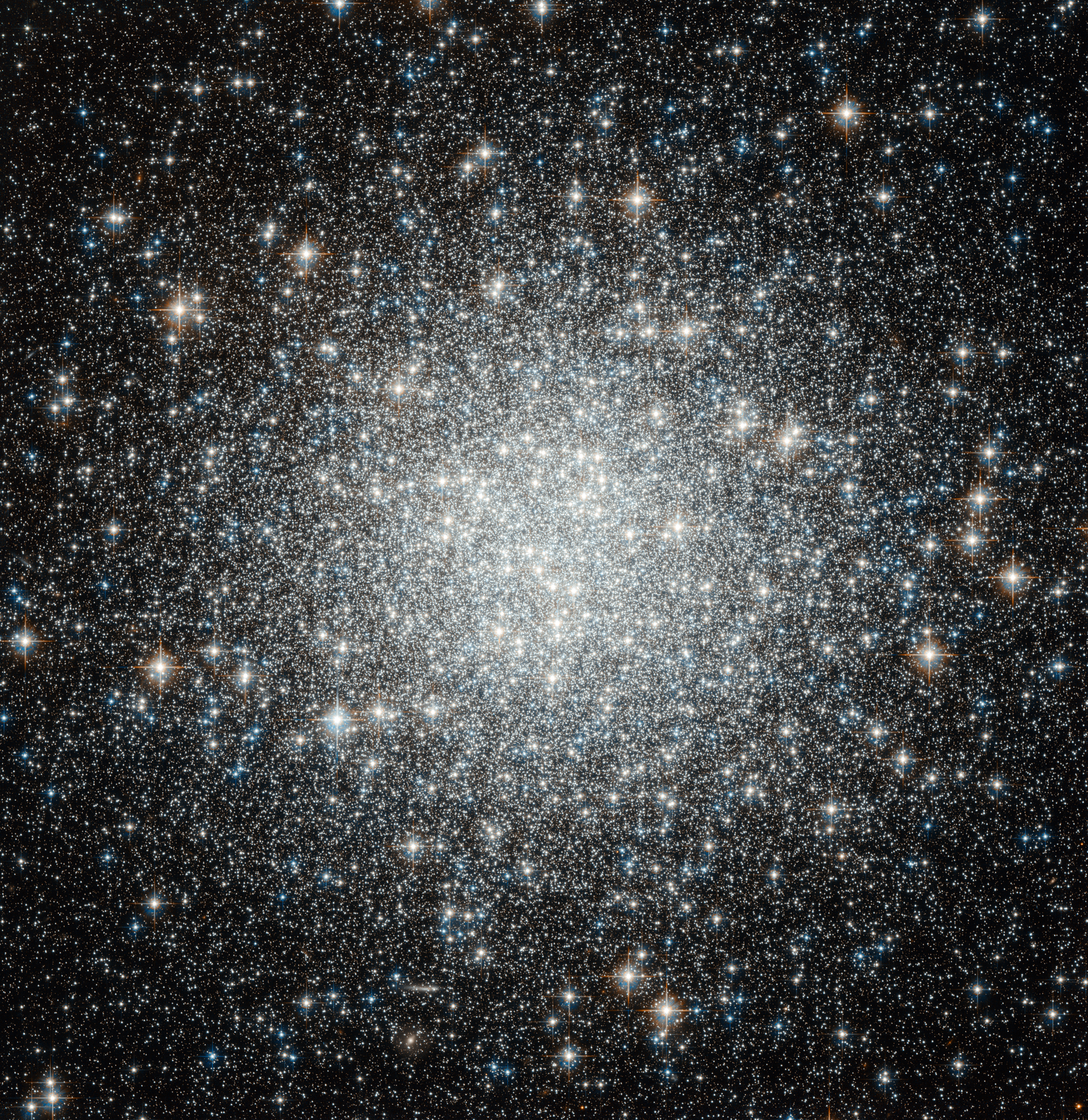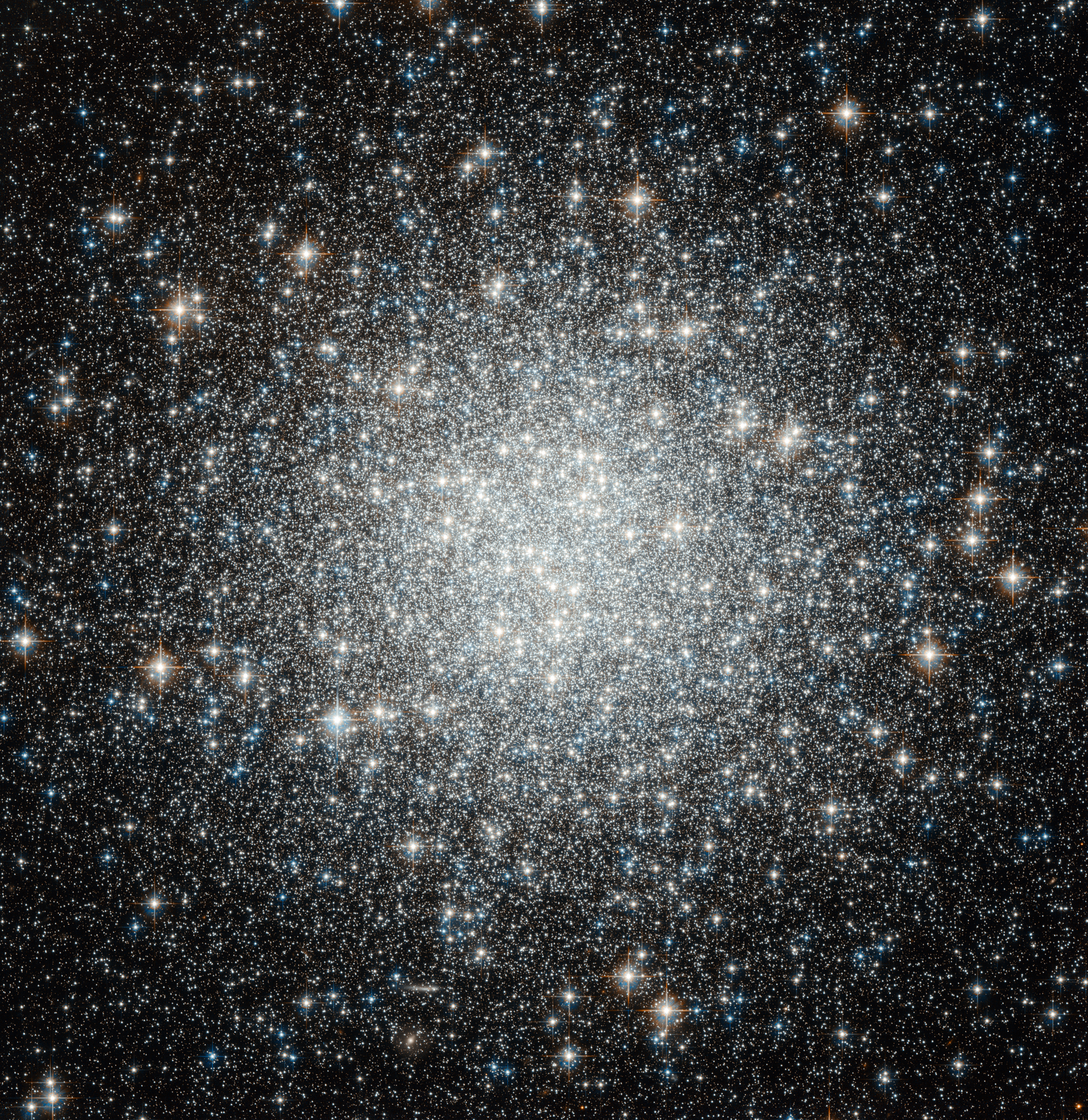
If our Sun were part of this star cluster, the night sky would glow like a jewel box of bright stars. This cluster, known as M53 and cataloged as NGC 5024, is one of about 250 globular clusters that survive in our Galaxy. Most of the stars in M53 are older and redder than our Sun, but some enigmatic stars appear to be bluer and younger. These young stars might contradict the hypothesis that all the stars in M53 formed at nearly the same time. These unusual stars are known as blue stragglers and are unusually common in M53. After much debate, blue stragglers are now thought to be stars rejuvenated by fresh matter falling in from a binary star companion. By analyzing pictures of globular clusters like the featured image taken by the Hubble Space Telescope, astronomers use the abundance of stars like blue stragglers to help determine the age of the globular cluster and hence a limit on the age of the universe. M53, visible with a binoculars towards the constellation of Bernice's Hair (Coma Berenices), contains over 250,000 stars and is one of the furthest globulars from the center of our Galaxy.
Si nuestro Sol fuera parte de este cúmulo estelar, el cielo nocturno brillaría como una caja de joyas llena de estrellas brillantes. Este cúmulo, conocido como M53 y catalogado como NGC 5024, es uno de los aproximadamente 250 cúmulos globulares que sobreviven en nuestra Galaxia. La mayoría de las estrellas en M53 son más antiguas y rojizas que nuestro Sol, pero algunas estrellas enigmáticas parecen ser más azules y jóvenes. Estas estrellas jóvenes podrían contradecir la hipótesis de que todas las estrellas en M53 se formaron casi al mismo tiempo. Estas estrellas inusuales se llaman estrellas azules estragadoras y son particularmente comunes en M53. Después de mucho debate, se cree ahora que las estrellas azules estragadoras son estrellas rejuvenecidas por la adición de nueva materia proveniente de un compañero en un sistema binario. Al analizar imágenes de cúmulos globulares como la que se muestra, tomada por el Telescopio Espacial Hubble, los astrónomos utilizan la abundancia de estrellas como las azules estragadoras para ayudar a determinar la edad del cúmulo globular, y por tanto, un límite sobre la edad del universo. M53, visible con binoculares hacia la constelación de Pelo de Berenice (Coma Berenices), contiene más de 250 000 estrellas y es uno de los cúmulos globulares más alejados del centro de nuestra Galaxia.