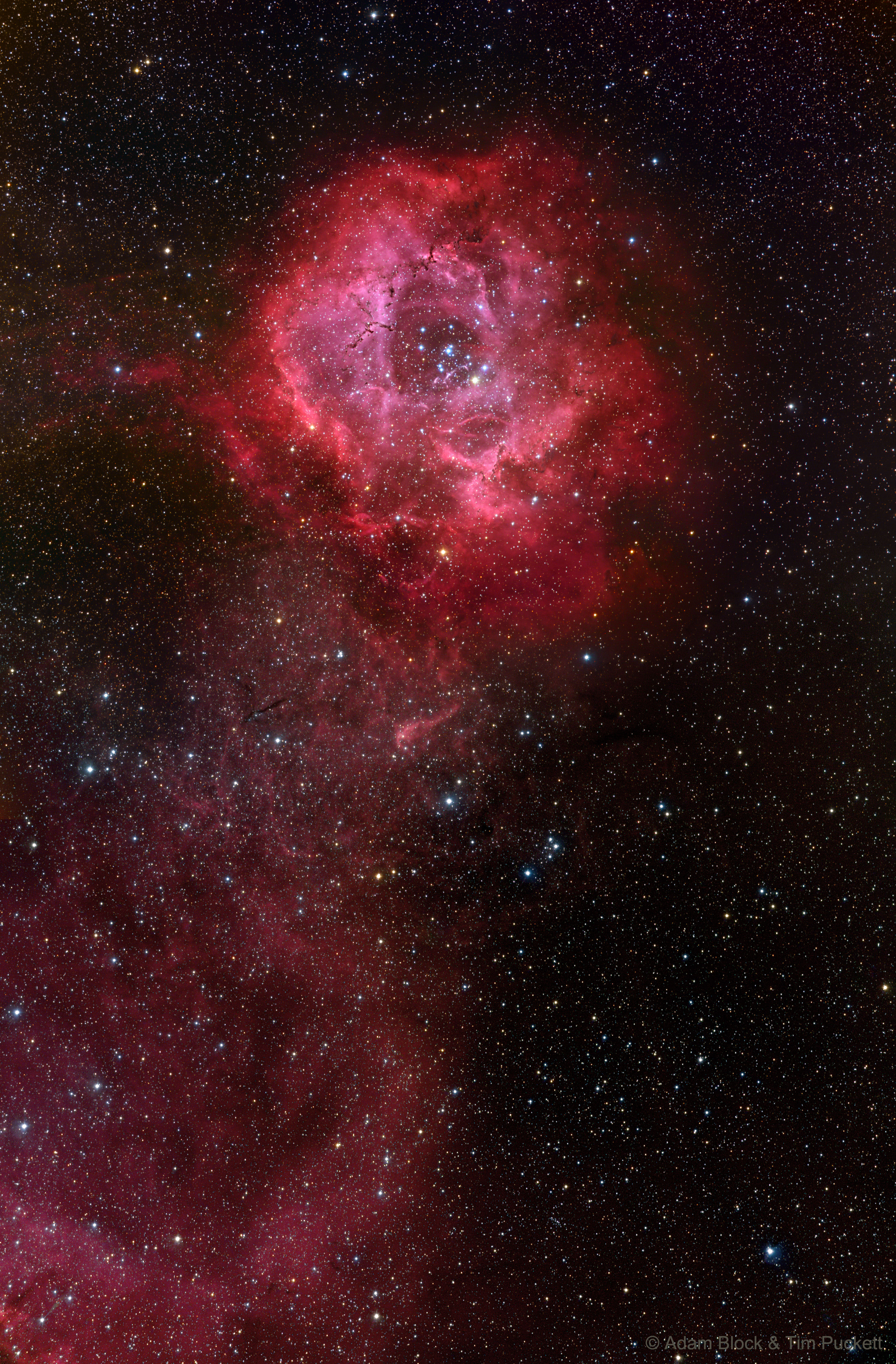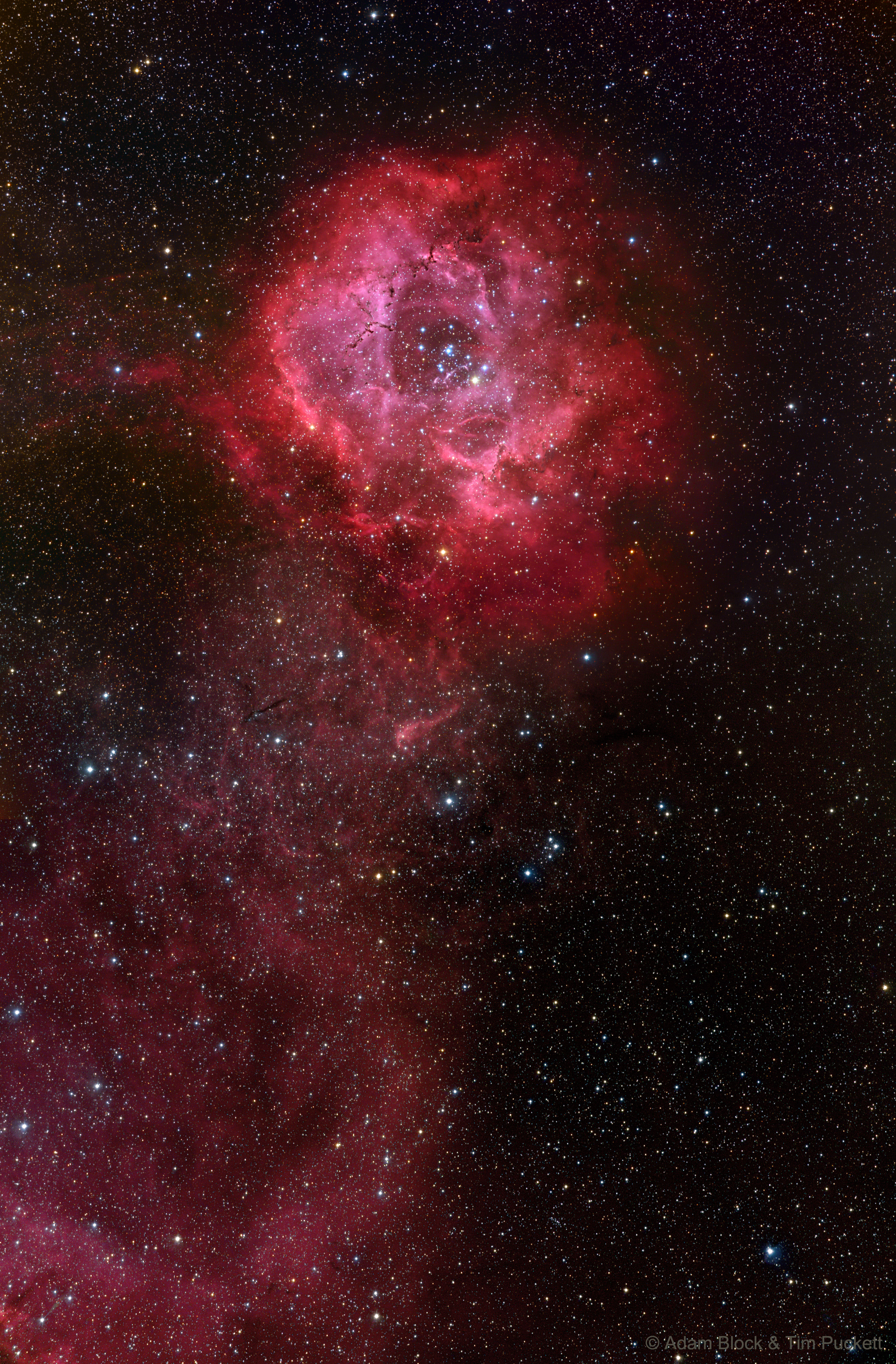
Would the Rosette Nebula by any other name look as sweet? The bland New General Catalog designation of NGC 2237 doesn't appear to diminish the appearance of this flowery emission nebula, at the top of the image, atop a long stem of glowing hydrogen gas. Inside the nebula lies an open cluster of bright young stars designated NGC 2244. These stars formed about four million years ago from the nebular material and their stellar winds are clearing a hole in the nebula's center, insulated by a layer of dust and hot gas. Ultraviolet light from the hot cluster stars causes the surrounding nebula to glow. The Rosette Nebula spans about 100 light-years across, lies about 5000 light-years away, and can be seen with a small telescope towards the constellation of the Unicorn (Monoceros). Jump around the Universe: Random APOD Generator
¿La Nebulosa Roseta luciría tan bonita con otro nombre? La designación poco atractiva del Nuevo Catálogo General, NGC 2237, no parece restarle belleza a esta nebulosa de emisión floral, que aparece en la parte superior de la imagen, coronada por un largo tallo de gas hidrógeno luminoso. Dentro de la nebulosa se encuentra un cúmulo abierto de estrellas jóvenes brillantes designado NGC 2244. Estas estrellas se formaron hace aproximadamente cuatro millones de años a partir del material nebuloso, y sus vientos estelares están creando un hueco en el centro de la nebulosa, aislado por una capa de polvo y gas caliente. La luz ultravioleta de las estrellas del cúmulo caliente hace que la nebulosa circundante brille. La Nebulosa Roseta tiene un diámetro de aproximadamente 100 años luz, se encuentra a unos 5000 años luz de distancia y puede observarse con un telescopio pequeño en dirección a la constelación del Unicornio (Monoceros).