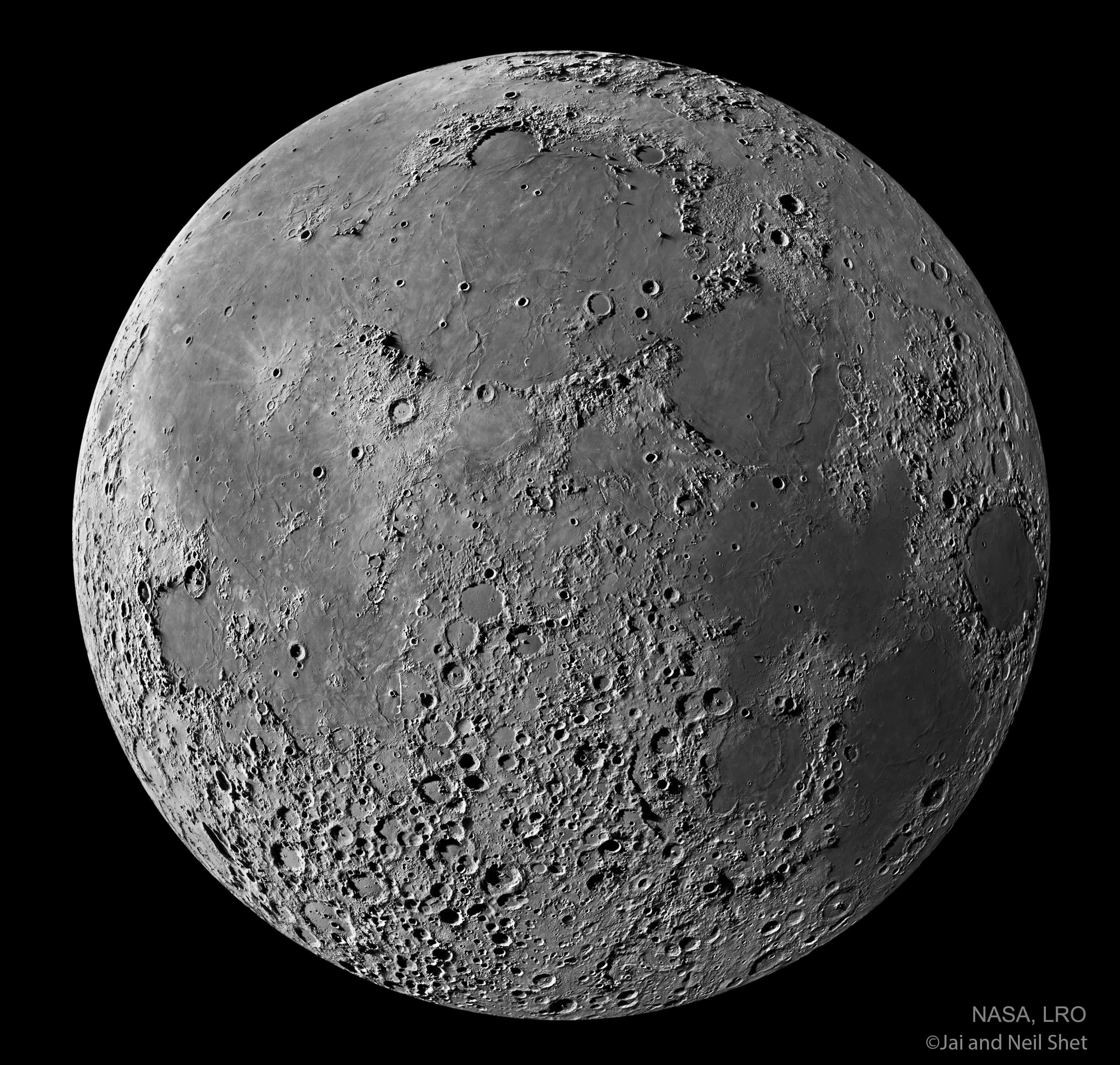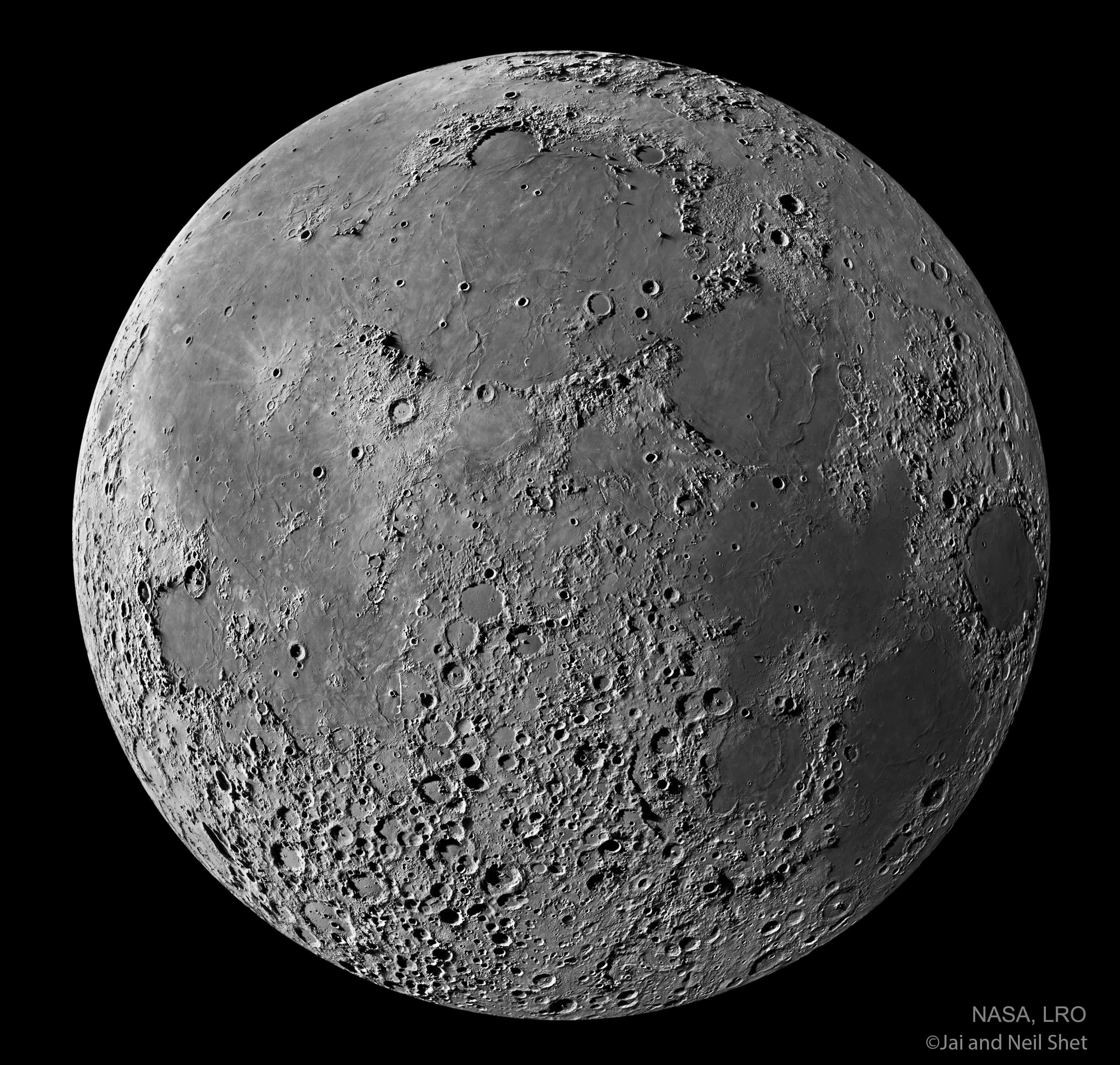
What's different about this Moon? It's the terminators. In the featured image, you can't directly see any terminator -- the line that divides the light of day from the dark of night. That's because the image is a digital composite of 29 near-terminator lunar strips. Terminator regions show the longest and most prominent shadows -- shadows which, by their contrast and length, allow a flat photograph to appear three-dimensional. The original images and data were taken near the Moon by NASA's Lunar Reconnaissance Orbiter. Many of the Moon's craters stand out because of the shadows they all cast to the right. The image shows in graphic detail that the darker regions known as maria are not just darker than the rest of the Moon -- they are flatter. Dial-A-Moon: Find the phase of the Moon on your birthday.
¿Qué es lo que hace diferente a esta Luna? Son los terminators. En la imagen destacada, no puedes ver directamente ninguno de ellos — la línea que divide la luz del día de la oscuridad de la noche. Esto se debe a que la imagen es un compuesto digital de 29 tiras lunares cercanas al terminator. Las regiones de terminator muestran las sombras más largas y prominentes — sombras cuyo contraste y longitud permiten que una fotografía plana aparezca tridimensional. Las imágenes originales y los datos fueron tomados cerca de la Luna por la nave espacial Lunar Reconnaissance Orbiter de la NASA. Muchos de los cráteres de la Luna se destacan debido a las sombras que todos ellos proyectan hacia la derecha. La imagen muestra con detalle gráfico que las regiones oscuras conocidas como maria no son solo más oscuras que el resto de la Luna — también son más planas.