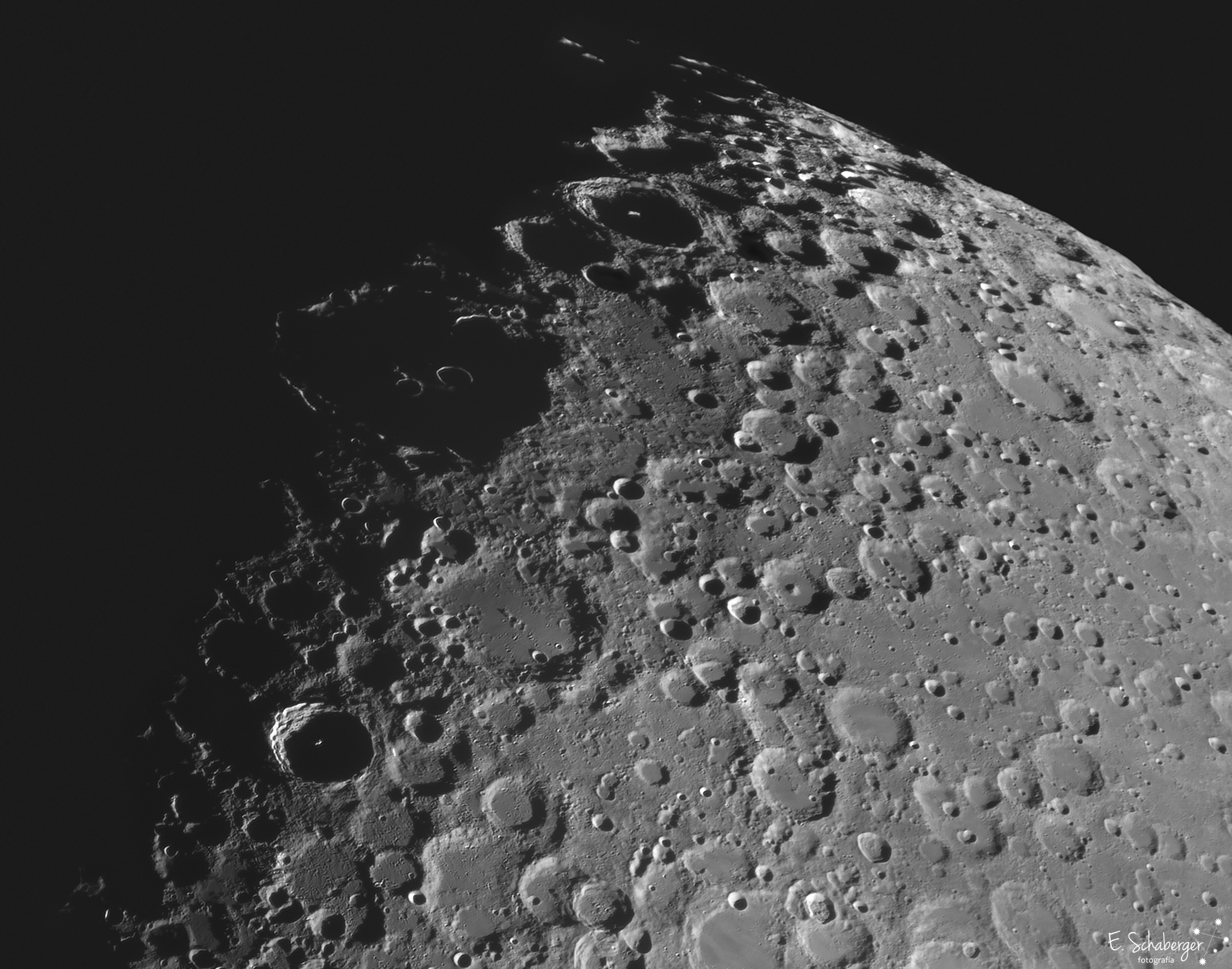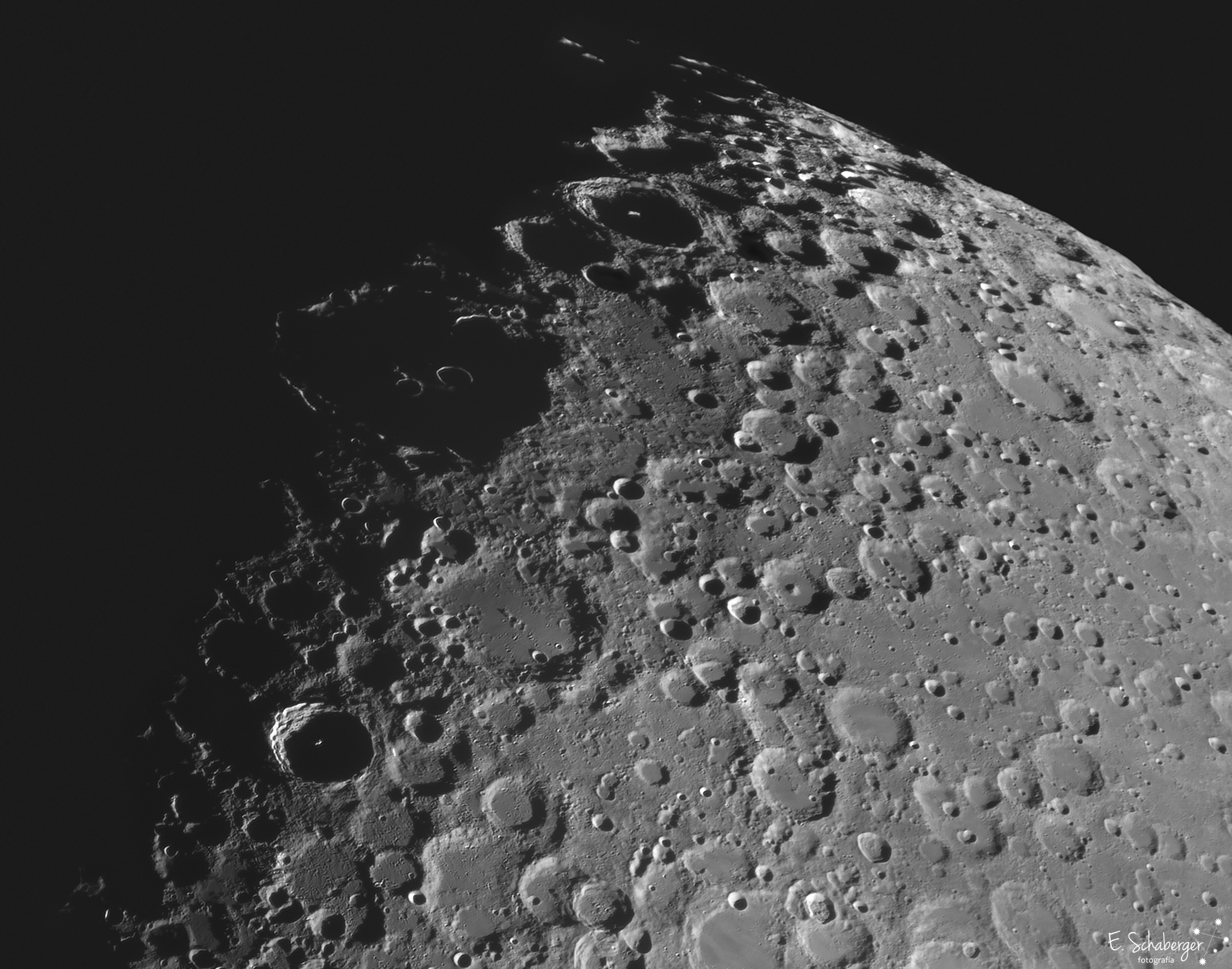
South is up in this dramatic telescopic view of the lunar terminator and the Moon's rugged southern highlands. The lunar landscape was captured on July 7 with the moon at its first quarter phase. The Sun shines at a low angle from the right as dawn comes to the region's young and old craters Tycho and Clavius. About 100 million years young, Tycho is the sharp-walled 85 kilometer diameter crater below and left of center. Its 2 kilometer tall central peak and far crater wall reflect bright sunlight, Its smooth floor lies in dark shadow. Debris ejected during the impact that created Tycho make it the stand out lunar crater when the Moon is near full though. They produce a highly visible radiating system of light streaks or rays that extend across much of the lunar near side. In fact, some of the material collected at the Apollo 17 landing site, about 2,000 kilometers away, likely originated from the Tycho impact. One of the oldest and largest craters on the Moon's near side, 225 kilometer diameter Clavius is due south (above) of Tycho. Clavius crater's own ray system resulting from its original impact event would have faded long ago. The old crater's worn walls and smooth floor are now overlayed by newer smaller craters from impacts that occurred after Clavius was formed. Reaching above the older crater, tops of the newer crater walls reflect this dawn's early light to create narrow shining arcs within a shadowed Clavius.
El sur está arriba en esta dramática vista telescópica del terminador lunar y las áridas tierras altas meridionales de la Luna. El paisaje lunar fue capturado el 7 de julio cuando la Luna se encontraba en su fase de primer cuarto. El Sol brilla a un bajo ángulo desde la derecha a medida que llega el amanecer a las regiones con cráteres jóvenes y antiguos, Tycho y Clavius. Con aproximadamente 100 millones de años de antigüedad, Tycho es el cráter de 85 kilómetros de diámetro con paredes nítidas ubicado ligeramente abajo y a la izquierda del centro. Su pico central de 2 kilómetros de altura y su lejana pared reflejan una brillante luz solar, mientras que su suelo liso permanece en sombra oscura. Los escombros eyectados durante el impacto que creó Tycho lo convierten en el cráter lunar más destacado cuando la Luna está cerca de su fase llena. Estos producen un sistema altamente visible de rayos luminosos que se extienden a lo largo de gran parte del lado cercano de la Luna. De hecho, parte del material recolectado en el sitio de aterrizaje de Apollo 17, a unos 2000 kilómetros de distancia, probablemente provino del impacto de Tycho. Clavius, uno de los cráteres más antiguos y grandes del lado cercano de la Luna, tiene un diámetro de 225 kilómetros y se encuentra al sur (arriba) de Tycho. El sistema de rayos de Clavius, resultado de su evento de impacto original, habría desaparecido hace mucho tiempo. Las paredes desgastadas y el suelo liso del antiguo cráter ahora están superpuestos por cráteres más pequeños y recientes, formados por impactos posteriores a la creación de Clavius. Las cimas de los nuevos cráteres, que se elevan sobre el antiguo cráter, reflejan la luz temprana de este amanecer, creando estrechos arcos luminosos dentro de un Clavius sombreado.