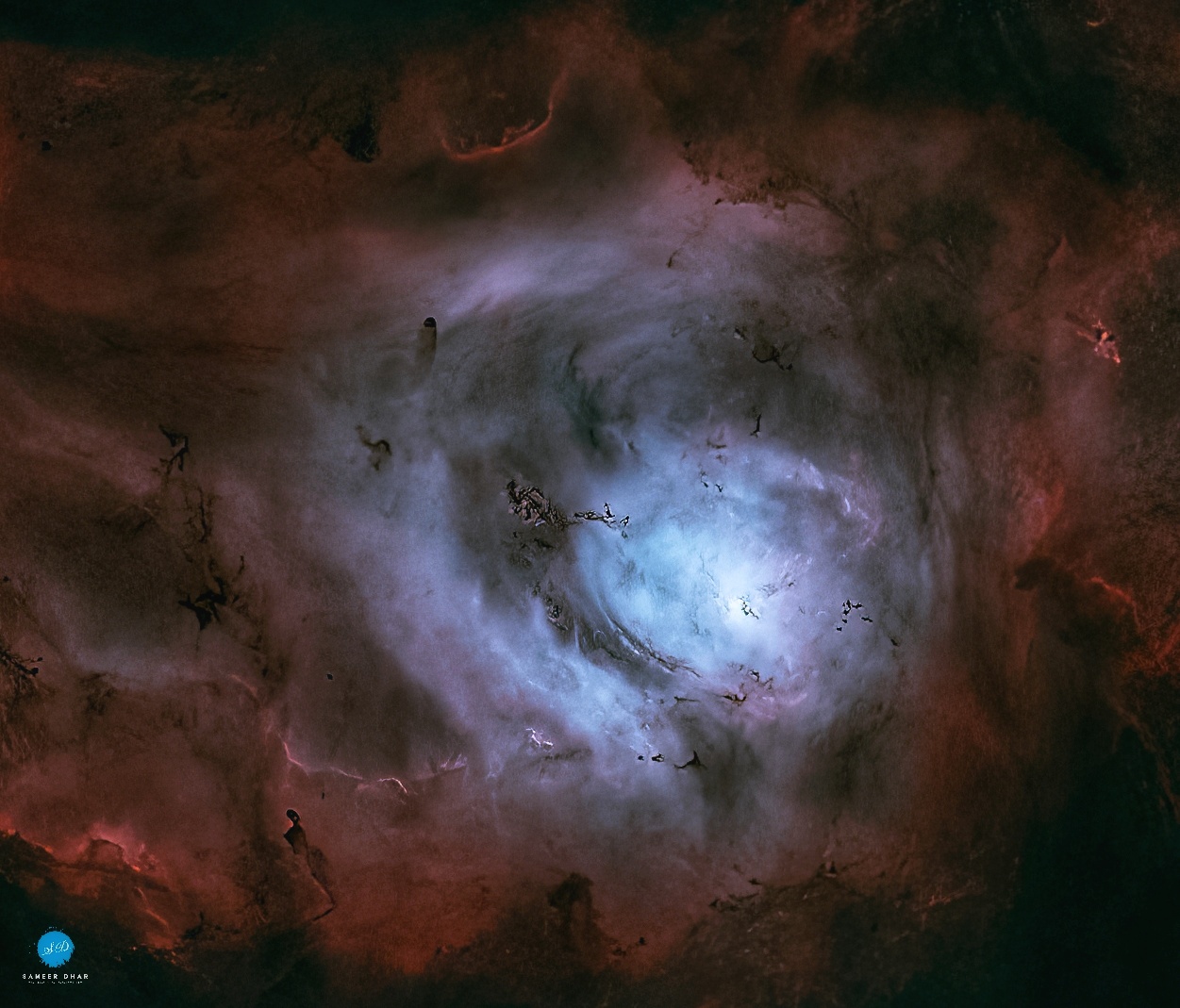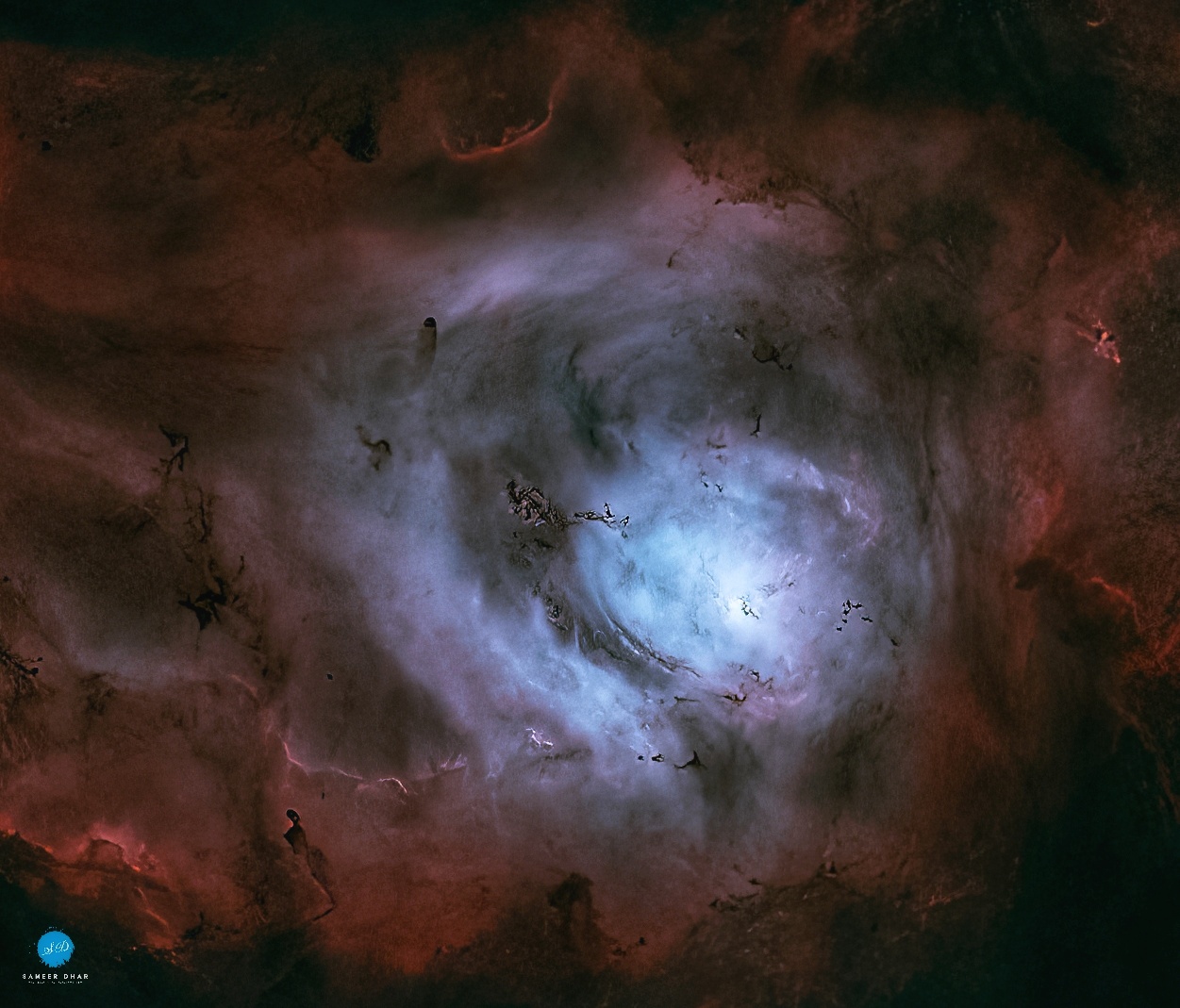
Ridges of glowing interstellar gas and dark dust clouds inhabit the turbulent, cosmic depths of the Lagoon Nebula. Also known as M8, the bright star forming region is about 5,000 light-years distant. But it still makes for a popular stop on telescopic tours of the constellation Sagittarius, toward the center of our Milky Way Galaxy. Dominated by the telltale red emission of ionized hydrogen atoms recombining with stripped electrons, this stunning, deep view of the Lagoon is nearly 100 light-years across. Right of center, the bright, compact, hourglass shape is gas ionized and sculpted by energetic radiation and extreme stellar winds from a massive young star. In fact, although digitally removed from the featured image, the many bright stars of open cluster NGC 6530 drift within the nebula, just formed in the Lagoon several million years ago.
Crédito: NASA, ESA, Hubble Heritage Team (STScI/AURA) Las crestas de gas interestelar luminoso y nubes oscuras de polvo habitan las profundidades turbulentas de la Nebulosa del Lago. También conocida como M8, esta región brillante de formación estelar se encuentra a unos 5000 años luz de distancia. Sin embargo, sigue siendo un punto de interés popular en recorridos telescópicos por la constelación de Sagitario, hacia el centro de nuestra Galaxia Vía Láctea. Dominada por la típica emisión roja de átomos de hidrógeno ionizados que se recombinan con electrones liberados, esta asombrosa vista profunda de la Nebulosa del Lago tiene casi 100 años luz de diámetro. A la derecha del centro, la forma compacta y en forma de reloj de arena es gas ionizado y moldeado por la radiación energética y los vientos estelares extremos provenientes de una estrella joven masiva. De hecho, aunque digitalmente eliminadas de la imagen destacada, las muchas estrellas brillantes del cúmulo abierto NGC 6530 se desplazan dentro de la nebulosa, recién formadas en el Lago hace varios millones de años.