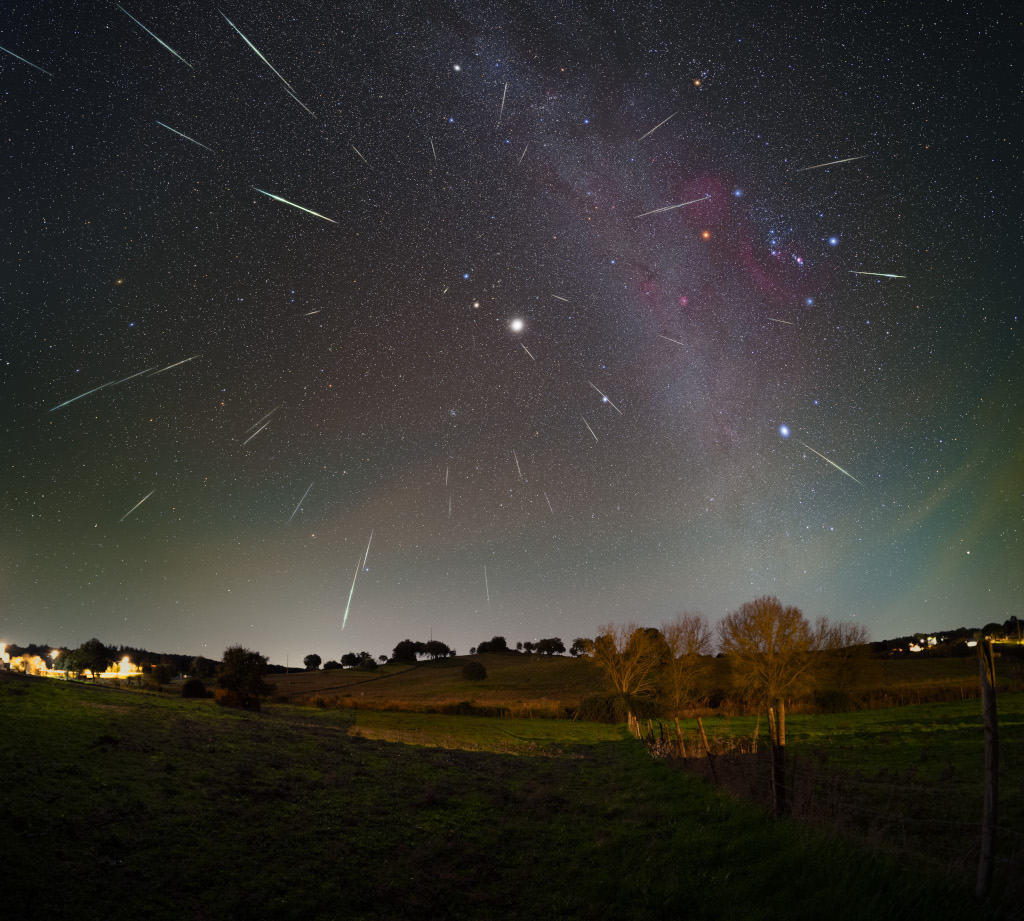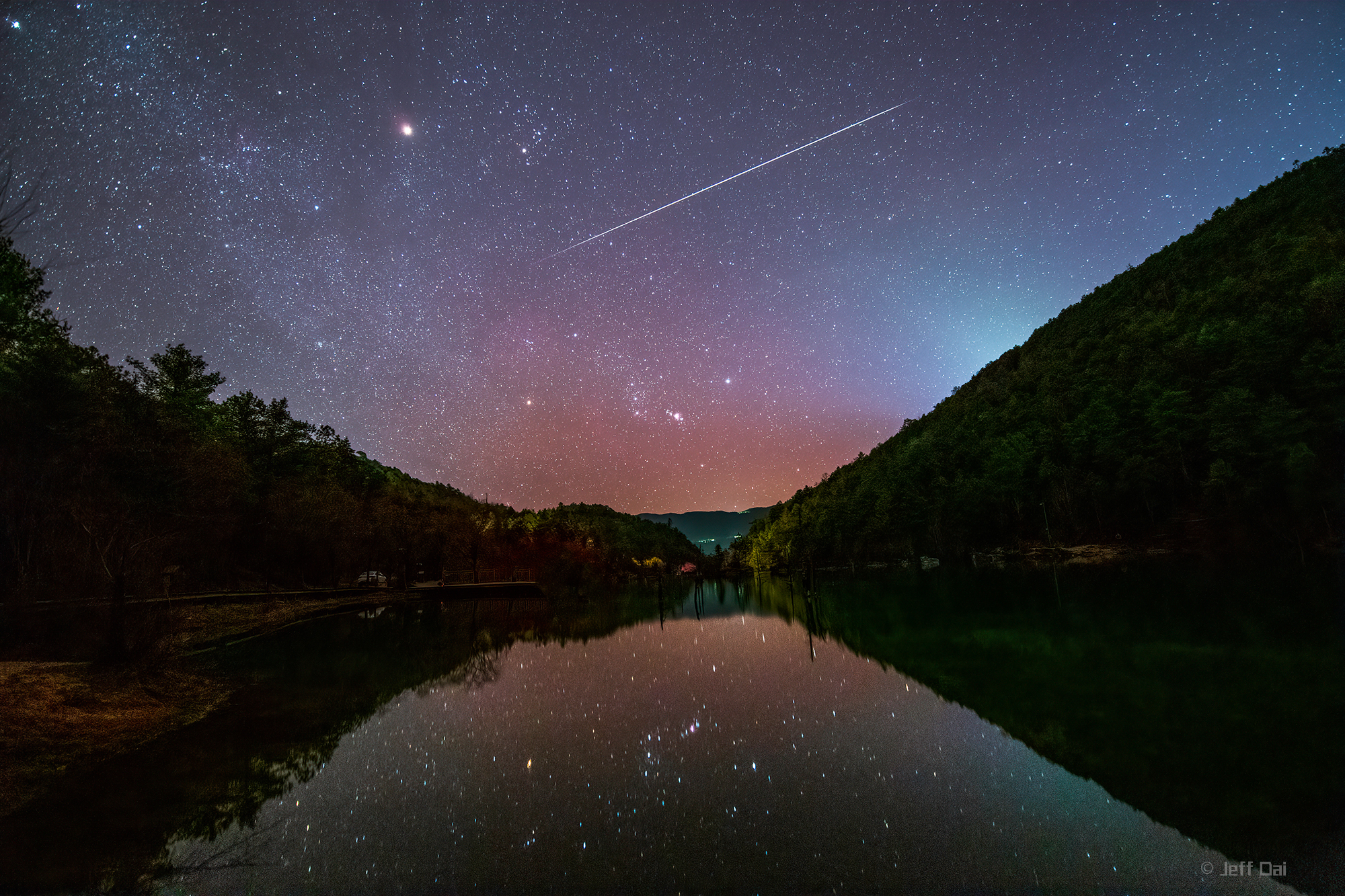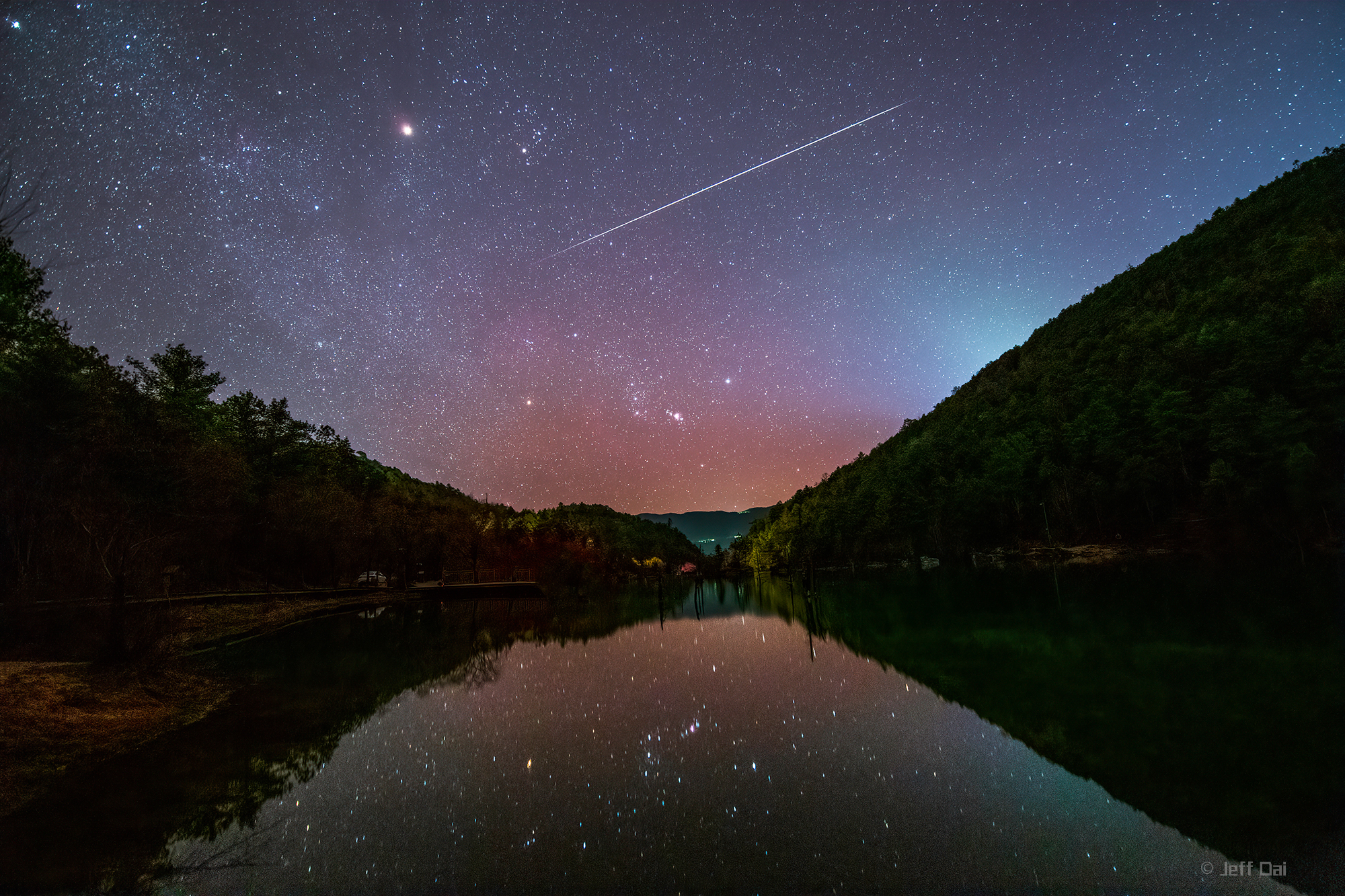
Returning from beyond the Moon, on December 11 the Orion spacecraft entered Earth's atmosphere at almost 11 kilometers per second. That's half the speed of the grain of dust that created this long fireball meteor when it entered the atmosphere on December 13, near the peak of the annual Geminid meteor shower. As our fair planet makes its yearly pass through the dust trail of mysterious asteroid 3200 Phaethon, the parallel tracks of all Geminid meteors appear to radiate from a point in the constellation Gemini. But the twin stars of Gemini hide just behind the trees on the left in this night skyscape from the beautiful Blue Moon Valley, Yunnan, China. Reflected in the still waters of the mountain lake, stars of the constellation Orion are rising near center. Captured before moonrise, dazzling Mars is still the brightest celestial beacon in the scene.
Regresando desde más allá de la Luna, el 11 de diciembre la nave espacial Orion entró en la atmósfera terrestre a casi 11 kilómetros por segundo. Esa es la mitad de la velocidad de la partícula de polvo que creó este largo meteoro bola cuando entró en la atmósfera el 13 de diciembre, cerca del pico de la lluvia anual de meteoros Geminidas. Mientras nuestro planeta atraviesa anualmente la estela de polvo del misterioso asteroide 3200 Phaethon, las trayectorias paralelas de todos los meteoros Geminidas parecen radiar desde un punto en la constelación de Géminis. Pero las dos estrellas gemelas de Géminis se ocultan justo detrás de los árboles a la izquierda en esta escena del hermoso valle Blue Moon, en Yunnan, China. Reflejadas en las aguas quietas del lago montañoso, las estrellas de la constelación de Orión ascienden cerca del centro. Capturada antes del amanecer de la luna, Marte deslumbrante sigue siendo el faro celestial más brillante en la escena.