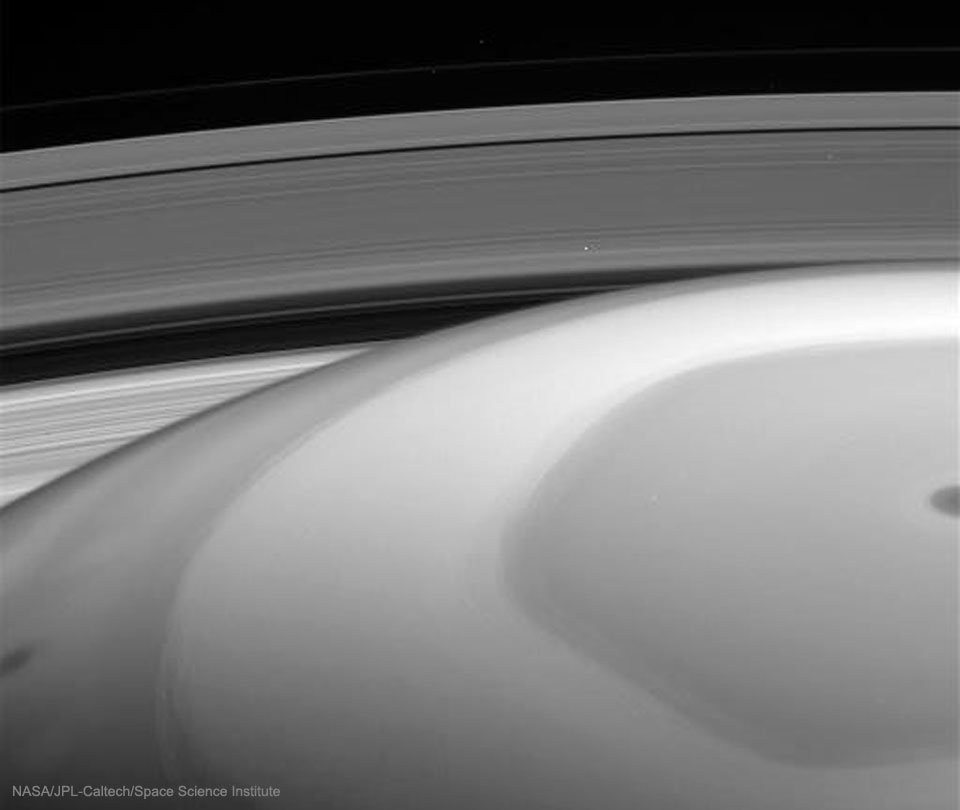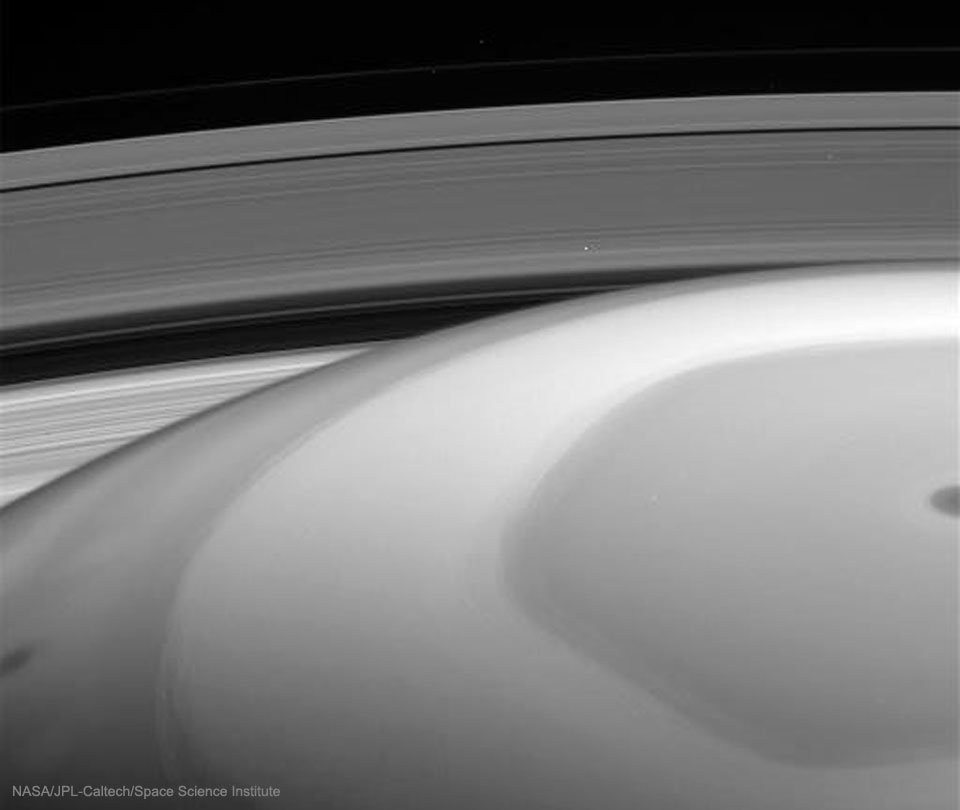
This is what Saturn looks like from inside the rings. In 2017, for the first time, NASA directed the Cassini spacecraft to swoop between Saturn and its rings. During the dive, the robotic spacecraft took hundreds of images showing unprecedented detail for structures in Saturn's atmosphere. Looking back out, however, the spacecraft was also able to capture impressive vistas. In the featured image, taken a few hours before closest approach, Saturn's unusual northern hexagon is seen surrounding the North Pole. Saturn's B ring is the closest visible, while the dark Cassini Division separates B from the outer A. A close inspection will find the two small moons that shepherd the F-ring, the farthest ring discernable. A few months after this image was taken -- and after more than a decade of exploration and discovery -- the Cassini spacecraft ran low on fuel and was directed to enter Saturn's atmosphere, where it surely melted.
Este es el aspecto que tiene Saturno visto desde dentro de sus anillos. En 2017, por primera vez, la NASA dirigió la nave espacial Cassini para que se deslizara entre Saturno y sus anillos. Durante la inmersión, la nave robótica tomó cientos de imágenes que mostraron un detalle sin precedentes de estructuras en la atmósfera de Saturno. Mirando hacia afuera, sin embargo, la nave también fue capaz de capturar impresionantes vistas. En la imagen destacada, tomada unas horas antes del acercamiento más cercano, se ve el inusual hexágono en el norte de Saturno rodeando el Polo Norte. El anillo B de Saturno es el más cercano visible, mientras que la oscura división de Cassini separa el B del exterior A. Una inspección más cercana revelará las dos pequeñas lunas que guían el anillo F, el anillo más alejado discernible. Unos meses después de que se tomara esta imagen — y después de más de una década de exploración y descubrimiento — la nave Cassini se quedó sin combustible y fue dirigida a entrar en la atmósfera de Saturno, donde seguramente se fundió.