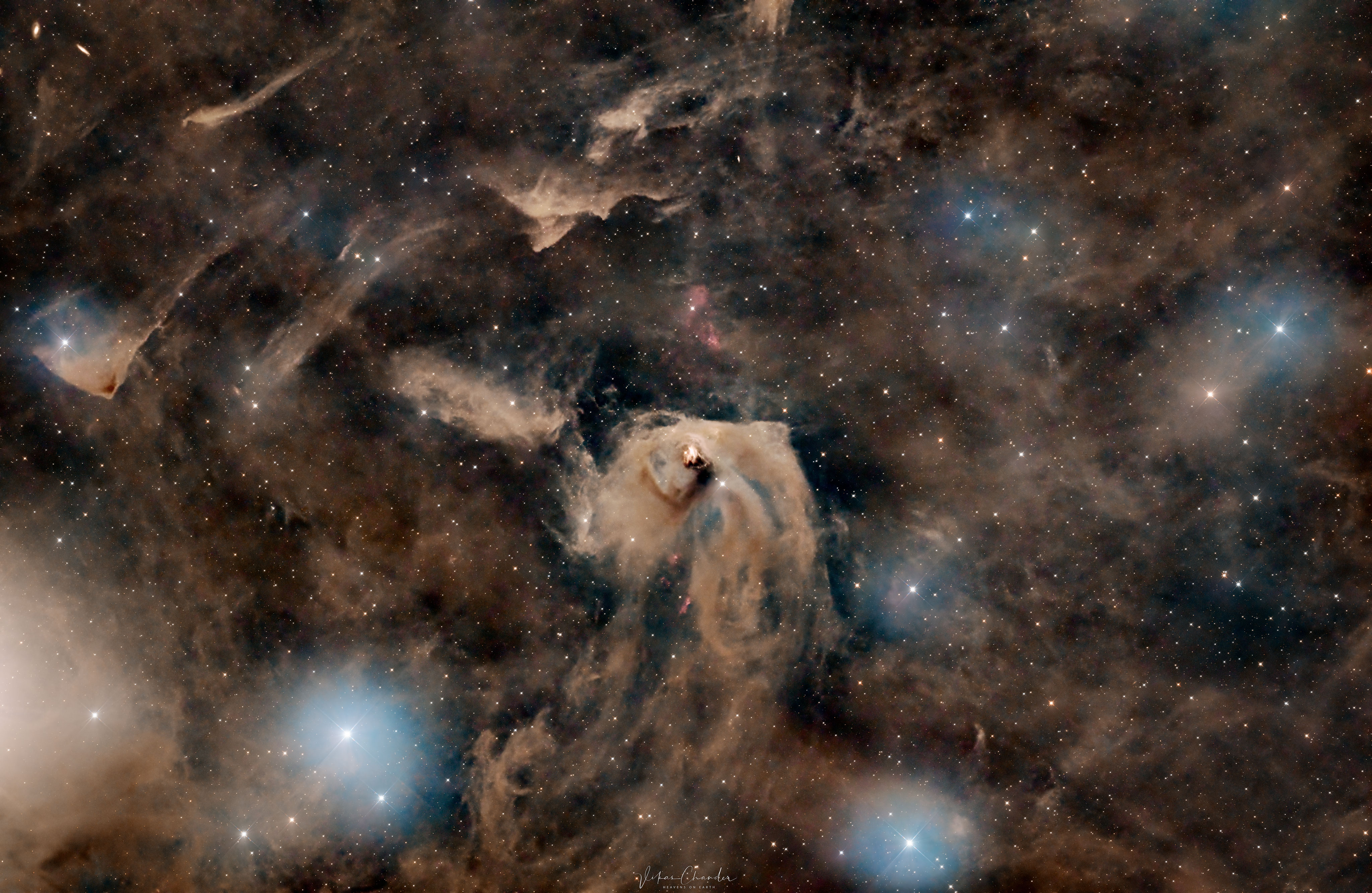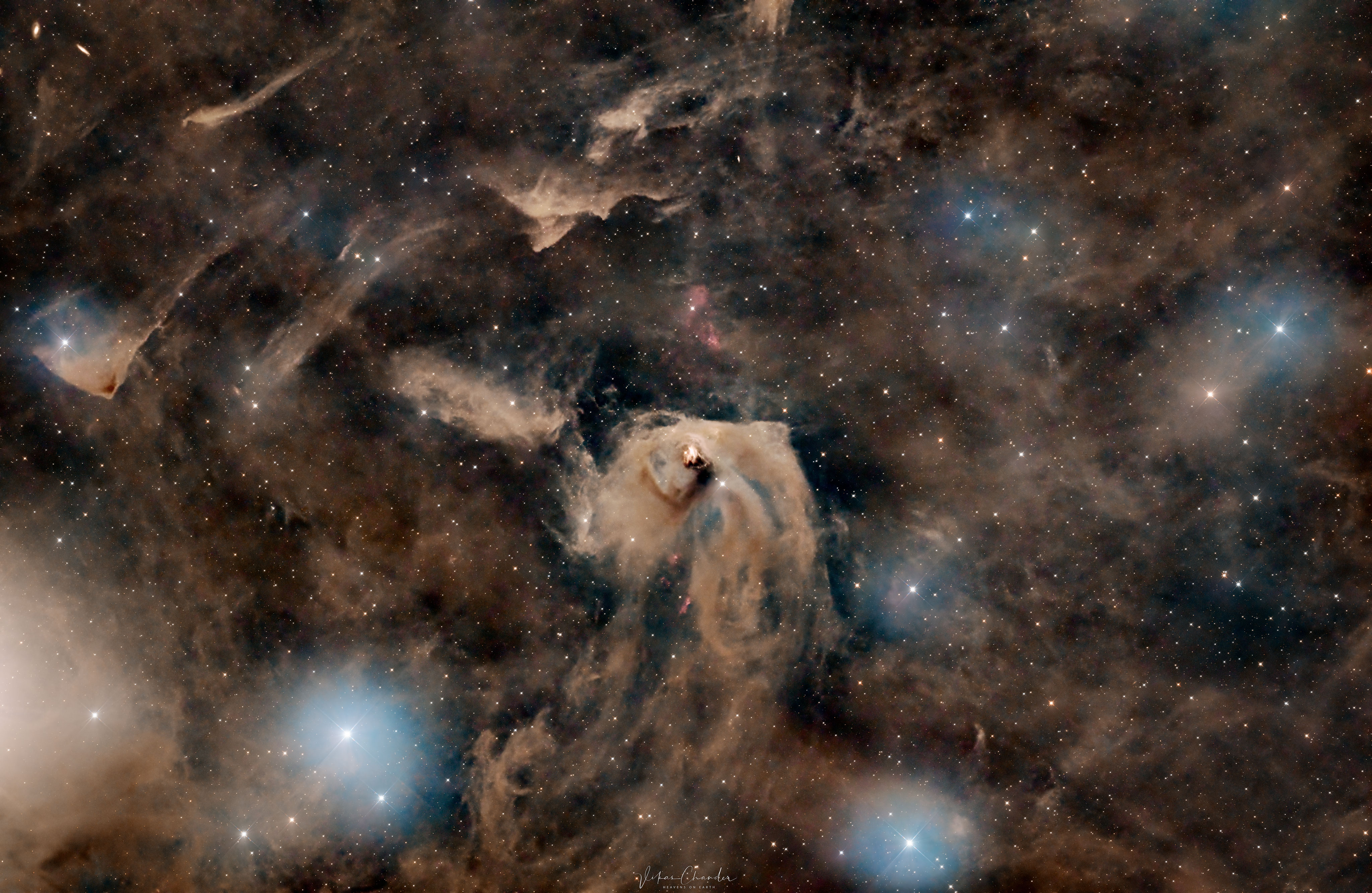
Can dust be beautiful? Yes, and it can also be useful. The Taurus molecular cloud has several bright stars, but it is the dark dust that really draws attention. The pervasive dust has waves and ripples and makes picturesque dust bunnies, but perhaps more importantly, it marks regions where interstellar gas is dense enough to gravitationally contract to form stars. In the image center is a light cloud lit by neighboring stars that is home not only to a famous nebula, but to a very young and massive famous star. Both the star, T Tauri, and the nebula, Hind's Variable Nebula, are seen to vary dramatically in brightness -- but not necessarily at the same time, adding to the mystery of this intriguing region. T Tauri and similar stars are now generally recognized to be Sun-like stars that are less than a few million years old and so still in the early stages of formation. The featured image spans about four degrees not far from the Pleiades star cluster, while the featured dust field lies about 400 light-years away.
¿Puede el polvo ser hermoso? Sí, y también puede ser útil. La nube molecular de Tauro tiene varias estrellas brillantes, pero es el polvo oscuro lo que realmente llama la atención. El polvo omnipresente tiene ondulaciones y crestas que forman bonitos montículos de polvo, pero quizás más importante aún, marca regiones donde el gas interestelar es lo suficientemente denso como para contraerse gravitacionalmente y formar estrellas. En el centro de la imagen se encuentra una nube luminosa iluminada por estrellas vecinas, que no solo alberga una nebulosa famosa, sino también una estrella joven y masiva muy famosa. Tanto la estrella, T Tauri, como la nebulosa, la Nebulosa Variable de Hind, se ven variar dramáticamente en brillo — pero no necesariamente al mismo tiempo, lo que añade misterio a esta región intrigante. T Tauri y estrellas similares son ahora generalmente reconocidas como estrellas similares al Sol que tienen menos de unos pocos millones de años y, por lo tanto, aún se encuentran en etapas tempranas de formación. La imagen mostrada abarca aproximadamente cuatro grados, no muy lejos del cúmulo estelar de las Pléyades, mientras que el campo de polvo destacado se encuentra a unos 400 años luz de distancia.