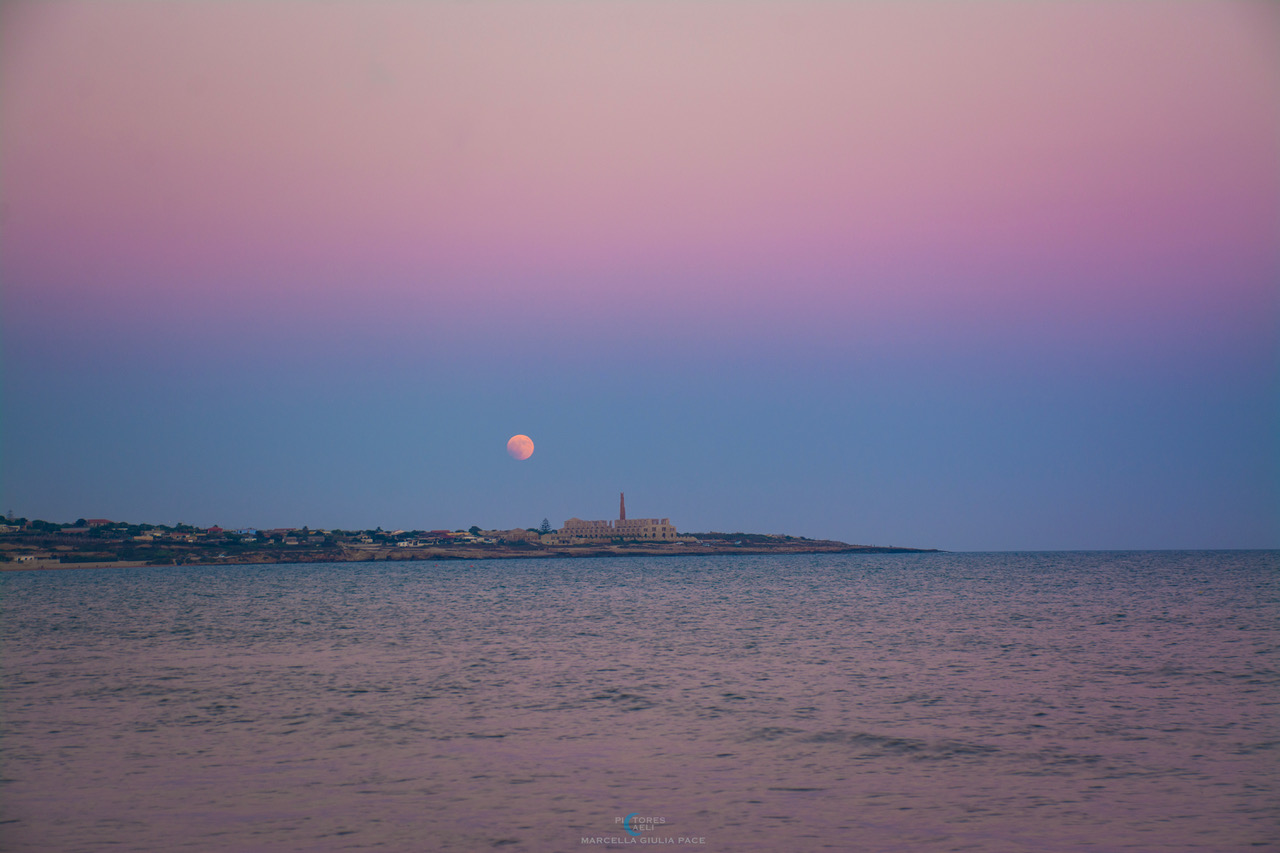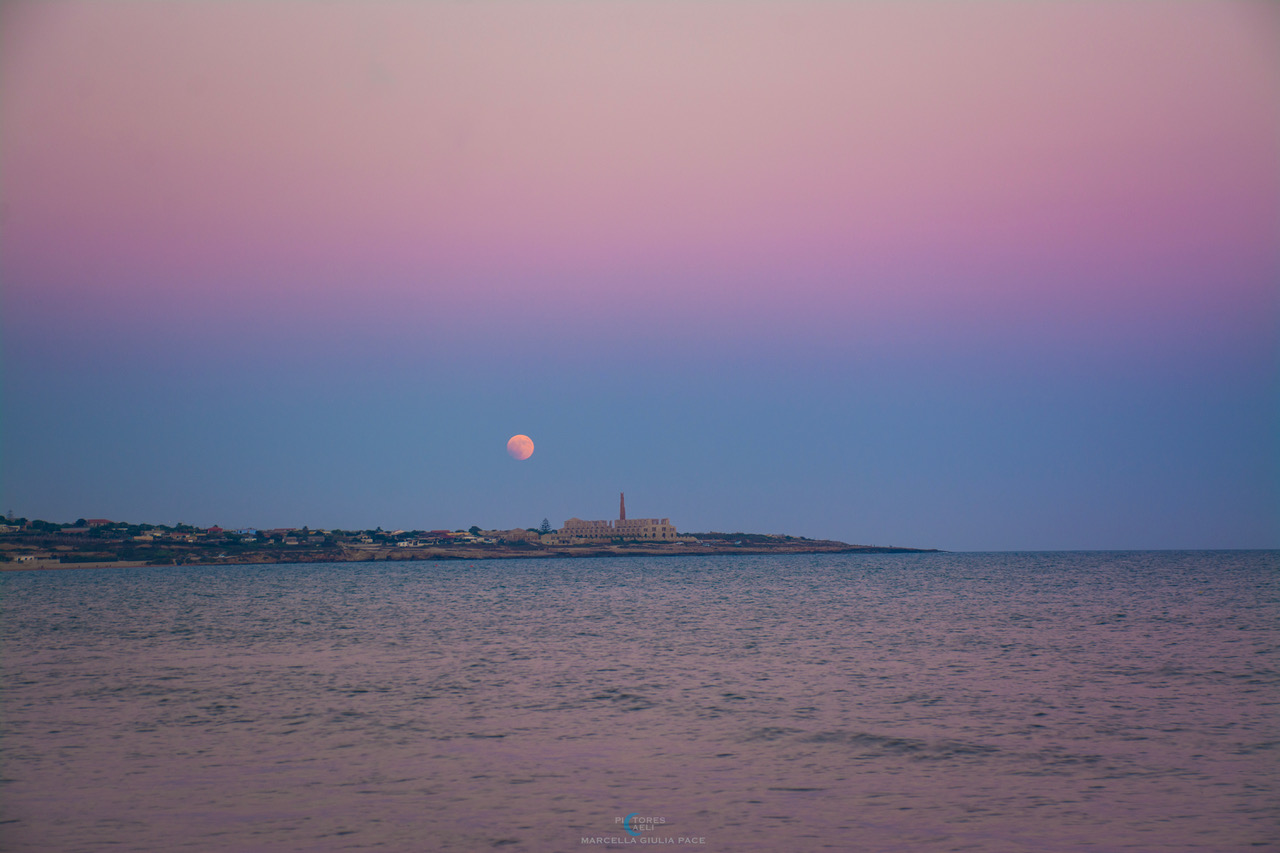
Can you find two Earth shadows in today's image? It's a bit tricky. To find the first shadow, observe that the top part of the atmosphere appears pink and the lower part appears blue. This is because the top half is exposed to direct sunlight, while the lower part is not. The purple area in between is known as the Belt of Venus, even though Venus can only appear on the other side of the sky, near the Sun. The blue color of the lower atmosphere is caused by the Earth blocking sunlight, creating Earth shadow number 1. Now, where is the second Earth shadow? Take a look at the Moon. Do you notice something unusual about the lower left part? That area appears unusually dark because it is in the shadow of the Earth, creating Earth shadow number 2. To be precise, the Moon was captured during a lunar eclipse. This carefully timed image was taken in Sampieri, Sicily, Italy, in July 2018.
¿Puedes encontrar dos sombras de la Tierra en esta imagen? Es un poco complicado. Para encontrar la primera sombra, observa que la parte superior de la atmósfera aparece rosa y la parte inferior aparece azul. Esto se debe a que la mitad superior está expuesta a la luz solar directa, mientras que la parte inferior no lo está. El área morada intermedia se conoce como el Cinturón de Venus, aunque Venus solo puede aparecer en el otro lado del cielo, cerca del Sol. El color azul de la atmósfera inferior es causado por la Tierra bloqueando la luz solar, creando la sombra número 1 de la Tierra. Ahora, ¿dónde está la segunda sombra de la Tierra? Mira la Luna. ¿Te das cuenta de algo inusual en la parte inferior izquierda? Ese área aparece inusualmente oscura porque está en la sombra de la Tierra, creando la sombra número 2 de la Tierra. Para ser precisos, la Luna fue capturada durante un eclipse lunar. Esta imagen cuidadosamente cronometrada fue tomada en Sampieri, Sicilia, Italia, en julio de 2018.