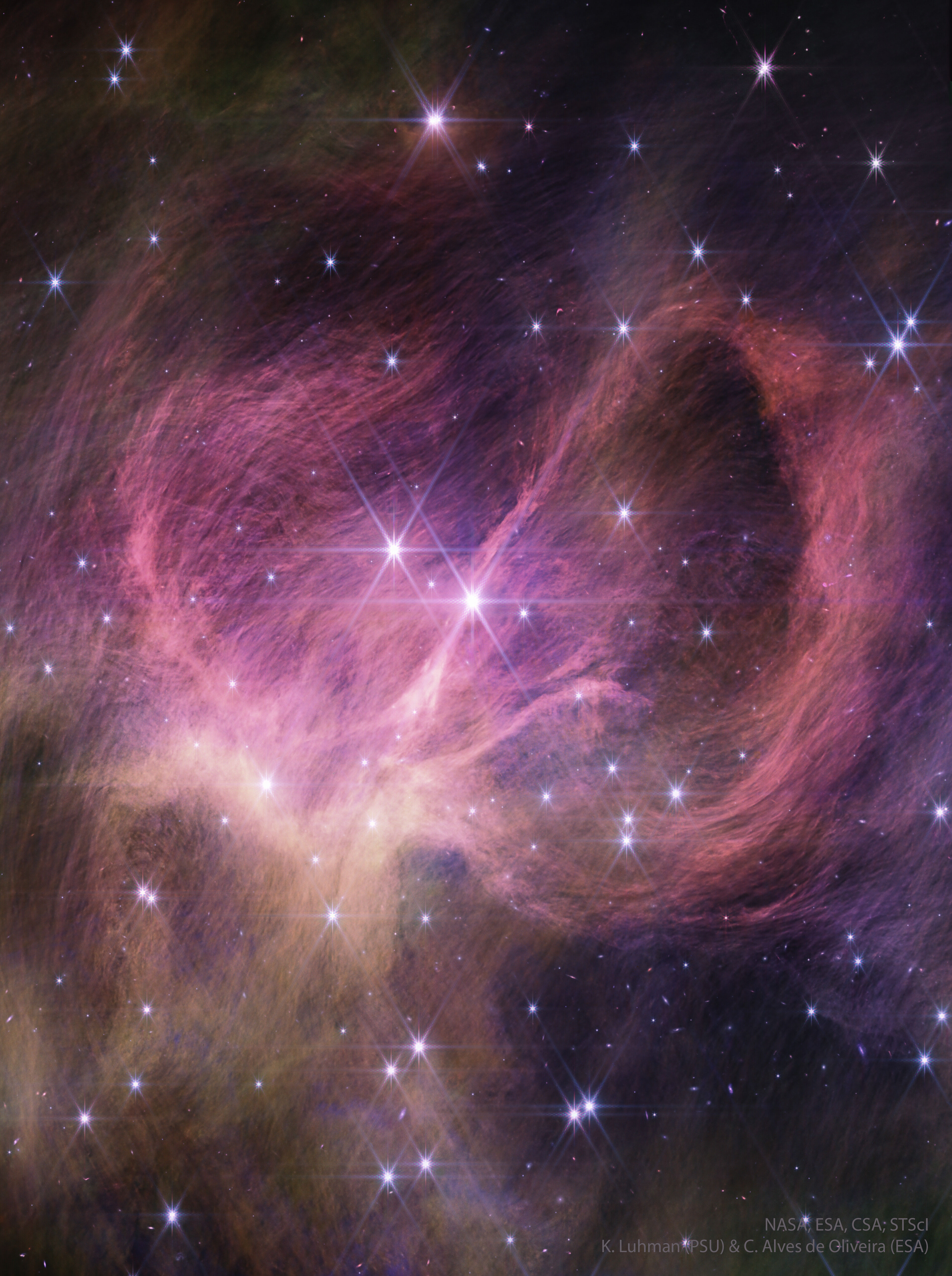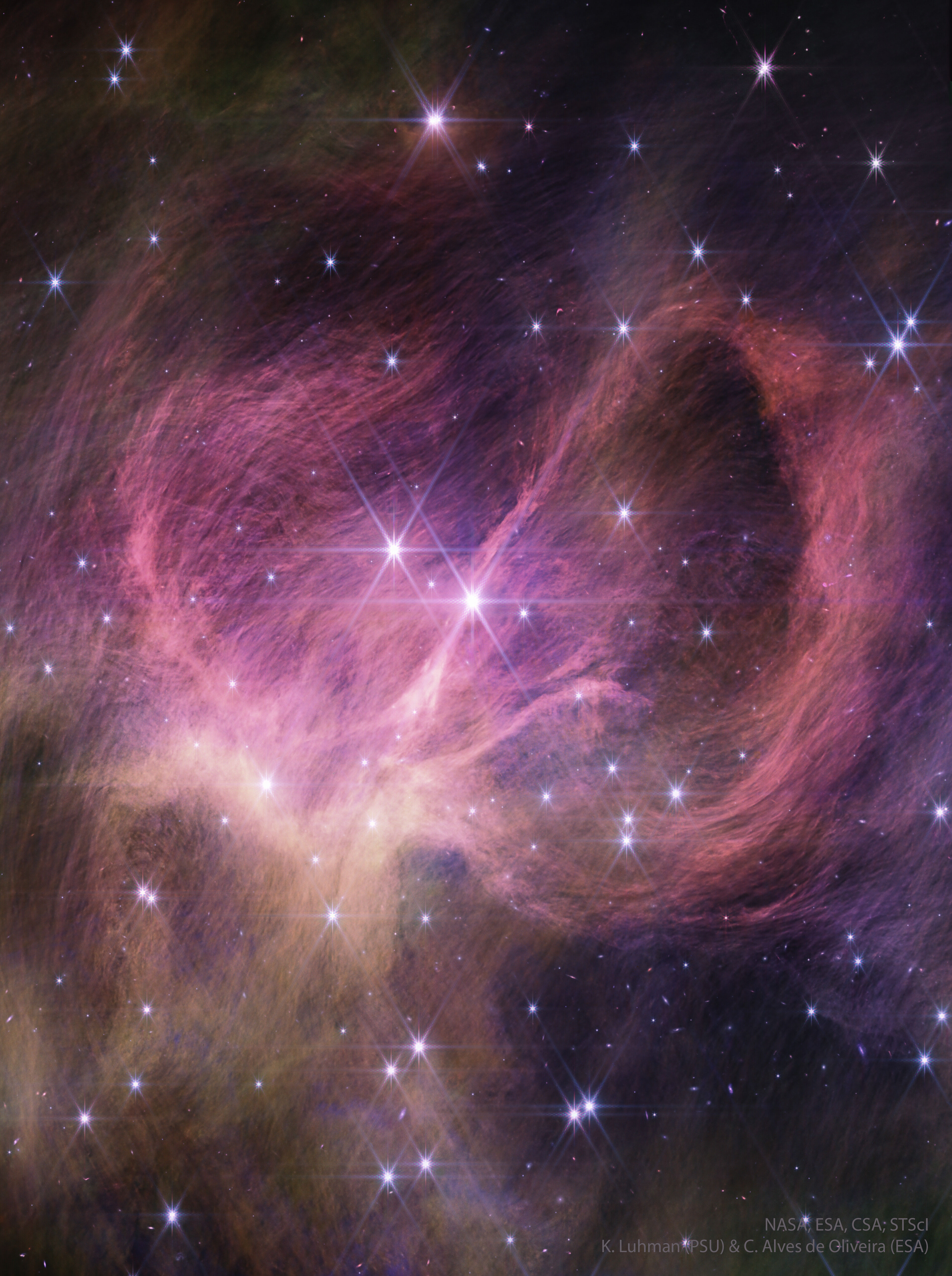
Sometimes, it's the stars that are the hardest to see that are the most interesting. IC 348 is a young star cluster that illuminates surrounding filamentary dust. The stringy and winding dust appears pink in this recently released infrared image from the Webb Space Telescope. In visible light, this dust reflects mostly blue light, giving the surrounding material the familiar blue hue of a reflection nebula. Besides bright stars, several cool objects have been located in IC 348, visible because they glow brighter in infrared light. These objects are hypothesized to be low mass brown dwarfs. Evidence for this includes the detection of an unidentified atmospheric chemical, likely a hydrocarbon, seen previously in the atmosphere of Saturn. These objects appear to have masses slightly greater than known planets, only a few times greater than Jupiter. Together, these indicate that this young star cluster contains something noteworthy -- young planet-mass brown dwarfs that float free, not orbiting any other star.
A veces, son las estrellas las más difíciles de ver las que resultan más interesantes. IC 348 es un joven cúmulo estelar que ilumina el polvo filamentoso que lo rodea. El polvo, de apariencia alargada y en espiral, aparece de color rosa en esta reciente imagen en infrarrojo del Telescopio Espacial Webb. En luz visible, este polvo refleja principalmente luz azul, otorgando al material circundante el familiar tono azul de una nebulosa de reflexión. Además de estrellas brillantes, se han localizado varios objetos fríos en IC 348, visibles porque brillan con mayor intensidad en luz infrarroja. Estos objetos se hipotetizan como enanas marrones de baja masa. La evidencia de esto incluye la detección de un compuesto químico atmosférico no identificado, probablemente un hidrocarburo, previamente observado en la atmósfera de Saturno. Estos objetos parecen tener masas ligeramente superiores a las de los planetas conocidos, solo unas pocas veces mayores que la de Júpiter. Juntos, estos hallazgos indican que este joven cúmulo estelar contiene algo digno de mención: enanas marrones de masa planetaria jóvenes que flotan libremente, sin orbitar ninguna otra estrella.