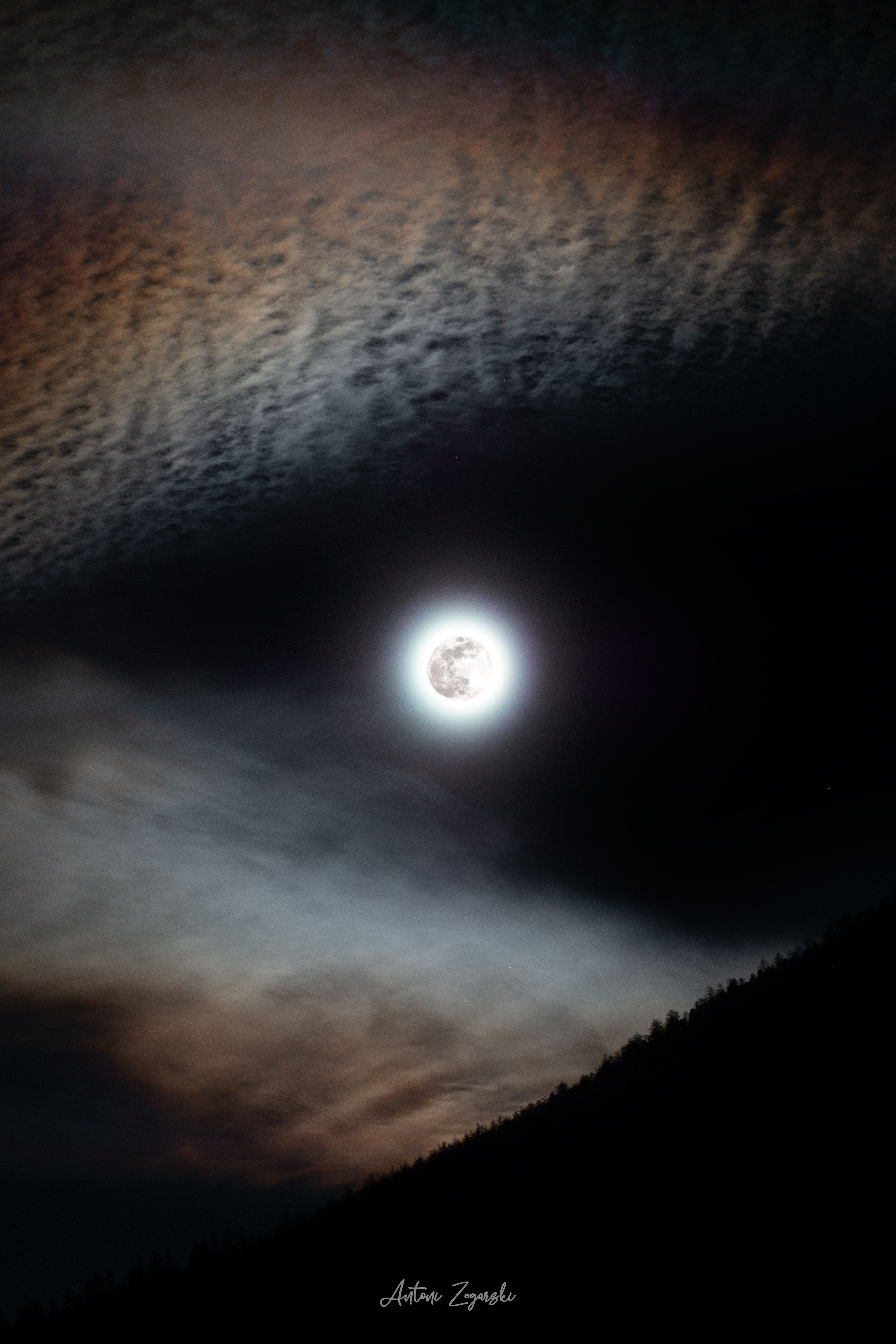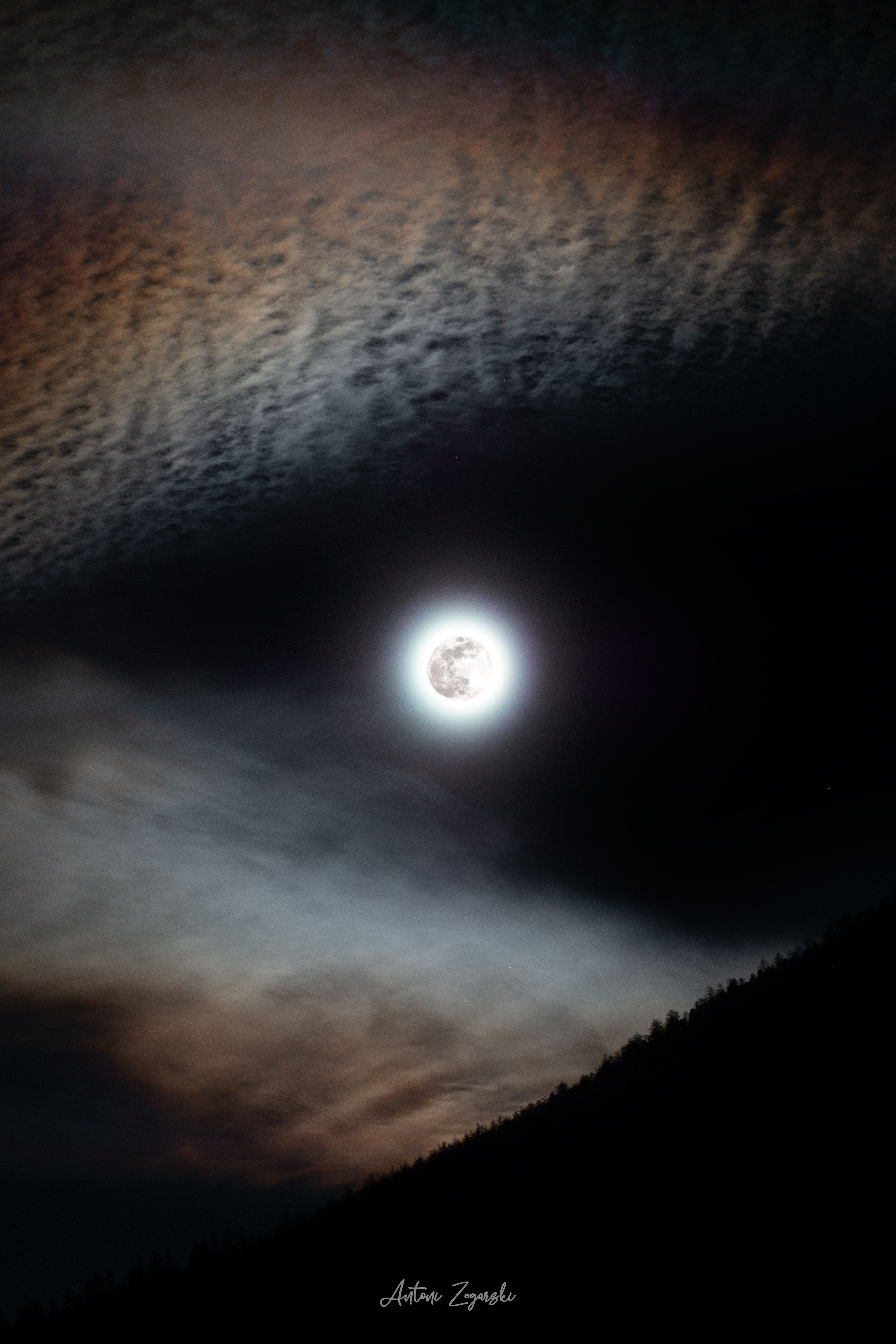
Did you see the full moon last month? During every month, on average, a full moon occurs in the skies over planet Earth. This is because the Moon takes a month to complete another orbit around our home planet, goes through all of its phases, and once again has its entire Earth-facing half lit by reflected sunlight. Many indigenous cultures give each full moon a name, and this past full moon's names include the Ice Moon, the Stay at Home Moon, and the Quiet Moon. Occurring in January on the modern western calendar, several cultures have also named the most recent full moon the Wolf Moon, in honor of the famous howling animal. Featured here above the Italian Alps mountains, this past Wolf Moon was captured in combined long and short exposure images. The image is striking because, to some, the surrounding clouds appear as a wolf's mouth ready to swallow the Wolf Moon, while others see the Moon as a wolf's eye.
¿Viste la luna llena del mes pasado? Cada mes, en promedio, ocurre una luna llena en los cielos sobre la Tierra. Esto se debe a que la Luna tarda un mes en completar otra órbita alrededor de nuestro planeta, pasa por todas sus fases y nuevamente tiene su mitad que mira hacia la Tierra iluminada por la luz solar reflejada. Muchas culturas indígenas dan un nombre a cada luna llena, y los nombres de la luna llena pasada incluyen la Luna de Hielo, la Luna de Quedarse en Casa y la Luna Silenciosa. Al ocurrir en enero según el calendario occidental moderno, varias culturas también han nombrado a la luna llena más reciente como la Luna Loba, en honor al famoso animal aullador. La Luna Loba pasada, mostrada aquí sobre las montañas de los Alpes Italianos, fue capturada en imágenes combinadas de larga y corta exposición. La imagen es impactante porque, para algunos, las nubes que la rodean parecen la boca de un lobo lista para tragar la Luna Loba, mientras que otros ven la Luna como el ojo de un lobo.