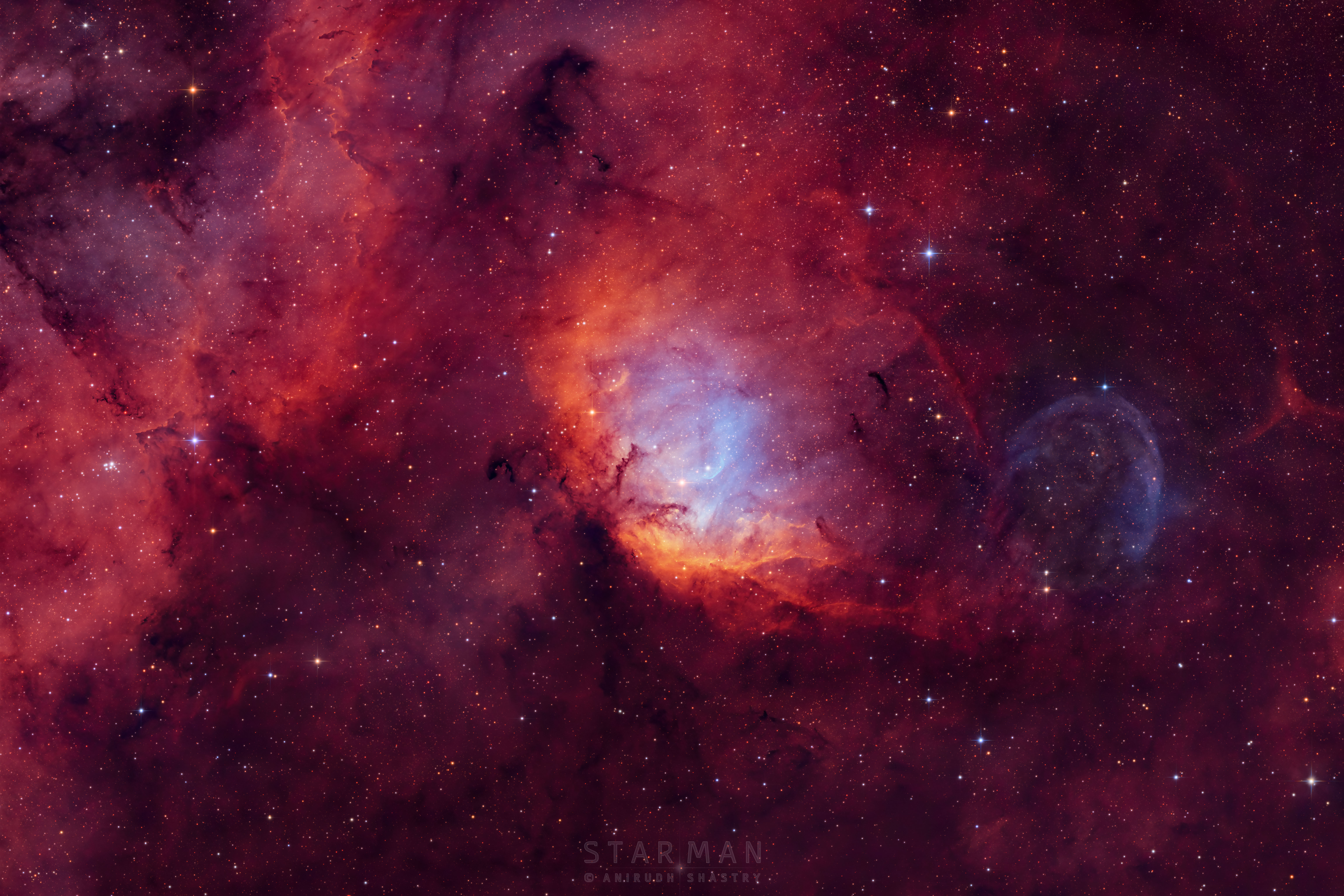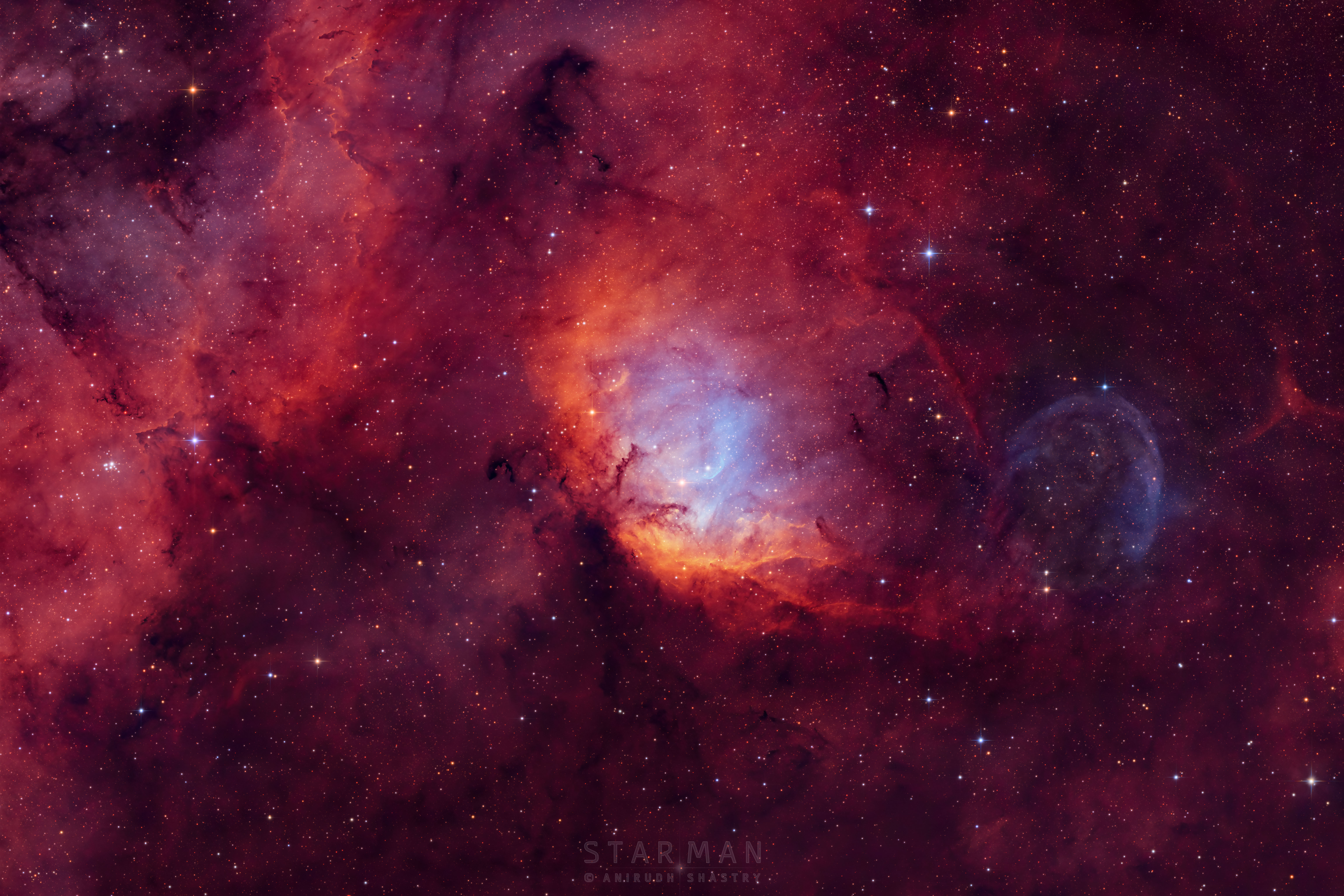
When can you see a black hole, a tulip, and a swan all at once? At night -- if the timing is right, and if your telescope is pointed in the right direction. The complex and beautiful Tulip Nebula blossoms about 8,000 light-years away toward the constellation of Cygnus the Swan. Ultraviolet radiation from young energetic stars at the edge of the Cygnus OB3 association, including O star HDE 227018, ionizes the atoms and powers the emission from the Tulip Nebula. Stewart Sharpless cataloged this nearly 70 light-years across reddish glowing cloud of interstellar gas and dust in 1959, as Sh2-101. Also in the featured field of view is the black hole Cygnus X-1, which is also a microquasar because it is one of strongest X-ray sources in planet Earth's sky. Blasted by powerful jets from a lurking black hole, its fainter bluish curved shock front is only faintly visible beyond the cosmic Tulip's petals, near the right side of the frame. Back to School? Learn Science with NASA
¿Cuándo puedes ver un agujero negro, un tulipán y un cisne al mismo tiempo? De noche — si el momento es adecuado y si tu telescopio está apuntando en la dirección correcta. La compleja y hermosa Nebulosa Tulipán florece a unos 8000 años luz de distancia hacia la constelación de Cisne. La radiación ultravioleta de estrellas jóvenes y energéticas en el borde de la asociación Cygnus OB3, incluyendo la estrella O HDE 227018, ioniza los átomos y alimenta la emisión de la Nebulosa Tulipán. Stewart Sharpless catalogó esta nube rojiza de gas y polvo interestelar, de casi 70 años luz de diámetro, en 1959 como Sh2-101. También en el campo de visión mostrado se encuentra el agujero negro Cygnus X-1, que también es un microquásar porque es una de las fuentes más fuertes de rayos X en el cielo terrestre. Golpeado por potentes chorros provenientes de un agujero negro oculto, su frente de choque azulada y más tenue es apenas visible más allá de las pétalas de la Tulipán cósmica, cerca del lado derecho del marco.