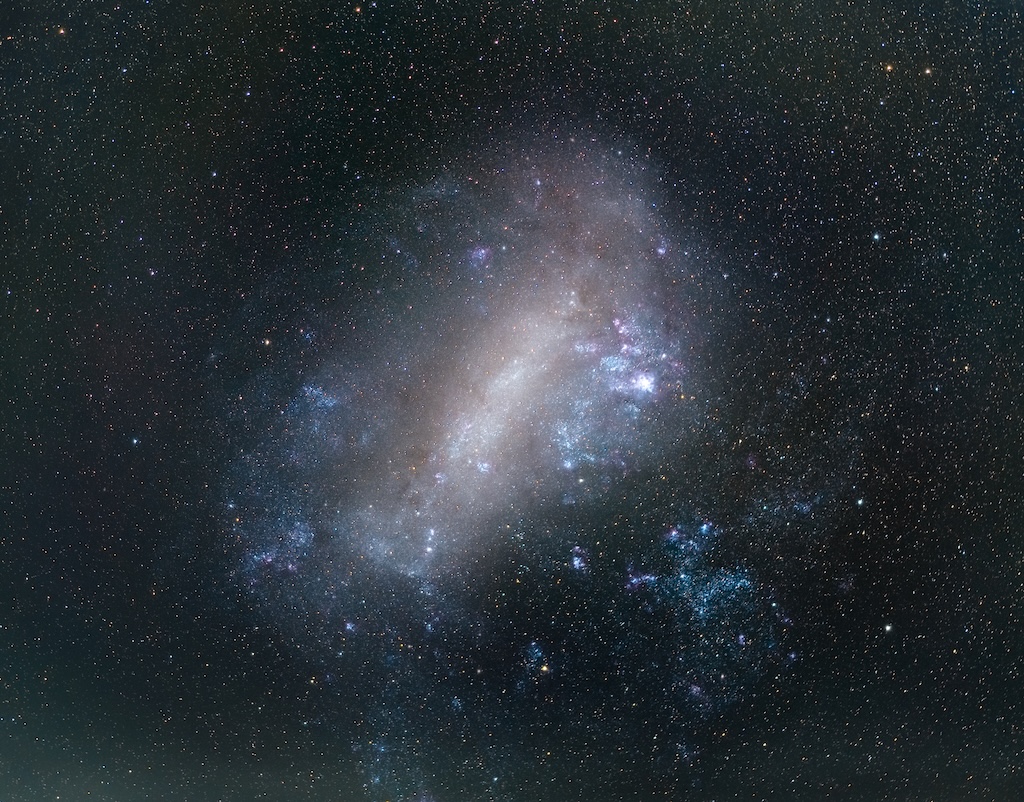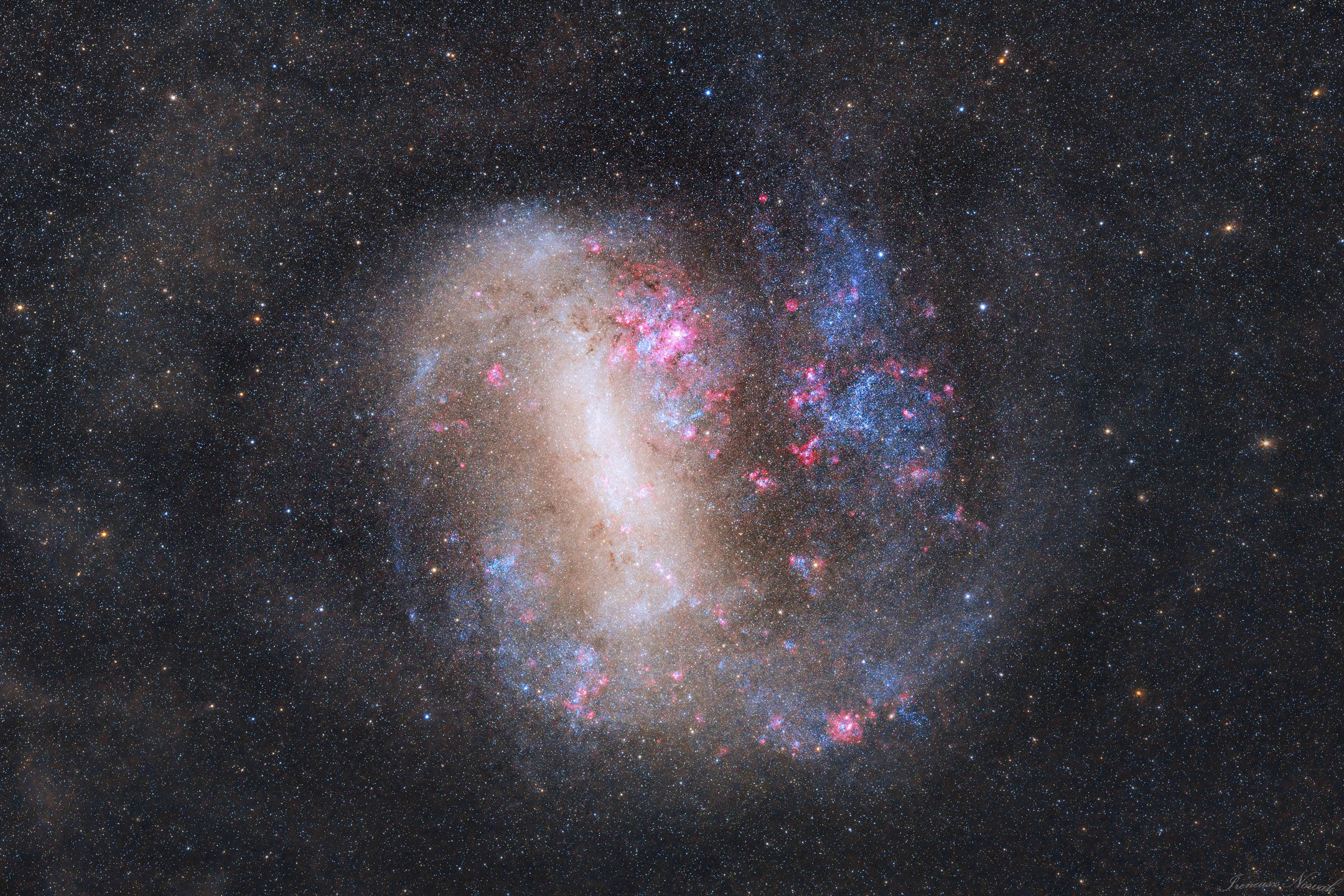
It is the largest satellite galaxy of our home Milky Way Galaxy. If you live in the south, the Large Magellanic Cloud (LMC) is quite noticeable, spanning about 10 degrees across the night sky, which is 20 times larger than the full moon towards the southern constellation of the dolphinfish (Dorado). Being only about 160,000 light years away, many details of the LMC's structure can be seen, such as its central bar and its single spiral arm. The LMC harbors numerous stellar nurseries where new stars are being born, which appear in pink in the featured image. It is home to the Tarantula Nebula, the currently most active star forming region in the entire Local Group, a small collection of nearby galaxies dominated by the massive Andromeda and Milky Way galaxies. Studies of the LMC and the Small Magellanic Cloud (SMC) by Henrietta Swan Leavitt led to the discovery of the period-luminosity relationship of Cepheid variable stars that are used to measure distances across the nearby universe. Survey: Color Blindness and Astronomical Images
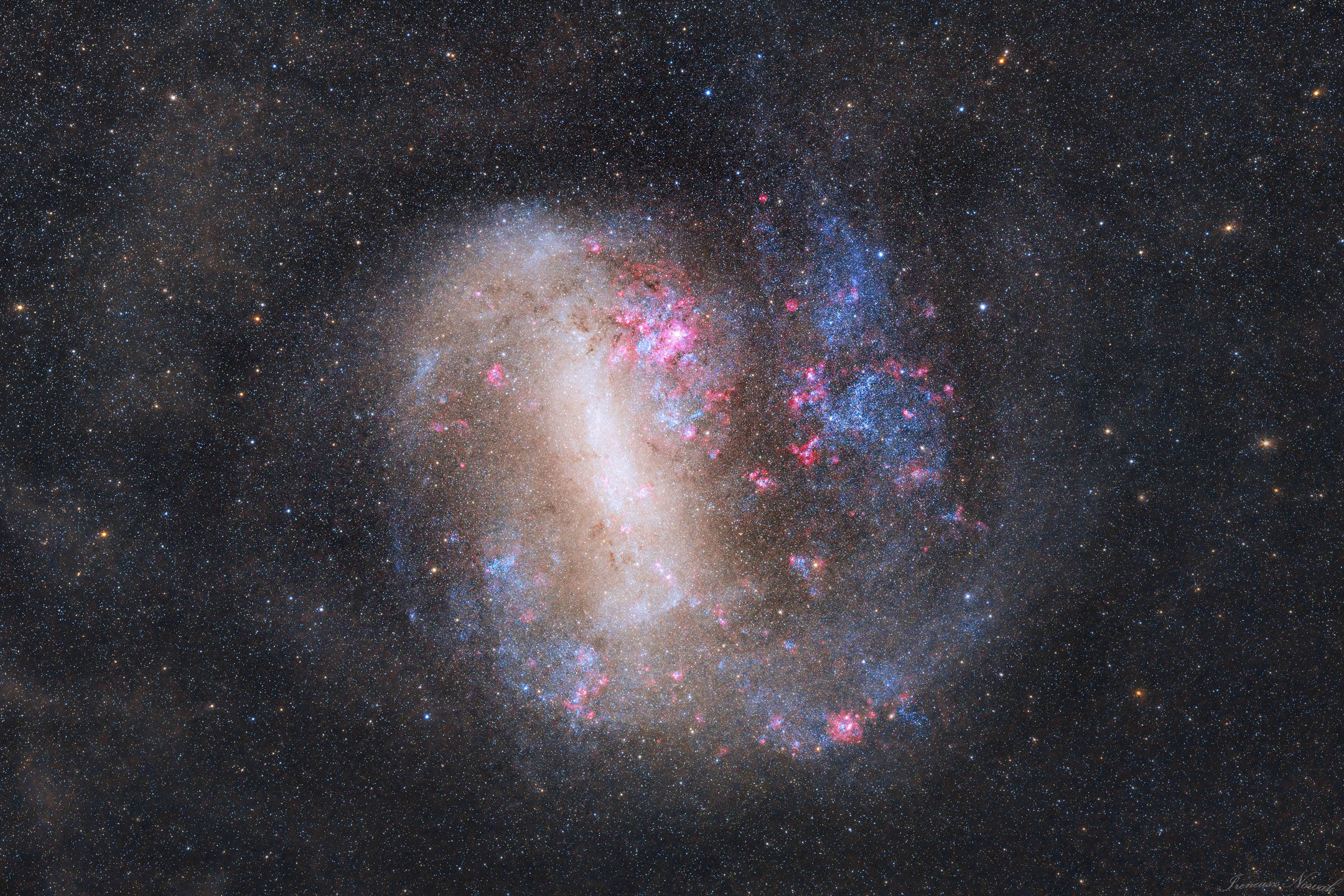
Crédito: NASA, CGRO SSC Es la galaxia satélite más grande de nuestra galaxia, la Vía Láctea. Si vives en el hemisferio sur, la Nube de Magallanes Grande (LMC, por sus siglas en inglés) es bastante visible, abarcando aproximadamente 10 grados en el cielo nocturno, lo que equivale a 20 veces el tamaño de la luna llena en dirección a la constelación del pez volador (Dorado). Al estar a solo unos 160,000 años luz de distancia, se pueden observar muchos detalles de la estructura de la LMC, como su barra central y su único brazo espiral. La LMC alberga numerosas regiones de formación estelar donde nacen nuevas estrellas, que aparecen en color rosa en la imagen destacada. Es el hogar de la Nebulosa del Tarantula, la región actualmente más activa en formación de estrellas en toda el Grupo Local, una pequeña colección de galaxias cercanas dominadas por las masivas galaxias Andrómeda y Vía Láctea. Los estudios de la LMC y la Nube de Magallanes Pequeña (SMC, por sus siglas en inglés) realizados por Henrietta Swan Leavitt llevaron al descubrimiento de la relación período-luminosidad de las estrellas variables Cefeidas, que se utilizan para medir distancias en el universo cercano.