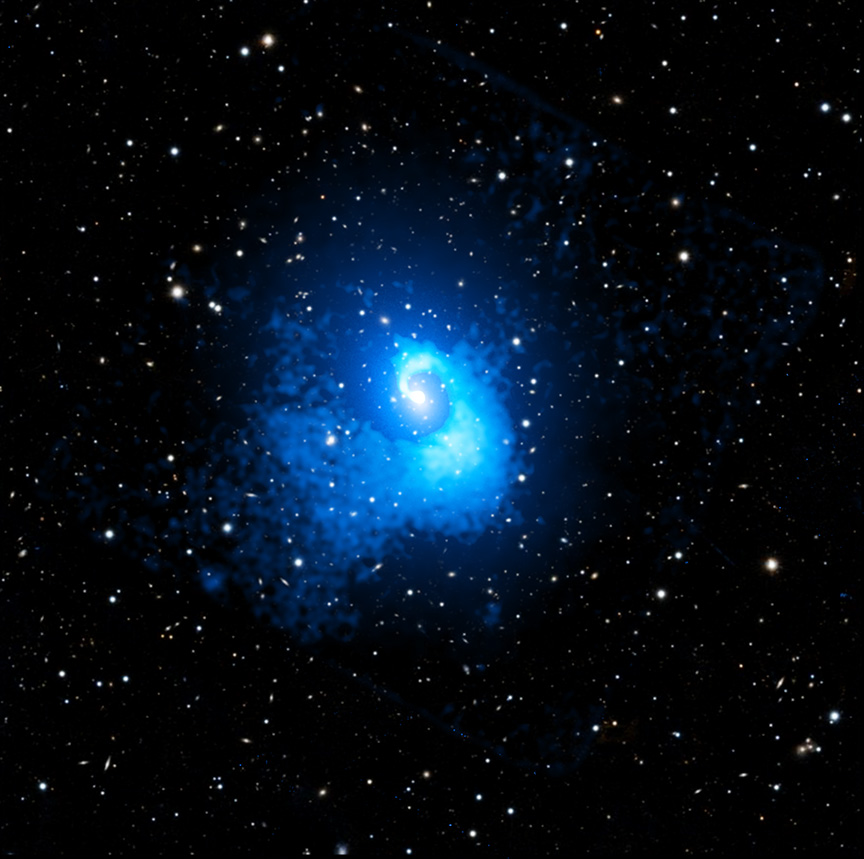
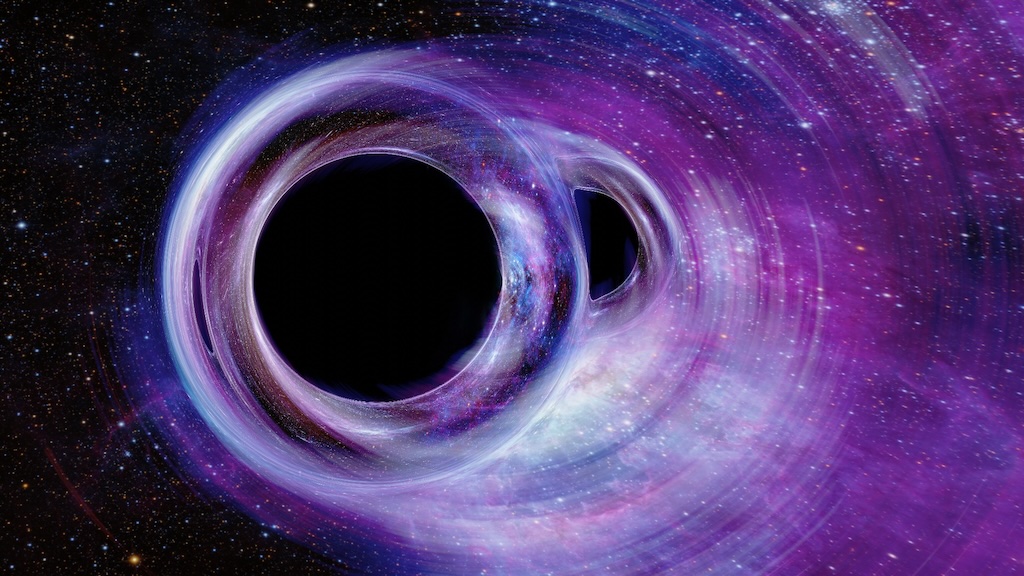
How far can black hole jets extend? A new record was found just recently with the discovery of a 23-million light-year long jet pair from a black hole active billions of years ago. Dubbed Porphyrion for a mythological Greek giant, the impressive jets were created by a type of black hole that does not usually create long jets -- one that is busy creating radiation from infalling gas. The featured animated video depicts what it might look like to circle around this powerful black hole system. Porphyrion is shown as a fast stream of energetic particles, and the bright areas are where these particles are impacting surrounding gas. The discovery was made using data from the Keck and Mayall (DESI) optical observatories as well as LOFAR and the Giant Metrewave Radio Telescope. The existence of these jets demonstrates that black holes can affect not only their home galaxies but far out into the surrounding universe. Your Sky Surprise: What picture did APOD feature on your birthday? (post 1995)
¿Hasta qué distancia pueden extenderse las llamaradas de un agujero negro? Un nuevo récord fue descubierto recientemente con la identificación de un par de chorros de 23 millones de años luz de longitud, provenientes de un agujero negro activo hace miles de millones de años. Bautizado como Porphyrion en honor a un gigante de la mitología griega, estos impresionantes chorros fueron creados por un tipo de agujero negro que normalmente no genera chorros largos — uno que está ocupado produciendo radiación a partir del gas que cae en él. El video animado destacado muestra cómo podría verse dar una vuelta alrededor de este sistema de agujeros negros poderoso. Porphyrion se muestra como un chorro rápido de partículas energéticas, y las áreas brillantes son donde estas partículas impactan el gas circundante. El descubrimiento se realizó utilizando datos de los observatorios ópticos Keck y Mayall (DESI), así como de LOFAR y el Gran Radiotelescopio Metrewave. La existencia de estos chorros demuestra que los agujeros negros pueden afectar no solo a sus galaxias natales, sino también muy lejos en el universo circundante.