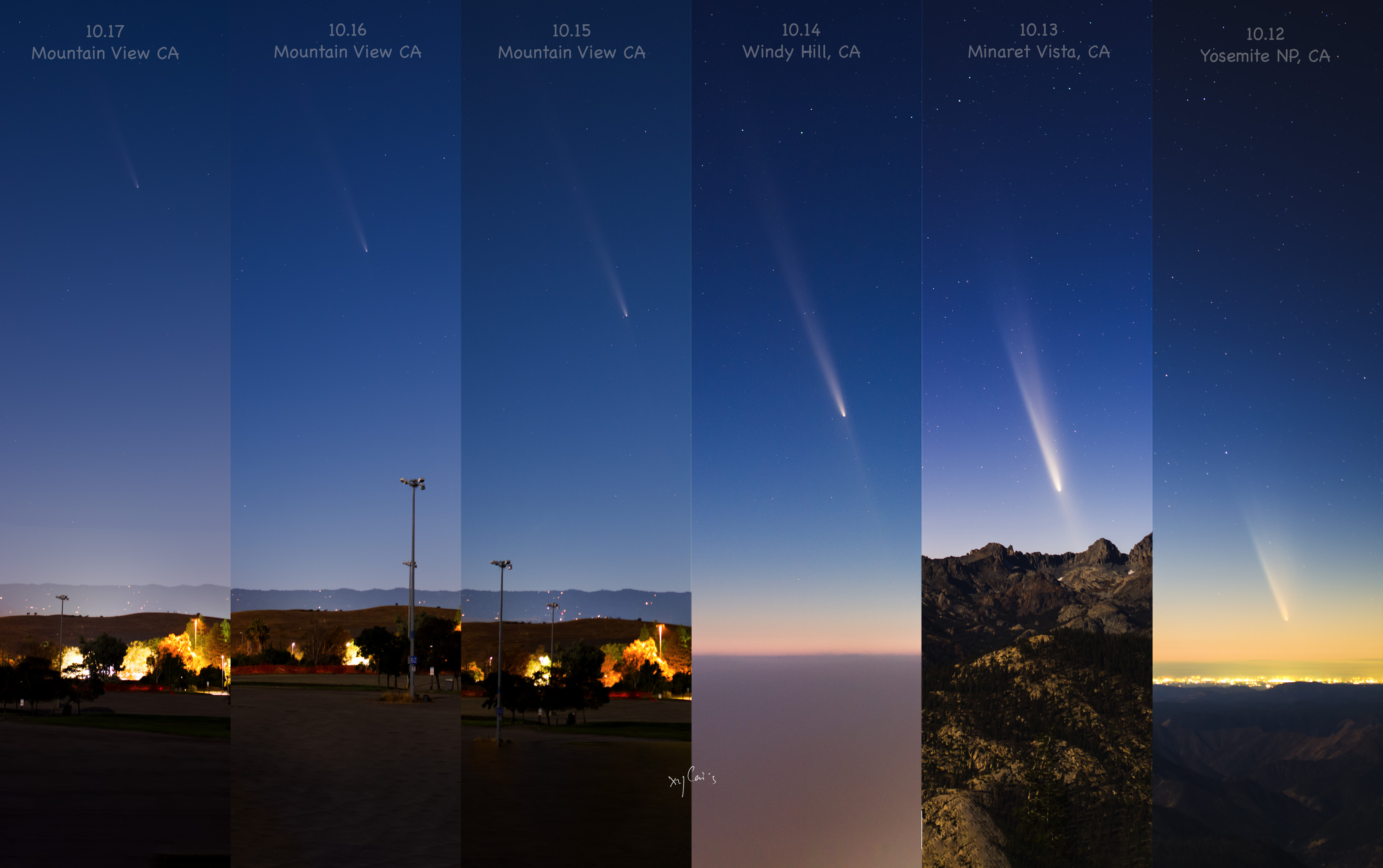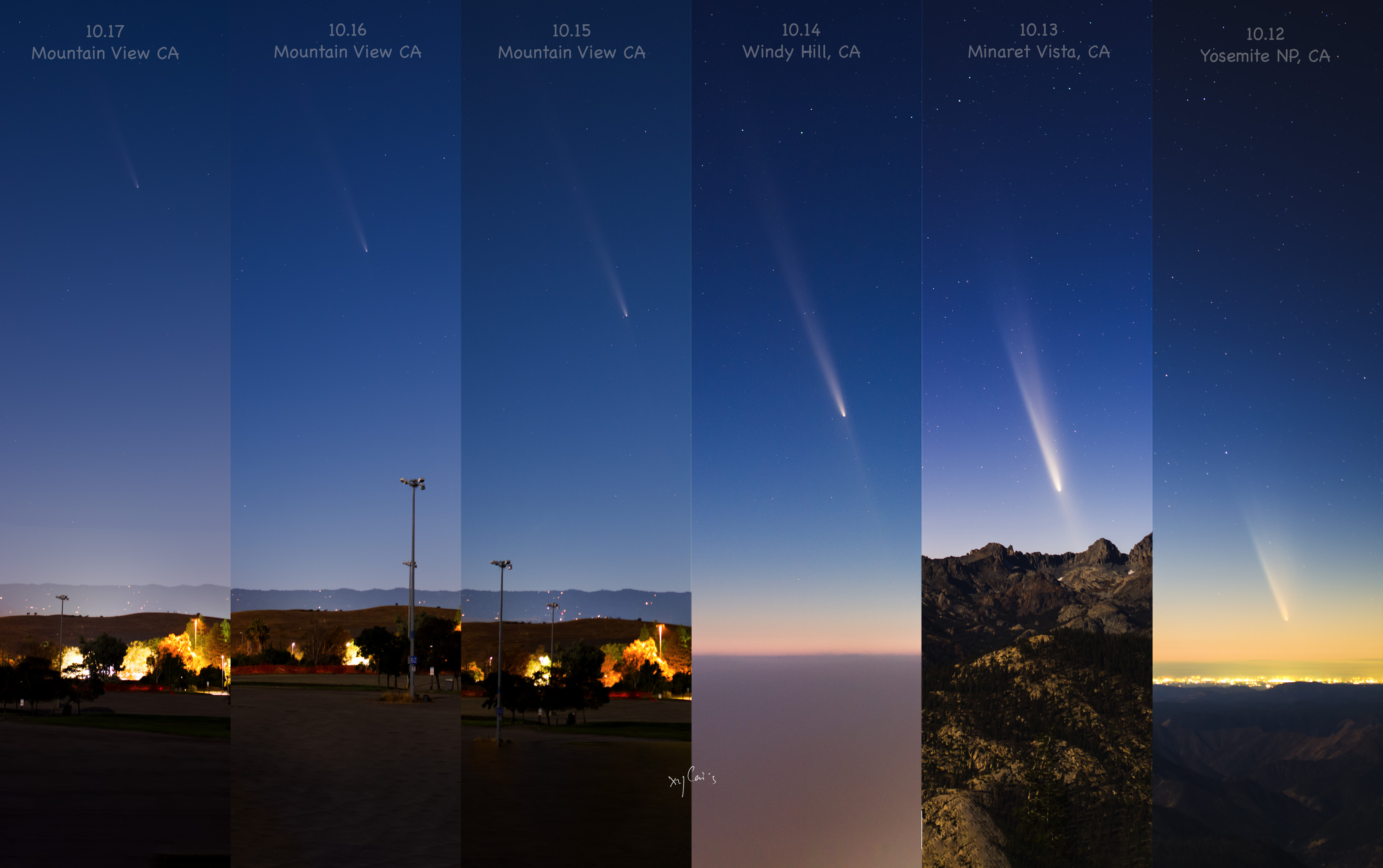
These six panels follow daily apparitions of comet C/2023 A3 Tsuchinshan-ATLAS as it moved away from our fair planet during the past week. The images were taken with the same camera and lens at the indicated dates and locations from California, planet Earth. At far right on October 12 the visitor from the distant Oort cloud was near its closest approach, some 70 million kilometers (about 4 light-minutes) away. Its bright coma and long dust tail were close on the sky to the setting Sun but still easy to spot against a bright western horizon. Over the following days, the outbound comet steadily climbs above the ecliptic and north into the darker western evening sky, but begins to fade from view. Crossing the Earth's orbital plane around October 14, Tsuchinshan-ATLAS exhibits a noticeable antitail extended toward the western horizon. Higher in the evening sky at sunset by October 17 (far left) the comet has faded and reached a distance of around 77 million kilometers from planet Earth. Hopefully you enjoyed some of Tsuchinshan-ATLAS's bid to become the best comet of 2024. This comet's initial orbital period estimates were a mere 80,000 years, but in fact it may never return to the inner Solar System. Growing Gallery: Comet Tsuchinshan-ATLAS in 2024
Estos seis paneles siguen las apariciones diarias del cometa C/2023 A3 Tsuchinshan-ATLAS a medida que se alejaba de nuestro planeta durante la semana pasada. Las imágenes fueron tomadas con la misma cámara y lente en las fechas y ubicaciones indicadas desde California, en la Tierra. El 12 de octubre, a la derecha, el visitante proveniente de la lejana nube de Oort estaba cerca de su punto más cercano, a unos 70 millones de kilómetros (aproximadamente 4 minutos luz) de distancia. Su coma brillante y su larga cola de polvo estaban cerca del Sol poniente en el cielo, pero aún eran fáciles de observar contra el horizonte occidental brillante. En los días siguientes, el cometa que se aleja sube progresivamente por encima de la eclíptica y hacia el norte, hacia el cielo occidental vespertino más oscuro, pero comienza a desvanecerse de la vista. Al cruzar el plano orbital de la Tierra alrededor del 14 de octubre, Tsuchinshan-ATLAS muestra una cola antitail notable extendida hacia el horizonte occidental. Para el 17 de octubre (a la izquierda), más alta en el cielo vespertino al atardecer, el cometa se ha atenuado y se encuentra a una distancia de unos 77 millones de kilómetros de la Tierra. Ojalá hayas disfrutado de algunos de los esfuerzos de Tsuchinshan-ATLAS por convertirse en el mejor cometa de 2024. Las estimaciones iniciales del período orbital de este cometa eran de apenas 80,000 años, pero en realidad podría no regresar nunca al sistema solar interior.