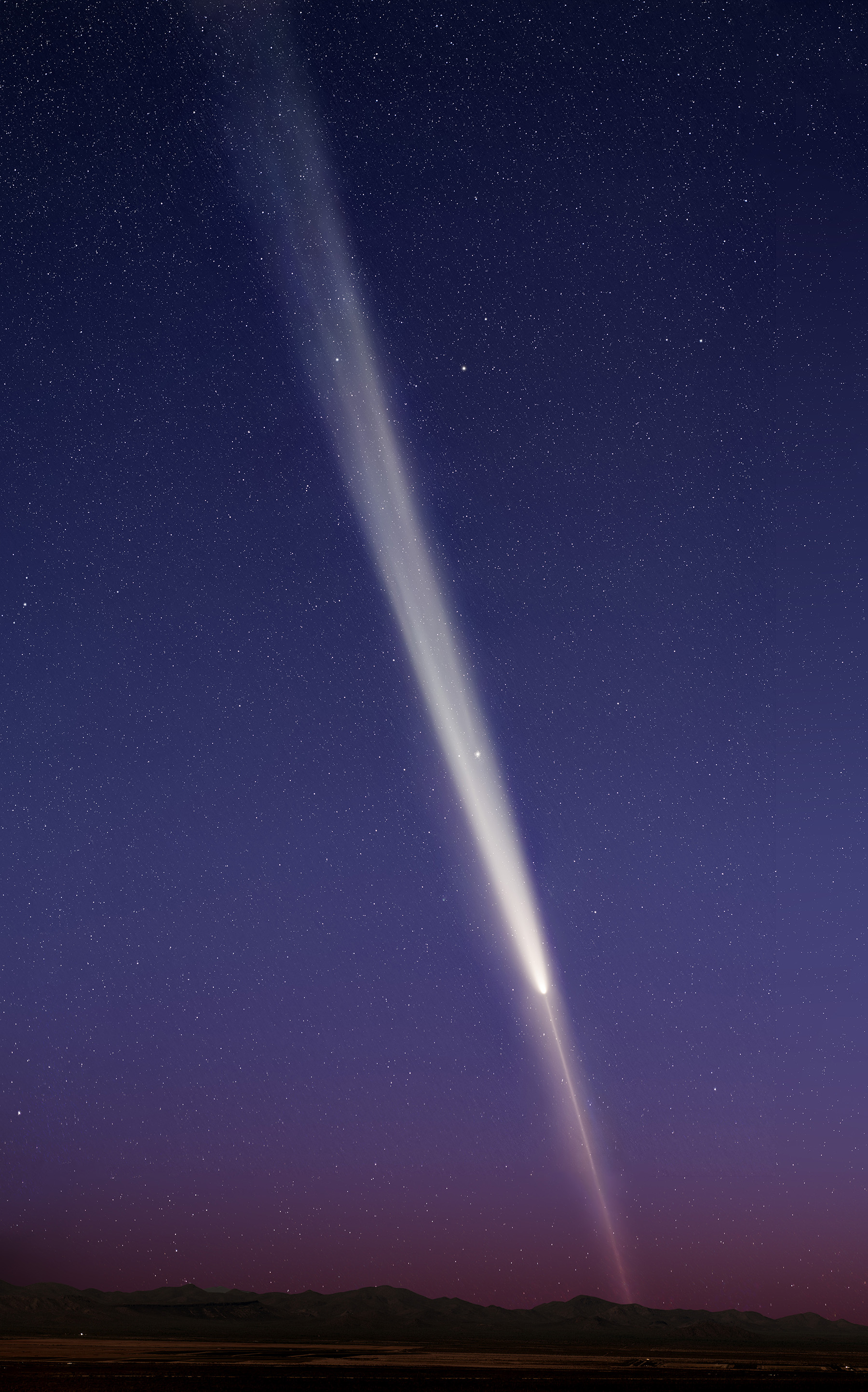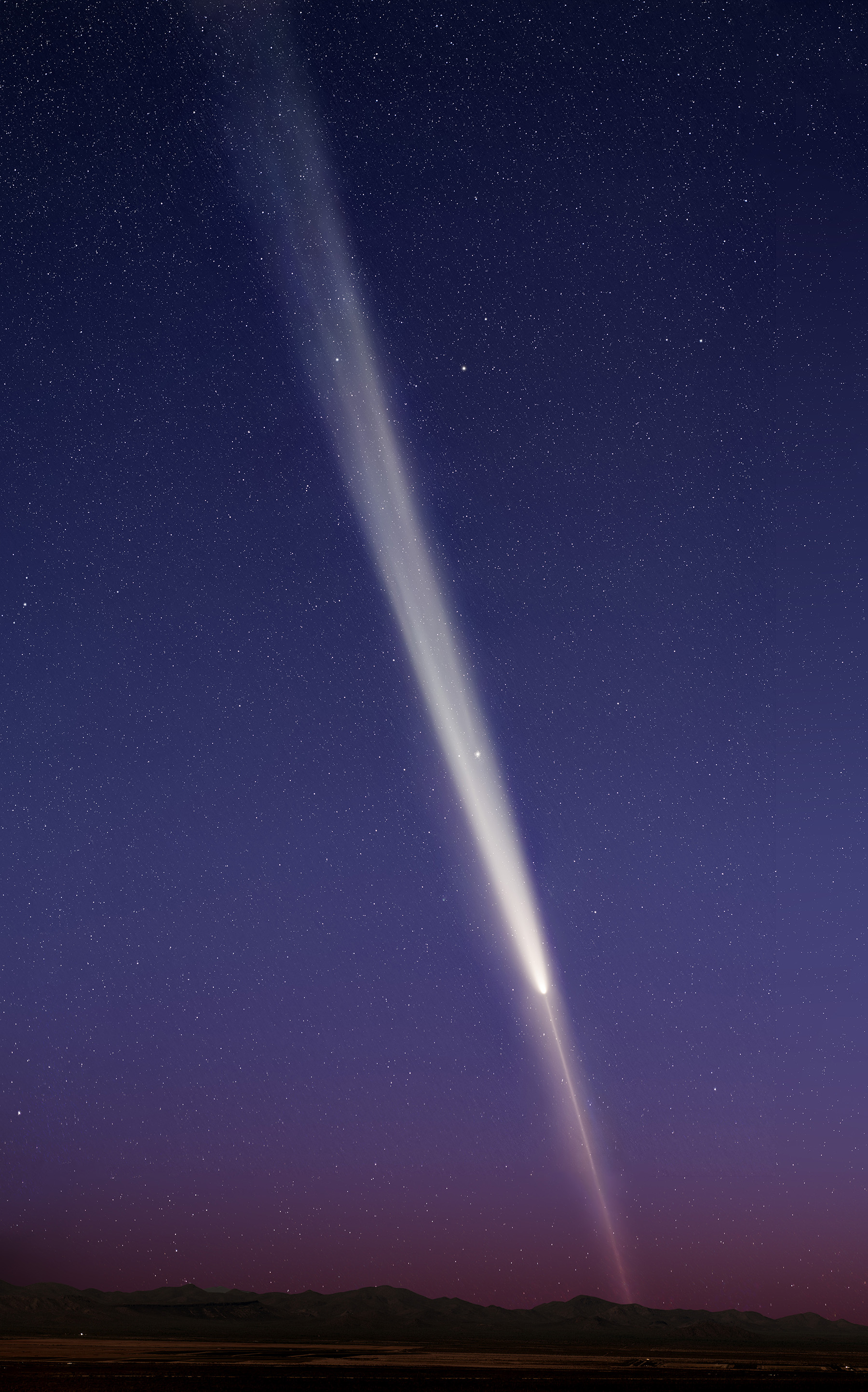
On October 14 it was hard to capture a full view of Comet C/2023 A3 Tsuchinshan-ATLAS. Taken after the comet's closest approach to our fair planet, this evening skyview almost does though. With two telephoto frames combined, the image stretches about 26 degrees across the sky from top to bottom, looking west from Gates Pass, Tucson, Arizona. Comet watchers that night could even identify globular star cluster M5 and the faint apparition of periodic comet 13P Olbers near the long the path of Tsuchinshan-ATLAS's whitish dust tail above the bright comet's coma. Due to perspective as the Earth is crossing the comet's orbital plane, Tsuchinshan-ATLAS also has a pronounced antitail. The antitail is composed of dust previously released and fanning out away from the Sun along the comet's orbit, visible as a needle-like extension below the bright coma toward the rugged western horizon. Growing Gallery: Comet Tsuchinshan-ATLAS in 2024
El 14 de octubre resultaba difícil captar una vista completa del cometa C/2023 A3 Tsuchinshan-ATLAS. Esta imagen de la noche casi lo logra, tomada después del acercamiento más cercano del cometa a nuestro planeta. Con dos tomas realizadas con teleobjetivo combinadas, la imagen se extiende aproximadamente 26 grados a través del cielo de arriba abajo, mirando hacia el oeste desde Gates Pass, Tucson, Arizona. Los observadores de cometas esa noche pudieron identificar incluso el cúmulo globular de estrellas M5 y la tenue aparición del cometa periódico 13P Olbers cerca del largo camino del antitail blanco del cometa Tsuchinshan-ATLAS sobre la coma brillante del cometa. Debido a la perspectiva a medida que la Tierra cruza el plano orbital del cometa, Tsuchinshan-ATLAS también tiene un antitail pronunciado. El antitail está compuesto por polvo previamente liberado y extendiéndose alejándose del Sol a lo largo de la órbita del cometa, visible como una extensión en forma de aguja debajo de la coma brillante hacia el horizonte occidental accidentado.